



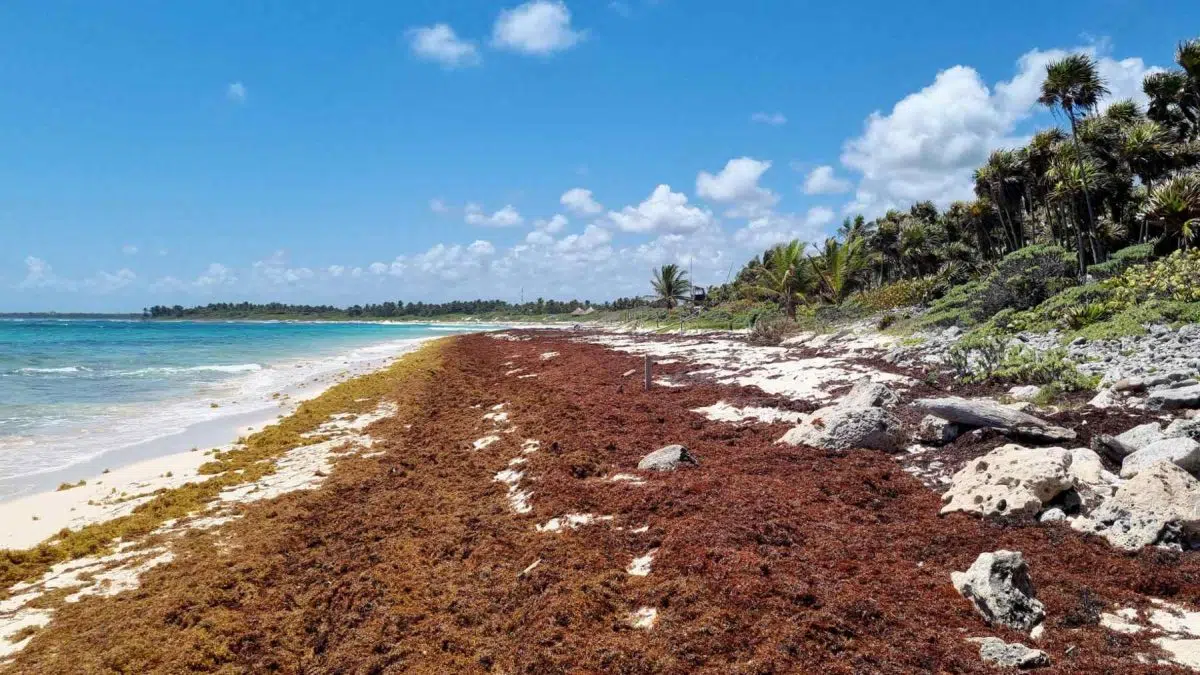
The Mexican Caribbean is facing one of the most critical sargassum seasons in its history. Experts and environmental authorities anticipate that by 2026, a record accumulation of this macroalgae will be reached, driven by natural phenomena and changes in ocean currents. The situation forces coastal states to maintain permanent combat strategies to mitigate the impacts.
The crisis transcends the natural environment: it affects the tourism economy, environmental health, and the daily life of thousands of residents and visitors.
Collection and Operational Deployment
At the end of January, the Secretary of the Navy reported the collection of 178 tons of sargassum in key municipalities of Quintana Roo. The operation included:
- 16 surface units (one oceanic vessel, 11 coastal vessels, and four amphibious sargassum collectors).
- 16 smaller support vessels.
- 9,500 meters of containment barriers, with an additional 6,000 projected.
These barriers are temporarily removed during cold fronts for maintenance and then replaced. Inter-institutional coordination is reflected in frequent meetings with environmental authorities, the business sector, and civil society, adjusting collection protocols and the landing traffic light.
Ecological and Health Impact
Sargassum not only affects the aesthetics of the beaches. Its accumulation and decomposition on the coast cause:
- Reduction of oxygen in the water, damaging coral reefs and seagrass beds.
- Release of hydrogen sulfide, a gas that causes respiratory discomfort and unpleasant odors.
- Alteration of the ecological balance, with consequences for marine species and coastal ecosystems.
Recent Scientific Data
Satellite images from May 2025, analyzed by the University of South Florida and NASA, revealed a record biomass of 38 million tons floating between Africa and the Caribbean. This figure surpassed the records of 2022 and confirmed the worsening of the problem.
The origin lies in the Great Atlantic Sargassum Belt, a continuous strip of macroalgae that has extended from Africa to the Caribbean since 2011. Although it provides benefits in open sea as a habitat for turtles and fish, its massive arrival on the coast severely alters ecosystems.
Economic Consequences
The tourism sector, the economic engine of the region, faces additional difficulties:
- Affected reservations for the upcoming spring if efficient management is not achieved.
- Cleaning and containment costs amounting to millions of dollars.
- Compromised aquatic activities and visitor experience.
Response Strategies
The institutional response depends on the collaboration between the Secretary of the Navy, SEMARNAT, the state government, and civil society. In 2025, the collection reached 92,783 tons, an unprecedented figure.
Technical meetings with the State Environmental Monitoring Center and the Oceanographic Institute of the Gulf and Caribbean Sea have improved satellite tracking and bulletin issuance. Preventive actions and equipment maintenance are essential to anticipate deployments during adverse weather conditions.
Sargassum in the Mexican Caribbean represents an environmental and economic crisis that could reach its peak in 2026. The continuity of collection strategies, the union of public and private efforts, and scientific monitoring will be key to keeping beaches clean and protecting both biodiversity and tourism, pillars of the region.



