



A multinational police operation led by Interpol and deployed between May and June 2025 in nine Latin American countries resulted in 225 arrests for environmental crimes and opened hundreds of new investigations into environmental crime networks, including: illegal logging, wildlife trafficking, and gold mining.
The action, named Operation Mother Earth VII, was coordinated by Interpol’s regional office for Central America and assisted by its environmental security unit.
Environmental crime: an expanding transcontinental network
The operation detected more than 400 cases of environmental crimes, including:
- 203 violations related to forestry
- 138 linked to the illegal wildlife trade
- Fishing violations, illegal mining, and pollution
The investigations revealed transnational routes connecting Latin America with Europe and Asia, showing how organized crime is behind the deforestation, the exploitation of protected species, and clandestine mining for profit.
Trafficked species and ecosystems at risk
Among the seizures were:
- Live birds, reptiles, turtles, primates, and big cats
- 2.4 tons of shark and ray fins
- 875 kg of totoaba, a critically endangered fish
- 7 kg of dried sea cucumber, highly valued in Asian markets
These figures reflect the systematic exploitation of protected species to supply international markets, with devastating consequences for the region’s biodiversity and climate resilience.
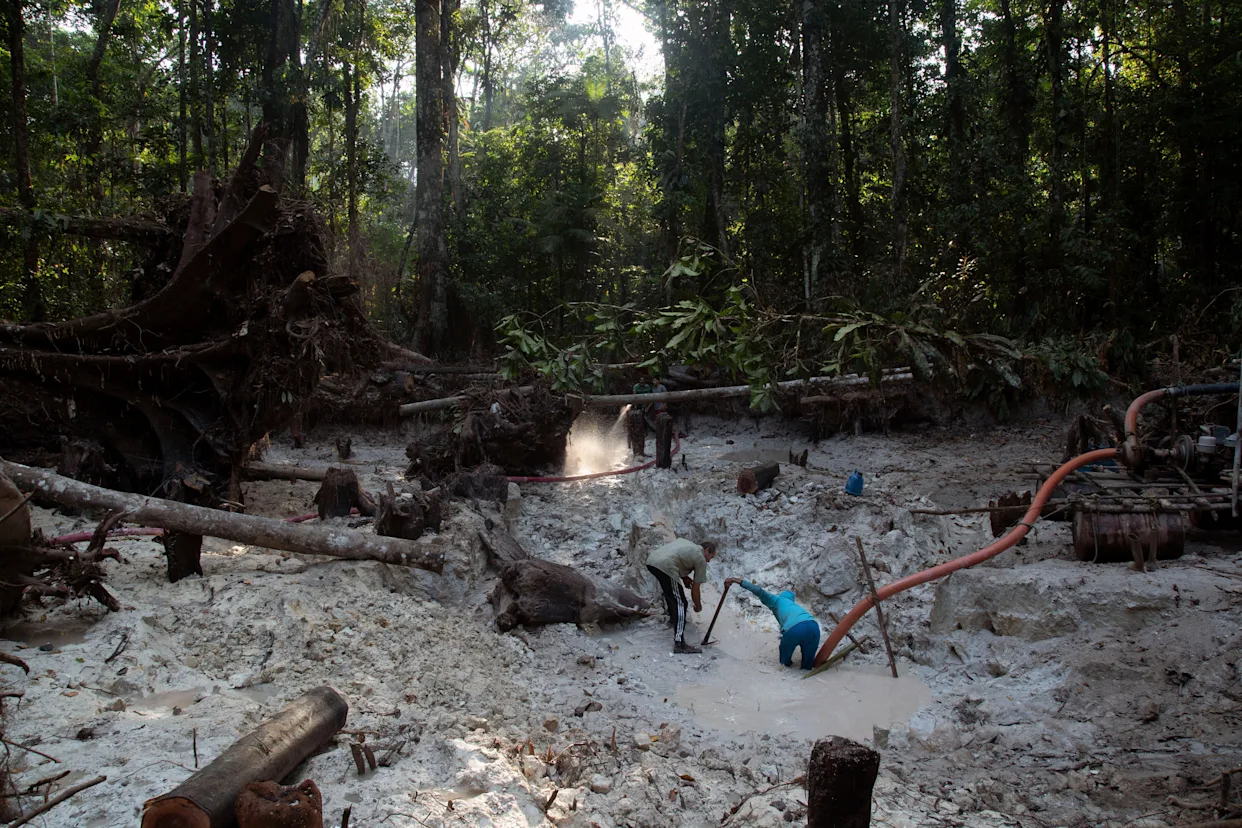
Illegal mining, human trafficking, and pollution
In Panama, a large-scale illegal gold mining operation was discovered involving:
- Child labor
- Human trafficking
- Mercury pollution in rivers and soils
Weapons, vehicles, boats, and communication equipment were also seized, confirming the sophistication level of these criminal networks.
Environmental crime and organized crime: a dangerous alliance
“These low-risk, high-profit crimes now finance armed groups and thrive on corruption,” warns Oscar Soria, director of The Common Initiative.
The operation shows how environmental crime has deeply integrated with traditional organized crime structures, especially in areas where the State is absent or weakened.
Violence against environmental defenders: a silent crisis
- Latin America is the most dangerous region in the world for environmental activists
- In 2023, more than 85% of the murders of defenders occurred in the region
- Colombia and Brazil lead the violence statistics
The attacks are often linked to opposition to extractive projects, such as mining, oil, and agribusiness expansion.
Structural causes and political urgencies
- Profit-seeking: crimes like illegal mining generate billions of dollars
- Corruption: facilitates the expansion of illicit activities
- Lack of regulation: many countries lack environmental criminal legislation
- Pressure for development: policies prioritizing economic growth over environmental protection exacerbate the conflict
Towards a structural and regional response
The operation is part of the GAIA Project, supported by the German Ministry of Environment, with participation from Colombia, Mexico, Costa Rica, and other countries. A final analytical report is expected in November, which will serve as a basis to strengthen environmental governance, recover territories, and coordinate regional responses.
The fight against environmental crime in Latin America demands more than arrests: it requires strong legal frameworks, international cooperation, protection for defenders, and a territorial vision that prioritizes life and biodiversity. Operation Mother Earth VII is a firm step, but the challenge is structural and urgent.



