



The national Government of Argentina has moved forward with a reorganization of the Environment area that involves significant changes in two strategic fronts:
- The Directorate of Native Forests lost hierarchy, moving from level III to a Level IV Coordination, with less administrative autonomy and decision-making capacity.
- The specific structures dedicated to climate change were eliminated, such as the National Directorate of Sustainable Development and Climate Management and the Directorate of Climate Impact.
These dependencies were responsible for designing mitigation and adaptation policies, as well as defining emission reduction targets and monitoring international commitments assumed by Argentina under the Paris Agreement.
New distribution of functions
After the restructuring, policies related to extreme climate events and the implementation of the Climate Change Law 27.520 will fall under the jurisdiction of the National Directorate of Biodiversity, Environmental Relations, and Cooperation, which implies a reorganization within a broader area.
The Government argues that the measure seeks to optimize state management, although various sectors warn that it could mean a weakening of the environmental focus, by reducing hierarchy and diluting specific attention to issues such as climate change.
Native forests in numbers
Argentina has 53.6 million hectares of native forests, covering about 19% of the continental territory.
- Chaco Park: concentrates 67% of the area, with Santiago del Estero as the leading province.
- Espinal: second most important region.
- Yungas and Paranaense Forests: high forest density.
- Andean Patagonian Forest: forest strip in the south.
- Monte and Delta/Paraná Islands: other relevant areas.
Current situation
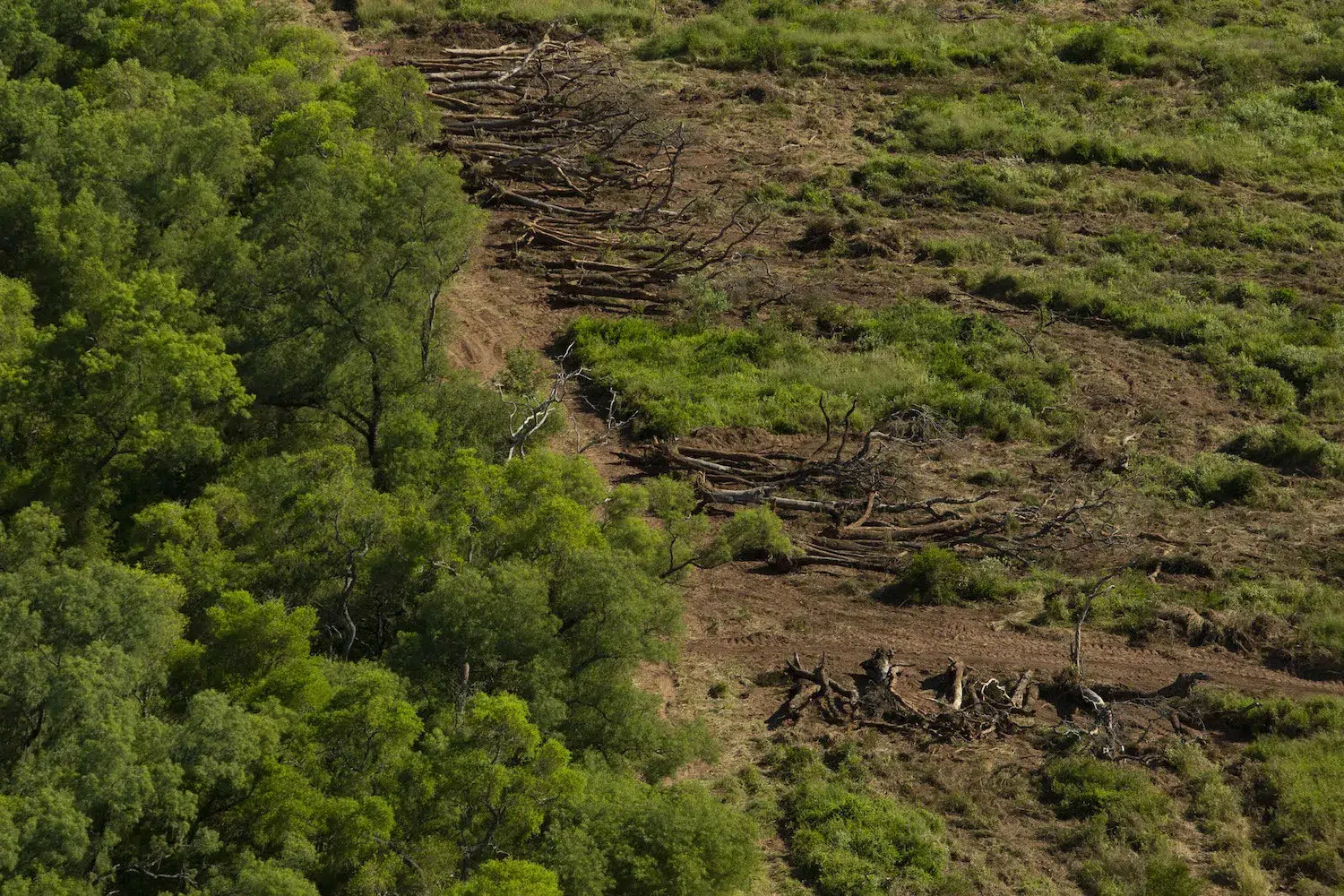
- Loss of area: more than 10 million hectares in the last 40 years.
- Deforestation: mainly affects the north of the country (Santiago del Estero, Chaco, and Formosa), due to agricultural and livestock expansion.
- Impacts: 12% of the national area suffered fires and 58% erosion.
The Forest Law (26.331) establishes territorial zoning with three categories:
- Red (I): very high value, transformation prohibited.
- Yellow (II): medium value, sustainable use.
- Green (III): low value, partial or total transformation.
Open debate
The restructuring brings back the discussion on the place that environmental policy occupies in the national agenda. For some specialists, the reduction of hierarchy in Forests and the elimination of specific climate change areas represent a setback in the State’s capacity to face environmental challenges and fulfill international commitments.
The decision to reorganize the Environment area reflects tensions between the search for administrative efficiency and the need to strengthen strategic environmental policies.
In a country with a high deforestation rate and international climate commitments, the debate on institutional hierarchy and the priority of forests and climate change becomes central to defining the direction of environmental management.



