



The Raíces Project promotes the participatory improvement of Andean crops in Argentina, Bolivia, and Brazil. Through workshops, experience exchanges, and evolutionary breeding strategies, it aims to strengthen agricultural biodiversity and consolidate agroecological practices alongside small rural producers.
The proposal is part of the Global Program for Small Agricultural Producers and the Sustainable Transformation of Food Systems (GP-SAEP), funded by the IFAD and the European Union, and executed by the IICA with Embrapa as the regional technical leader. In Argentina, the INTA coordinates actions in Jujuy, Salta, and Misiones.
Workshops and Methodologies
At the INTA Abra Pampa Agricultural Experimental Station, technicians and specialists discussed access to biodiversity and the construction of evolutionary populations. Participants included figures like anthropologist Jorge Cladera (CONICET), engineer Magda Choquevilca (UNJu), and ethnobiologist María Florencia Barbarich (INTA).
The focus of evolutionary breeding differs from traditional methods: instead of seeking homogeneous varieties, it promotes diverse populations capable of adapting to changing climatic and productive scenarios.
Selected Crops
Producers prioritized species such as:
- Potato.
- Quinoa.
- Corn.
- Broad beans.
Valued characteristics included color, adaptation to different climatic conditions, and size according to commercialization standards.
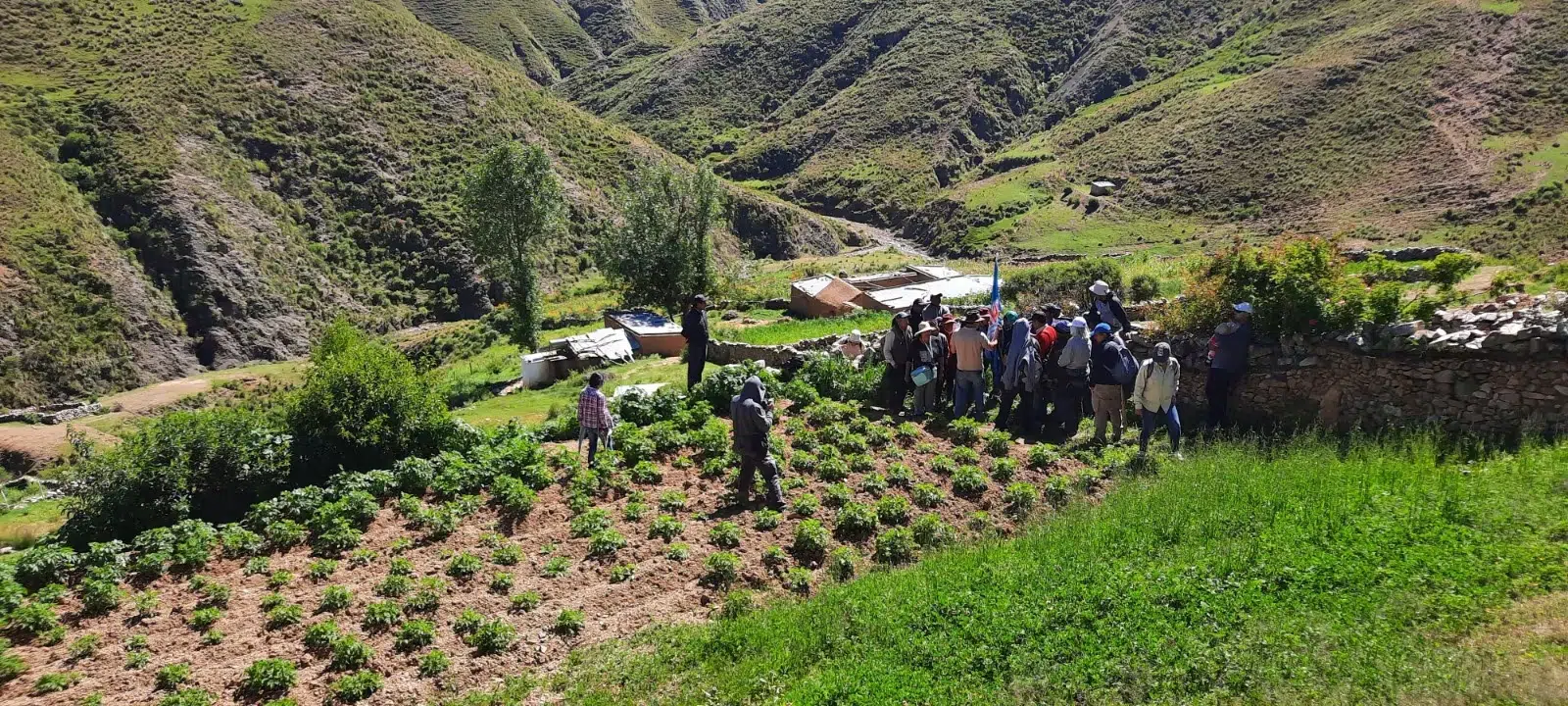
Work in the Field
During the winter, fieldwork will begin with service crops to improve soils, conserve moisture, and optimize productive plots. Systems of associated planting between main crops and complementary species will also be implemented.
The second stage aims to multiply the methodology through promoter producers, who will serve as territorial references and training spaces for other rural families. The third phase will seek to consolidate the methodology and facilitate the insertion of improved crops into commercialization circuits, including business plans for more experienced producers.
Fairs and Cultural Gatherings
The project supported the Meeting of regional foods and local products in Yavi, where contests of the “Papa Yaveña” and “Agrobiodiversity” were held, highlighting emblematic varieties like the collareja potato.
These fairs strengthen the exchange of seeds and knowledge and highlight productive practices that sustain the genetic wealth of the territory.
Agroecological Education
Activities also reached schools such as E.P.A. N°15 and Colegio Secundario N°10 de El Cóndor, where students and teachers participated in workshops on agroecology, evolutionary breeding, and bio-input production. Greenhouses, water systems, and quinoa dryers were visited, integrating educational practices with sustainable production.
The Raíces Project demonstrates that agrobiodiversity is a collective construction that articulates territory, culture, and future. Through the exchange of seeds, knowledge, and experiences, it seeks to strengthen the resilience of Andean crops against climate change and ensure the food security of rural communities in Salta and Jujuy.


