



The possibility of a large feline returning to the Catalan mountains has reactivated an environmental debate that had been dormant for decades. The last recorded specimen of the Eurasian lynx (Lynx lynx) in Spain died in 1930 in the Ripollès region, marking the disappearance of this species from the peninsula.
Now, two organizations —Friends of the High Pyrenees Natural Park and ADLO Pirineu— propose studying the feasibility of its return to the High Pyrenees Natural Park through the introduction of specimens from Romania, where populations maintain demographic stability.
A proposal with divided opinions
The initiative contemplates releasing previously neutered animals, a method that would allow ecological observations without the risk of establishing new reproductive nuclei. However, the proposal has generated divided responses among specialists and territory managers.
Although it presents itself as an opportunity to expand knowledge about large carnivores, researchers warn that any such action could influence other ongoing conservation programs on the peninsula. The role of the European lynx as a super predator in cold environments adds complexity to the discussion.
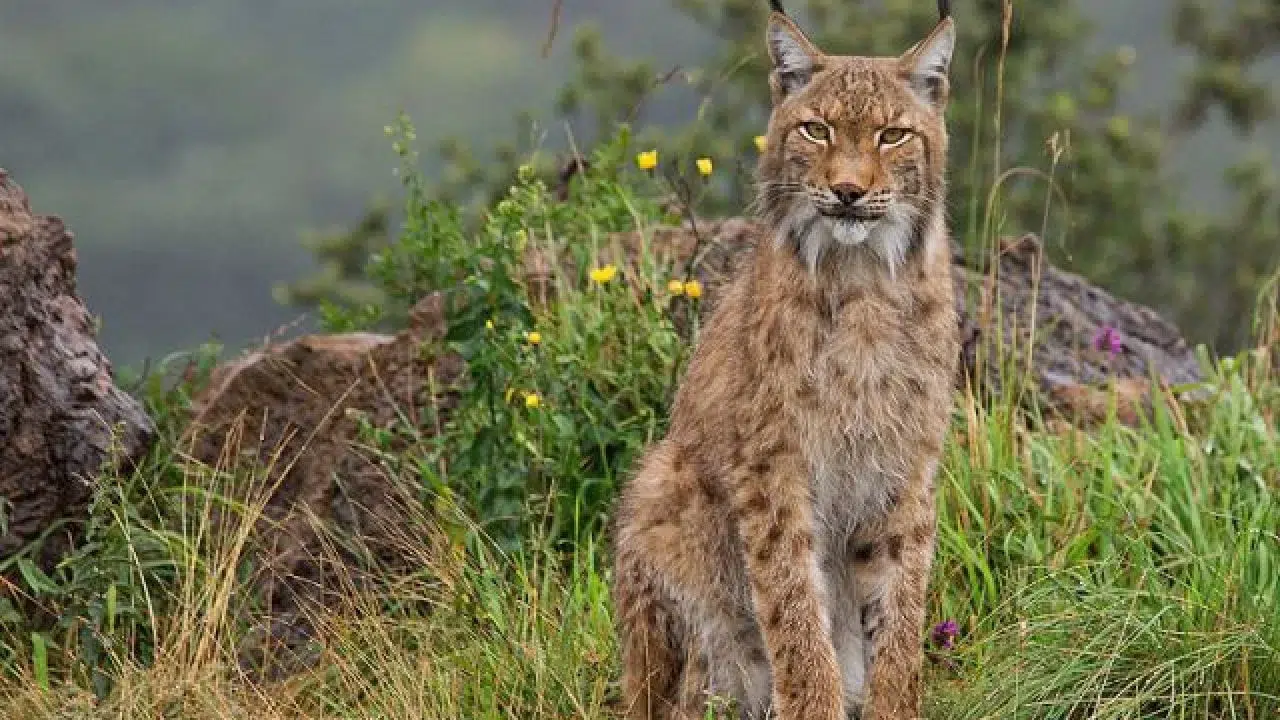
Characteristics of the Eurasian lynx
The Eurasian lynx is distinguished by:
- A larger size than the Iberian lynx.
- A diet based on roe deer, chamois, and small cervids, which conditions its ecological impact.
- A wide distribution in central and northern Europe, where the species persists despite its disappearance from Spain over a century ago.
Risks of hybridization with the Iberian lynx
Part of the conservation sector is concerned about the potential future territorial overlap between the Iberian lynx and the Eurasian lynx. It’s not about direct competition, but the possibility of hybridization, a phenomenon documented in recent studies.
Researchers from the Doñana Biological Station (CSIC) analyzed DNA remnants of lynxes found in Andújar, Alcanar, and Algarve. The study showed that the most recent specimens had greater genetic similarity with the Eurasian lynx than the older individuals.
The lead author, María Lucena, explained:
“The modern lynxes shared more genetic material with their sister species, the Eurasian lynx, than the older lynxes.”
The results confirm that both species interbred between 3,000 and 4,000 years ago, increasing the genetic diversity of the Iberian lynx. However, experts warn that a similar process today could alter the balance of a species whose recovery has taken decades of scientific and administrative work.
Procedure and necessary authorizations
The proposal must overcome several stages:
- Technical review by the High Pyrenees Natural Park.
- Validation by the Generalitat of Catalonia.
- Authorization from the Ministry for Ecological Transition.
The proponents insist that the neutering of the animals eliminates the risk of reproduction, limiting the effects of an initial release. However, experts emphasize that any future consideration of fertile specimens should be approached with maximum precaution criteria.
A precedent: the reintroduction of the European sea eagle
A recent case on the peninsula illustrates the type of process that could be initiated: the reintroduction of the European sea eagle (Haliaeetus albicilla). This project, centered on a large piscivorous and scavenger bird of prey, required:
- Years of planning.
- Authorizations and international cooperation.
- Technological monitoring and control.
- Debates on interaction with other birds and social perception.
For several experts, this experience demonstrates that any “return” of extinct fauna —whether an eagle or a large carnivore— demands a rigorous technical basis, transparency, and a precise assessment of risks before advancing to new phases.
The proposal to reintroduce the Eurasian lynx in Catalonia opens a deep debate on conservation, biodiversity, and the management of extinct species. Although the initiative seeks to expand knowledge about large carnivores, the risks of hybridization and the implications for the Iberian lynx require thorough analysis.
The case of the European sea eagle shows that any reintroduction requires long-term planning, international cooperation, and maximum precaution. The future of the Eurasian lynx in the Pyrenees will depend on the ability to combine science, politics, and society in a responsible conservation project.


