



In the heart of the Brazilian Amazon, colossal trees rise towering over 80 meters in height. Among them, the angelim-vermelho (Dinizia excelsa) stands out as the tallest tree in the country, with a specimen of 88.5 meters discovered in the state of Pará. These giants not only impress with their size, but also with the role they play in climate regulation and in the preservation of biodiversity.
Their carbon dioxide capture capacity is extraordinary. A single individual can absorb an amount of CO₂ equivalent to that of an entire hectare of average forest. Furthermore, they contribute to the water cycle by releasing large volumes into the atmosphere, favoring the rainfall that sustains the region and a large part of South America.
These trees, which exceed 400 years of age, are living witnesses of the history of the jungle. Their longevity holds clues about the evolution of Amazonian ecosystems and the climatic changes they underwent in past centuries. However, their presence is not guaranteed: deforestation, illegal mining, and logging threaten to silence these giants.
Protection initiatives have led to the creation of the State Environmental Park of the Giant Trees of the Amazon, a conservation area aimed at ensuring the survival of these specimens. Yet external pressures and forest exploitation still jeopardize a natural treasure that is unique on the planet.
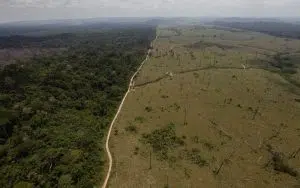 The Amazon against climate change.
Amazon: the system that sustains life on the planet
The presence of specimens like the angelim-vermelho reminds us that there are still secrets to be discovered in the most remote corners of the forest. Science continues to study their characteristics, from dating their growth rings to accurately measuring their contribution to the global climate balance. Each discovery reinforces the need to preserve them as a natural heritage and as allies in the fight against climate change.
However, protecting them requires more than just delimited natural areas on maps. Effective control policies against deforestation, sustainable forest management, and recognition of the role played by local communities as guardians of the territory are essential.
The Amazon is much more than a biodiversity reserve: it is a system that sustains life on the planet. Taking care of its giant trees is protecting the memory of the jungle and, at the same time, ensuring a future where climate, water, and biodiversity remain part of the vital balance of the Earth.
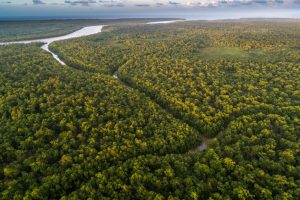 Brazil auctions Amazon forest.
The Amazon: a key ecosystem for life on Earth
The value of giant trees is better understood when analyzing the entire Amazon biome. This tropical rainforest is considered the “lungs of the planet” for its capacity to absorb carbon dioxide and produce oxygen, regulating the global climate. It is estimated to harbor around 10% of global biodiversity, with thousands of plant and animal species found nowhere else.
In addition to its biological wealth, the Amazon plays a central role in the continent’s water dynamics. The so-called “flying rivers,” moisture streams released by the trees, transport water to agricultural regions in southern Brazil, Argentina, and Paraguay. Without this contribution, the rainfall pattern in much of South America would be drastically altered, with serious consequences for food production and access to clean water.
Another essential aspect is its cultural and social function. More than 30 million people live in the jungle, including indigenous communities that directly depend on its resources to survive. For them, the Amazon is not only territory but also identity, spirituality, and tradition, a legacy that also urgently requires protection.


