



In the heart of Villa La Angostura, Neuquén, surrounded by the neighborhoods Mallín, Margaritas, Peumayén, and Calafate, lies a nature reserve created in 2003 with the aim of protecting a valuable urban wetland, which coexists with the Calafate lagoon, a space that hosts a rich diversity of flora and fauna.
For years, it was a refuge for birds, amphibians, and small mammals, as well as a meeting place for the community. In 2018, trails, benches, and a bird observatory were inaugurated, driven by the COA Tintica Observers Club, consolidating its educational and recreational role.
However, environmental deterioration is advancing. Untreated household effluents reach the lagoon, altering its composition and affecting the habitat of the species that inhabit it. The Management Plan established at its creation —which was supposed to guarantee its protection— is only partially fulfilled.
Residents nostalgically remember the times when fish and water birds were abundant. Currently, biodiversity has drastically reduced, and the mallín shows evident signs of degradation.
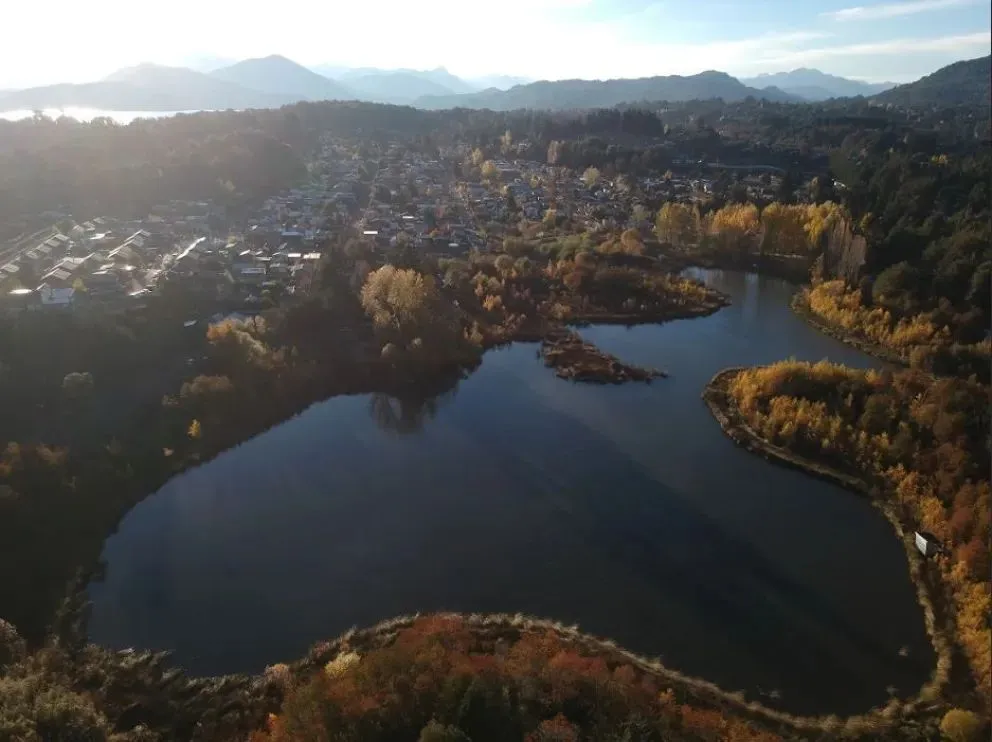
A key ecosystem at risk
The Mallín de Nahuel Huapi is much more than an urban green space: it is a wetland, a vital ecosystem that regulates the water cycle, filters pollutants, and prevents floods. Its vegetation acts as a natural filter that purifies the water flowing into the region’s lakes and rivers.
In its surroundings, native species such as ñires, radales, cypresses, and maitenes grow, contributing to nutrient retention and soil stability. However, urban expansion and lack of environmental control are jeopardizing these essential functions.
Intervening, filling, or modifying a mallín implies altering its ecological balance. When the wetland loses its capacity to absorb and purify water, nutrients and waste accumulate, generating eutrophication processes that suffocate aquatic life.
Moreover, the loss of vegetation cover promotes erosion and reduces the soil’s ability to retain moisture, affecting both the flora and the local fauna. What begins as a point contamination ends up becoming a chain of imbalances difficult to reverse.
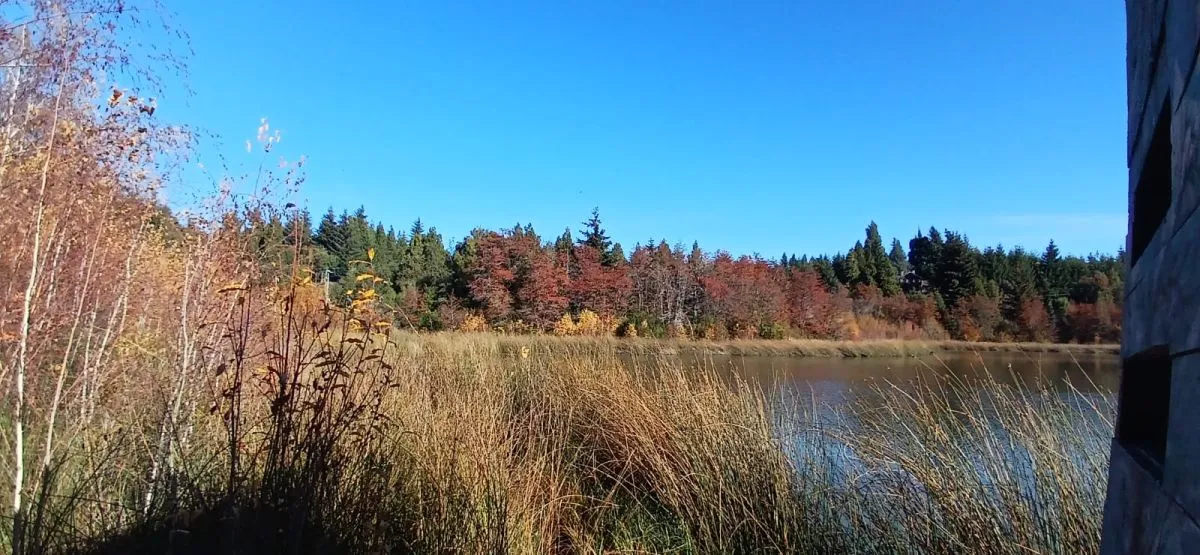
Consequences of the degradation of the Calafate lagoon
The degradation of the mallín has impacts that go far beyond its perimeter. The contamination of the water threatens connected streams and lakes, affecting other species and reducing the quality of drinking water.
The loss of biodiversity also implies the disappearance of pollinators, insectivorous birds, and aquatic species that perform key ecological functions. This deterioration directly impacts the balance of the Andean Patagonian forest and the environmental services that benefit the entire community.
At a climatic level, wetlands act as natural carbon sinks. Their degradation releases greenhouse gases and contributes to global warming. In urban contexts, their disappearance also exacerbates flooding and reduces the natural spaces available for environmental education and recreation.
The loss of this wetland would be more than a local damage: it would be a setback in the fight for conservation and the fulfillment of the commitments assumed by Argentina in the Ramsar Convention, which protects wetlands as strategic ecosystems for the sustainability of the planet.


