



Sustainable beekeeping gains a new ally: powdered honey. A group of Spanish researchers and entrepreneurs managed to transform liquid honey into a high-quality dehydrated product.
It retains its nutritional properties and facilitates its industrial use, without losing flavor or aroma.
The initiative aims to revalue apiculture production, reduce waste, and open new commercial opportunities for beekeepers.
Sustainable Beekeeping: How is powdered honey obtained?
The project is led by the Apimeltec team, with the support of the Technological Center Itacyl and the business incubator of the University of Burgos. It represents a disruptive innovation in the honey value chain.
The process involves dehydrating honey using atomization techniques, obtaining a fine, stable, and easy-to-preserve powder.
This technology, common in the dairy and pharmaceutical industries, allows the transformation of a difficult-to-handle product like liquid honey into a versatile ingredient. It is ideal for the development of functional foods, supplements, pastries, beverages, and cosmetics.
 How powdered honey is made. (Photo: courtesy of El Correo de Burgos).
Unlike traditional honey, which can crystallize or deteriorate over time, powdered honey extends its shelf life, improves its preservation, and allows for transportation without special containers.
Furthermore, it reduces surplus waste and batches that do not meet retail market standards.
Boosting local and sustainable beekeeping
This advancement aims to commercialize less valued honey varieties, such as those with different organoleptic characteristics or produced in small quantities.
Thus, a new channel is opened for producers who often struggle to position themselves in large chains.
According to its creators, the technology is adaptable and scalable, making it a strategic opportunity to promote sustainable beekeeping in rural environments.
By enabling new industrial uses, powdered honey can also generate greater profitability for beekeepers and diversify the offering in national and international markets.
Preservation of properties and quality assurance
One of the challenges of the process was to ensure that powdered honey retains its nutritional benefits and active principles, such as antioxidants, enzymes, and natural antimicrobial compounds.
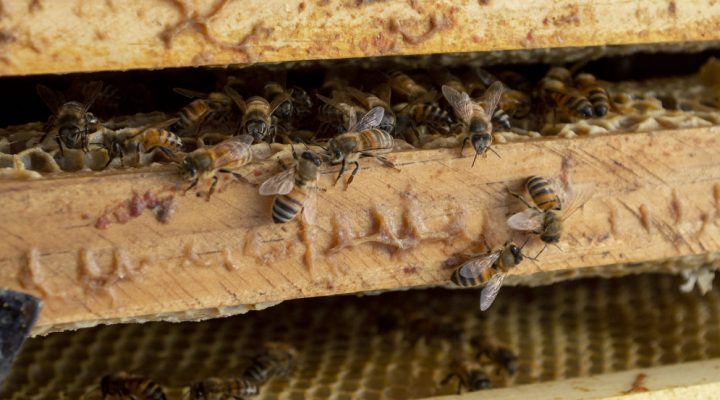 Challenges facing beekeeping.
Laboratory tests demonstrated that, with the appropriate temperature and humidity parameters, it is possible to preserve a large part of its functional qualities.
This new format also allows for improving quality control and product traceability, which is crucial in demanding markets and industries like pharmaceuticals or food, requiring high sanitary standards.
Technological innovation in favor of the environment
In addition to the economic and logistical benefits, powdered honey reduces the use of plastic packaging, facilitates surplus management, and avoids discarding large volumes of liquid honey, often challenging to market.
The project has been well received both by the beekeeping sector and by researchers in food technology, who highlight its potential to enhance the efficiency of the production chain and reduce environmental impact.



