



For years, space agriculture was seen as a key solution to achieve food self-sufficiency on long-duration missions, especially in future colonies on Mars.
However, recent research has raised alarms: lettuce grown in microgravity grows more slowly and presents critical nutritional deficiencies, according to open data from NASA and studies published in Nature.
Less calcium, less magnesium: a salad that doesn’t nourish
Lettuces harvested on the International Space Station and the Chinese station Tiangong II showed a reduction of between 29% and 31% in calcium, and about 25% in magnesium, compared to their terrestrial equivalents.
Although they visually appear healthy, their chemical composition reveals a concerning loss of essential nutrients for bone and metabolic health.
“A space salad may look perfect in photos, but it doesn’t strengthen bones,” scientists warn.
This deficit is especially serious in microgravity, where the human body already suffers from an accelerated loss of bone mass. A diet low in minerals exacerbates that deterioration, and the irregularity in iron levels can cause fatigue and anemia on prolonged missions.
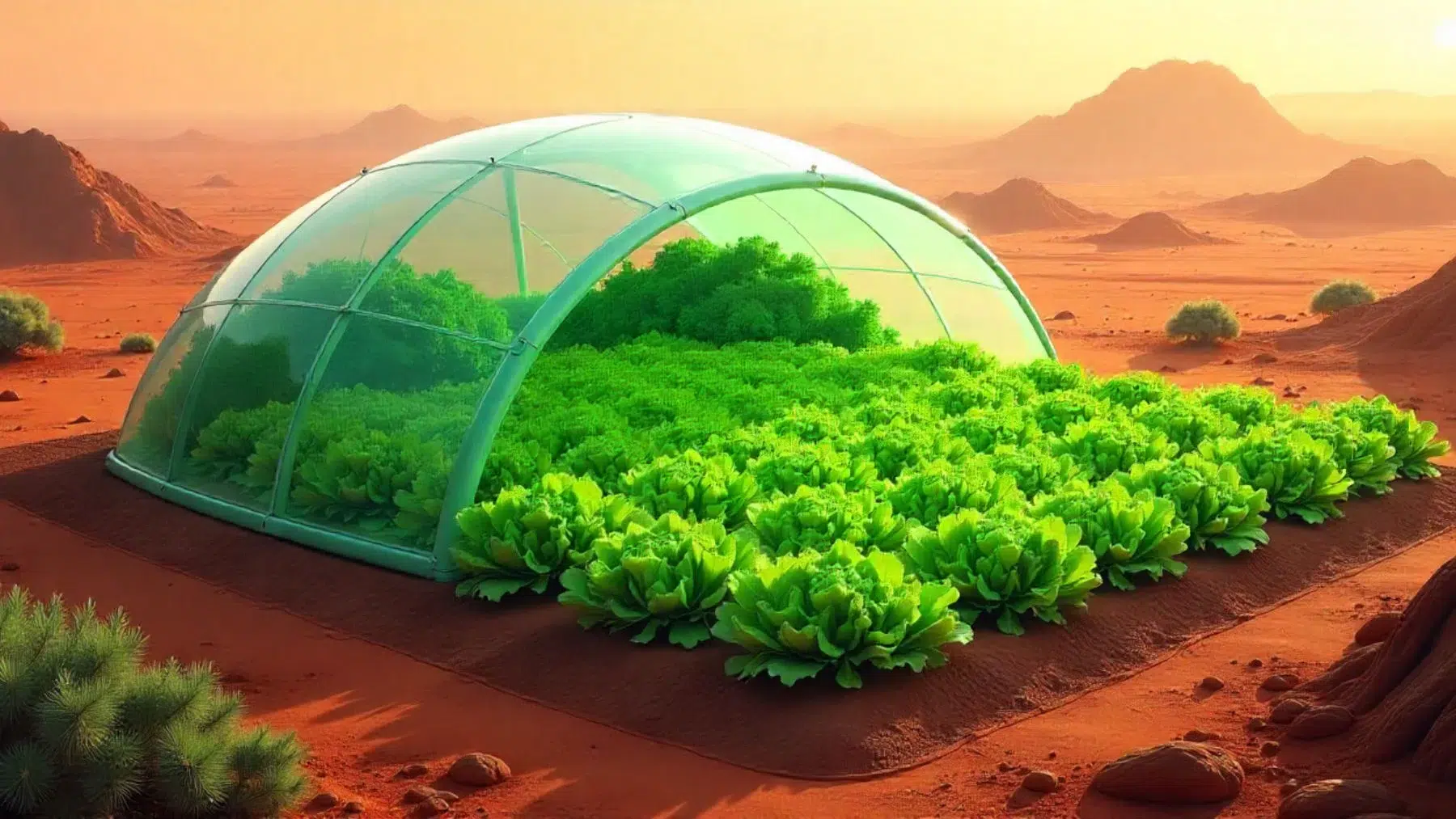
Microgravity: impact on plants and astronauts
The lack of gravity alters the way plants absorb water and nutrients, reducing the production of antioxidants such as carotenoids and phenolic compounds, essential to combat oxidative stress.
At the same time, studies like NASA’s Twins Study show that astronauts suffer genetic and digestive alterations that limit nutrient absorption.
Some develop leaky gut syndrome, which weakens the immune system and accelerates bone loss. The result: less nutritious food in bodies less prepared to absorb it.
Biofortification and resistant species: the race to improve the space diet
In light of this situation, researchers are working against the clock to biofortify space crops. More resistant and flavonoid-rich species, such as soy, garlic, and red lettuce, are being tested, along with techniques like microbial fermentation, which improves the gut microbiota.
The Italian Space Agency, for example, is developing a super-dwarf rice adapted to lunar soils. The challenge is enormous: a round trip to Mars can last more than three years without resupply.
Space crops: more than food, a vital infrastructure
- Reduction of Earth dependency: local crops decrease the need to transport food from Earth
- Closed resource cycles: plants recycle water, absorb CO₂, and release oxygen
- Fresh food and psychological well-being: cultivating improves the crew’s mood and mental health
- In situ resource utilization (ISRU): Martian regolith contains nutrients like nitrogen, phosphorus, and potassium (NPK)
Technology to overcome extreme obstacles
Space agriculture faces challenges such as cosmic radiation, extreme temperatures, and space limitation. To overcome them, solutions like vertical farming, the use of LED lighting, and hydroponic cultivation systems adapted to closed environments are being developed.
Improving nutrition in space is not just a technical issue: it is a condition for survival.
If astronauts do not have food capable of maintaining their bone, immune, and metabolic health, interplanetary missions could fail before reaching their destination. Space agriculture is, literally, the root of the human future on Mars.


