



A recent study led by Oregon State University and published in the scientific journal Science revealed that, at different times over the past 4.5 million years, the oceans reached levels up to 20 meters higher than current levels.
The analysis was based on the composition of oxygen isotopes in deep-sea sediments, considered a key record for understanding climate changes and sea level variations during the Cenozoic, a geological era that began 66 million years ago.
The research team clarified that these results do not contradict contemporary global warming caused by human activity, but rather refer to completely different time scales. “We are talking about tens of millennia versus a few decades, as is the case with the current climate emergency,” explained scientist Peter Clarke, lead author of the study, to SINC.
Glaciations, ice sheets, and climate feedbacks
The results indicate that between 4.5 and 3 million years ago, the average sea level was significantly higher, suggesting that the ice masses in Greenland and Antarctica were much smaller.
Starting around 4 million years ago, episodic decreases of between 50 and 80 meters were recorded, marking the beginning of glaciation in the northern hemisphere. Between 3 and 2.5 million years ago, this glaciation intensified, and ocean levels dropped to values similar to current levels.
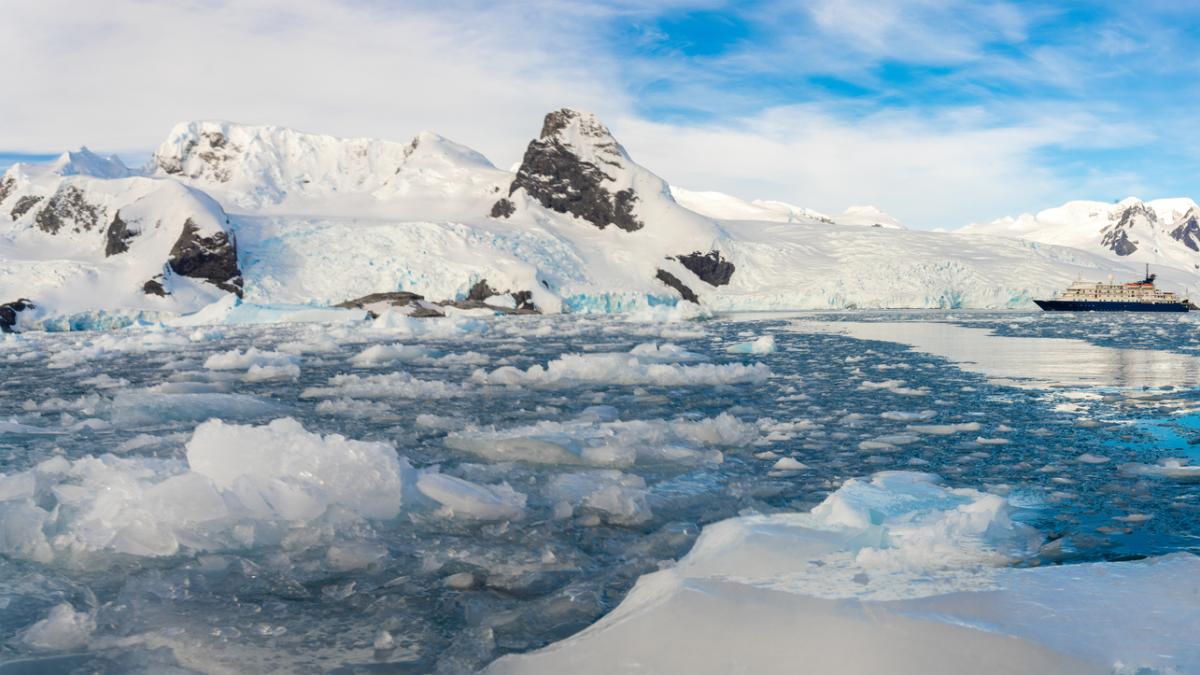 Ice sheets and their relationship with sea level and oceans.
The study also revealed that the ice sheet oscillations over the past 2.5 million years were as pronounced as during the last glacial maximum occurring 21,000 years ago. This contradicts the dominant hypothesis of the past five decades, which held that large fluctuations only occurred in the last million years.
Furthermore, it was observed that extensive ice masses persisted during the Pleistocene, even as global temperatures dropped by up to 6°C. This phenomenon suggests that factors such as precipitation dynamics, atmospheric circulation, and energy balance contributed to maintaining ice sheet growth.
Current consequences of rising sea levels
Oceanic rise due to melting and thermal expansion has serious impacts on ecosystems and coastal communities.
Although the study focuses on past geological processes, the authors warn that current changes in sea level, global temperature, and extreme events are directly linked to human action. Among the most relevant consequences are:
- More frequent coastal flooding and soil erosion
- Saltwater intrusion into aquifers and agricultural lands
- Forced migrations due to habitat loss
- Alteration of marine ecosystems and reduced food security
- Intensification of storms and extreme weather events
Effects such as wetland loss, coral reef bleaching, increased ocean acidity, and decreased oxygen in deep waters are also observed, leading to dead zones and impacting vulnerable species.



