



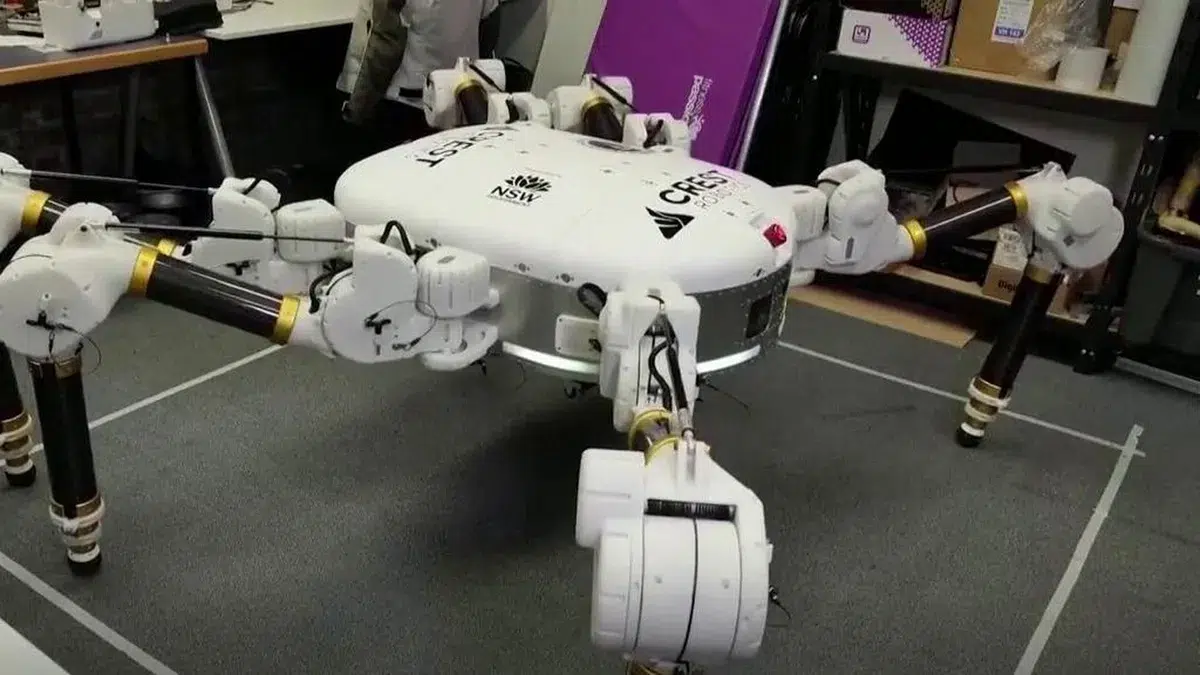
The housing crisis is one of the great global challenges, and in Australia, they have put Charlotte, a 3D printing robot, to work, promising to revolutionize construction. This prototype managed to build a 198 square meter house in just 24 hours, a performance equivalent to the simultaneous work of 100 workers.
The secret lies in the extrusion of eco-friendly materials —sand, crushed brick, and recycled glass— which are placed layer by layer to form walls and structures. The result is fireproof (fire-resistant) and difficult to flood buildings, making them an attractive option to face extreme phenomena.
A prototype with potential, but still in development
Charlotte is not limited to stacking bricks: it uses a giant extrusion system that deposits recycled material in uniform layers. Although the progress is promising, it is a small-scale prototype, and experts estimate it could take several decades before this technology is applied on a large scale in real homes.
Even so, the approach aims to eliminate many of the most expensive steps in construction, which could significantly reduce costs and construction times. The challenge is to balance innovation with social impact, as automation could displace part of the traditional workforce.
Homes on Earth… and shelters on the Moon
The project leaders are looking beyond the terrestrial housing crisis. They also consider that Charlotte could print shelters on the Moon, applying the same logic of layers and materials in environments outside Earth. Although the idea is ambitious, its viability in real conditions still needs to be proven.
Benefits of 3D printing in construction
3D printing applied to construction offers advantages that make it one of the most promising technologies in the sector:
Efficiency in time and cost
- Reduces construction times by up to 70%.
- Decreases costs by requiring less labor and reducing material waste.
- Time savings also imply lower energy consumption.
Sustainability
- Generates up to 60% less waste on site.
- Allows the use of the precise amount of material needed.
- Promotes more eco-friendly construction practices.
Freedom of design and creativity
- Facilitates the creation of complex and customized designs.
- Allows for organic shapes and high-precision architectural molds.
- Is based on digital models that ensure millimetric accuracy.
Safety and labor
- Minimizes occupational risks by reducing the presence of operators on site.
- Responds to the shortage of skilled labor, with small and specialized teams.
Other applications
- Heritage restoration: precise replicas of historical elements.
- Architectural models and mock-ups: fast and cost-effective.
- Solution to the housing crisis: pilot projects have already built houses in a few hours in countries like Chile.
A future that redefines construction
Charlotte is just a prototype, but its potential is enormous. If it can be scaled, it could become a key tool to tackle the global housing crisis, reduce costs, and accelerate infrastructure projects.
Moreover, it opens the door to applications in extreme environments like the Moon, demonstrating that 3D printing is not only a technological innovation but also a strategic solution for the future of humanity.



