



With the purpose of supporting the productive sector in its transition towards a greener economy, BBVA in Argentina held its 1st Sustainability Summit. Under the motto “Transforming the sustainable future”, the event gathered more than 450 business leaders at the BBVA Tower both in person and via simultaneous streaming.
Opening: Record Figures and Ambitious Goals
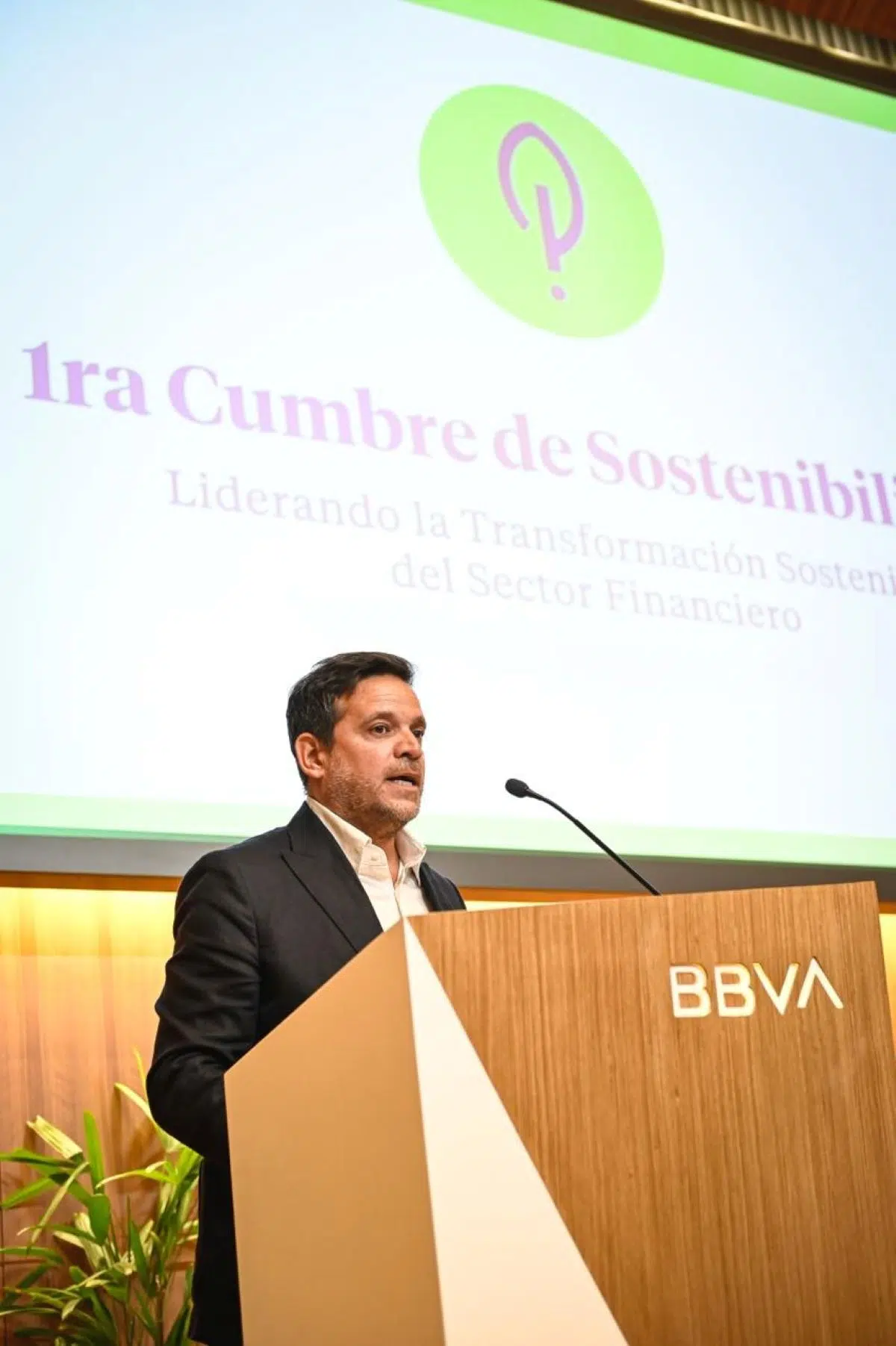
The day began with Hernán Jordan, Director of Corporate and Institutional Banking at BBVA in Argentina. In his speech, he highlighted the sustained support for companies, SMEs, and the agricultural sector:
“At BBVA Argentina, we have grown exponentially in channeling, reaching over USD 2 billion by 2025, with this distribution: 70% in climate projects and 30% in inclusive growth,” said Jordan during his welcome. He also emphasized that the goal for 2026 is to mobilize more than 3 billion dollars.
Keynote: Sustainability as a Tool for Competitiveness and Resilience
The agenda continued with a session focused on global standards and the demands of new markets. The moderation was conducted by Toni Ballabriga, Global Head of Sustainability Intelligence & Advocacy at BBVA, who set the framework for the discussion: “We continue to believe that competitiveness is a strategic imperative and a huge business opportunity; the key lies in the strategic sense of sustainability. Change is unstoppable.”
Next, the panel featured perspectives from global leaders. Marina Andrés, Head of Advisory GTB Global at BBVA, outlined the three fundamental axes where banking must act as a driver of change: mobilizing capital, strategically supporting all customer segments in their development, and scaling the transition to new models.
Sebastián Bigoritto, Executive Director of CEADS, emphasized the internal transformation of organizations: “Some practices have more adherence than others, but today it is essential to integrate sustainability into the governance structure of companies.” To conclude, Jvan Gaffuri from S&P provided an optimistic diagnosis for the region: “The sustainability assessment methodology allows evaluating companies’ performance in sustainability to integrate it into investment decision-making. Among the evaluated companies, Latin America scores higher than the global average.”
From Commitment to Action: Sustainable Lessons from the Private Sector
This session, moderated by Jaime Marín Otero, focused on practical cases from the corporate sector. Participants included Manuel Ron (BIO 4), Sofía María Wullich (Lartirigoyen), and Augusto Buda (Essential Energy Holding). The central debate revolved around corporate resilience as a synonym for sustainable strategy and how management and impact are measured in relation to climate change. They also discussed the country’s opportunities to lead the production of low-carbon footprint fuel and the paths in the regulation of these issues.
During this session, leaders demonstrated that sustainability is a fundamental pillar for profitability. Manuel Ron highlighted that emission reduction translates into savings and higher profits, emphasizing the role of financial leverage from BBVA. Meanwhile, Sofía María Wullich shared success in circular economy —such as recovering 89% of silobags— and the impact of pastoral livestock, stressing that commitment must come from top management.
Augusto Buda emphasized the importance of diversifying the energy matrix through renewable sources, moving away from oil dependency. He concluded by highlighting the historic opportunity: “Latin America can meet Europe’s energy demand.” Jaime’s closing left a clear concept: “No company can be sustainable on its own. Today, your suppliers’ emissions are your emissions. Alliances are the engine.”
The Role of the Private Sector in the Energy Transition
Under the moderation of Gonzalo Martinez Cereijo, the critical role of companies in decarbonization was discussed. In the opening, he highlighted: “BBVA plays a very important role in supporting companies in their financing strategy, seeking efficient and sustainable alternatives.”
The leaders agreed that collaborative work is the only way to decarbonize the national matrix. Gustavo Castagnino from Genneia celebrated the historic leap, projecting to close the year with 1.7 GW of renewable energy. He also emphasized that a solid ESG agenda is essential for accessing better financing, linking the energy matrix with the development of mining.
Juan Giglio, CFO of PCR, emphasized adaptability: “We dedicate more than 50% of our investments to renewable energy.” To conclude, Marina Iribarne from YPF Luz stressed that the challenge is to put the customer at the center, advising companies that do not have specialized areas: “The role of banks is fundamental to accelerate sustainability strategies.”
Event Closing: The Role of the Financial System in the Transition
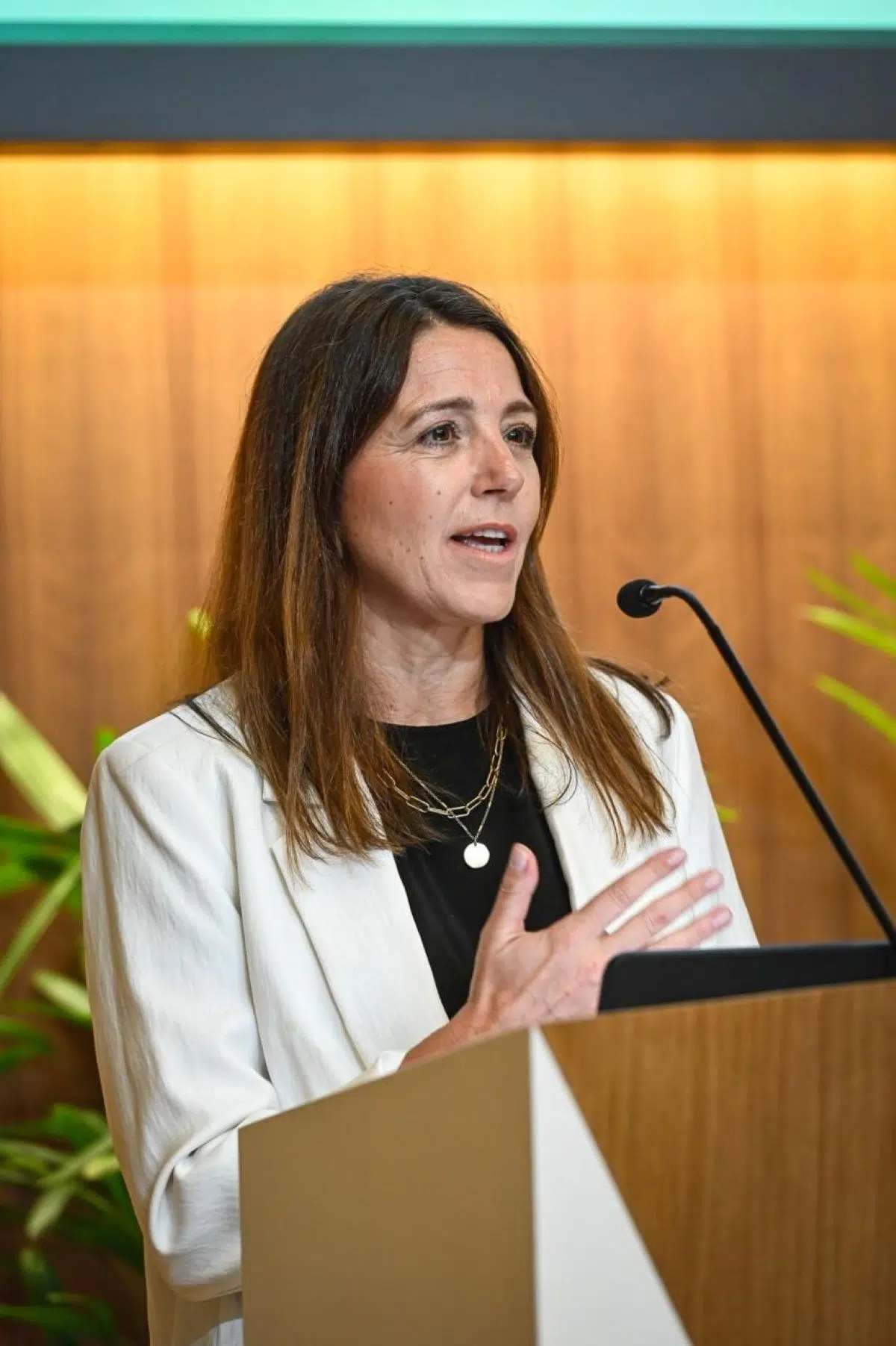
The conclusions were delivered by Verónica Incera, Director of Corporate and Investment Banking at BBVA in Argentina, who highlighted:
“Sustainability is not a trend or an aspiration; it is a business issue and a factor of competitiveness. For the transition, collaboration is necessary. The financial system has a key role in accelerating this path.”
Thus, the 1st Sustainability Summit marks a milestone in the 2026 agenda of BBVA in Argentina. The entity reaffirms its purpose of putting the customer at the center, consolidating its leadership through digital transformation and innovation leveraged by Artificial Intelligence, being the strategic partner of SMEs, corporate clients (CIB), and the agricultural sector for a more resilient and sustainable country.



