



In the province of Neuquén, there is a small town of just 200 inhabitants that every summer changes its quiet rhythm for tourist excitement. It is Mari Menuco, a municipality that thrives on rural calm and its proximity to the lake of the same name, but in the summer season receives caravans of visitors who arrive by car, set up tents in organized campsites, or enjoy its free beaches.
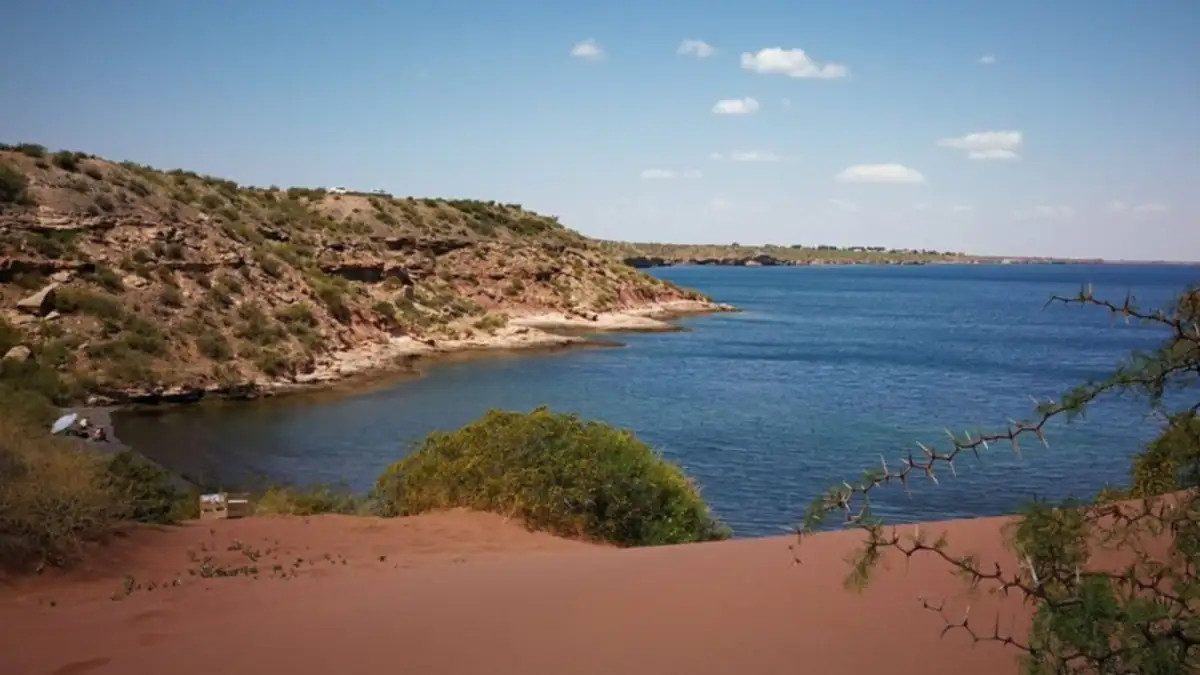
Everyday life there unfolds with the serenity of a place where everyone knows each other, and the days are measured by the sun and the wind of the steppe. However, its crystal-clear and warm bay becomes an irresistible magnet for thousands of tourists seeking to cool off and connect with nature.
The lake and its attractions
The lake Mari Menuco is an artificial reservoir fed by the Neuquén River. Its turquoise and warm waters make it an oasis in the middle of the Patagonian steppe. The main bay has campsites equipped with grills, a grocery store, tree shade, and electricity, making it easy for those who come to spend the day or the weekend.
Activities abound: water sports like windsurfing, jet skiing, canoeing, and sailing are favorites thanks to the constant wind and calm waters.
Sport fishing attracts enthusiasts looking for silversides and trout, while diving reveals a surprising “underwater museum” with submerged sculptures. Trekking through the cliffs, bird watching, and unforgettable sunsets complete the offer.
Tradition and tourism
The name Mari Menuco comes from Mapudungun and means “ten swamps,” recalling the history linked to water and land. Although small, its strategic location has positioned it as an emerging destination that combines the peace of a rural town with the summer tourist vitality.
The bay not only refreshes the body but also boosts the local economy and keeps Mapuche traditions alive in a unique natural setting.
How to get to Mari Menuco
From Neuquén capital, the trip takes approximately one hour:
- Via Route 7 and Route 51, you reach the lake after about 40 km.
- Via North Highway and Route 67, you avoid the traffic of Route 7 and arrive in less time.
As for transportation, the car is the most recommended option to explore the area. You can also get there by taxi or remis (about 50 minutes, though more expensive) or by bus (about two hours, more economical).
What to do in Mari Menuco
- Water sports: windsurfing, water skiing, motorboating, canoeing, and sailing.
- Sport fishing: catching silversides, trout, and perch, always respecting regulations.
- Events: the Wakeboard Festival and the Mari Menuco Lake Festival in January and February are the most popular.
- Relaxation: spend the day at its resorts and beaches during the warm months.
- Hiking: explore nearby routes and viewpoints, such as those recommended by AllTrails.
Tips for visitors
Local authorities recommend taking your trash back, checking fishing regulations, and keeping in mind that in summer the lake is a very popular destination to escape the heat.
Mari Menuco is the perfect example of the contrast between the tranquility of a small town and the tourist energy that invades it every summer. Its crystal-clear bay, water activities, and natural surroundings make it a Patagonian refuge that attracts thousands of visitors each year in search of rest, adventure, and connection with nature.

