



A report prepared within the framework of the Proyecto MaRes confirmed that more than 90% of the waste found on the beaches and coastal areas of the province of Chubut originates from fishing activity.
This problem is closely linked to the intense exploitation and the shrimp boom in provincial waters.
The impact of shrimping activity
The work, developed over three years in different Protected Coastal and Marine Areas, associates the increase in marine pollution with the sustained growth of the fishery.
Shrimp landings went from 50 thousand tons in 2013 to about 185 thousand tons in 2024. This jump generated a greater circulation of disposable materials that end up in the sea or are carried by currents.
Among the elements most frequently detected in terrestrial and aerial surveys are:
-
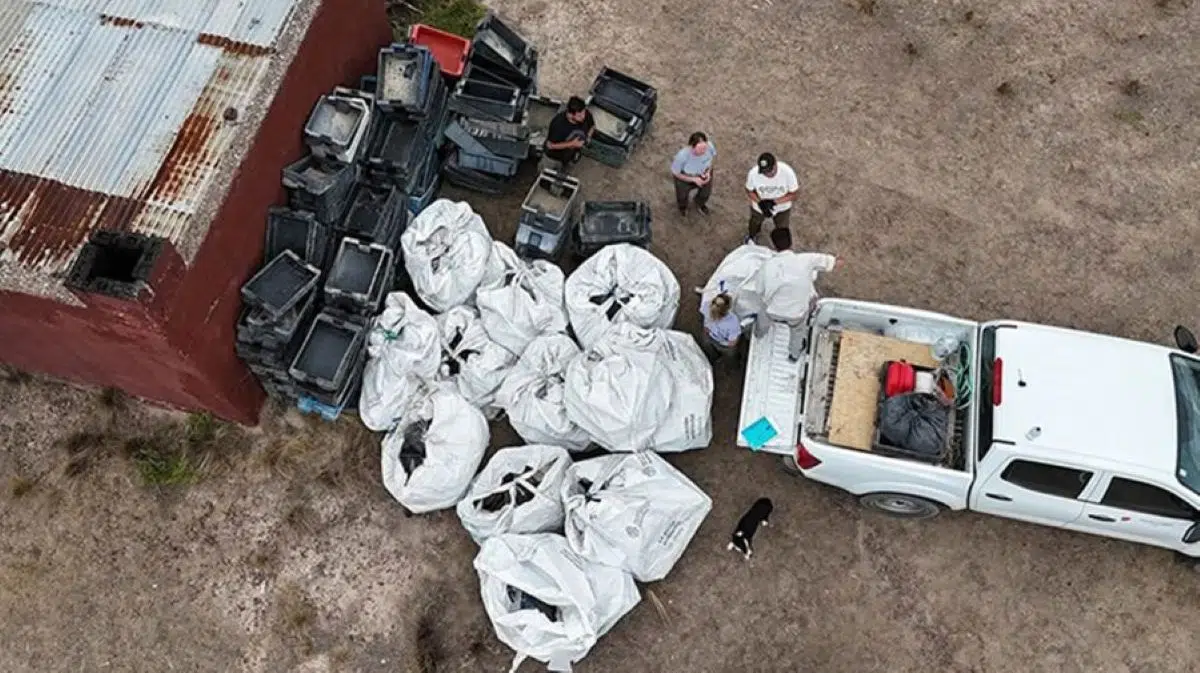
Fishing crates and plastic containers.
-
Nets, ropes, and lines.
-
Gloves used on boats and in fish plants.
The researchers emphasized that the study was not limited to visible waste, but included analyses of microplastics, oceanographic modeling, and regulatory evaluations to understand the dispersion of pollutants.

More than 20 tons of plastic removed
As part of the cleanup actions in areas such as Playa Cormoranes, Isla Leones, and Caleta San Roque, more than 20 tons of plastic waste were removed along 60 kilometers of coastline.
During these specific days, it was found that more than 95% of the collected material belonged to the fishing operation. Additionally, overflights were conducted over 1,329 kilometers of maritime coastline to generate environmental monitoring maps.
Coordination and ecosystem risk
The Proyecto MaRes was coordinated by the Forum for the Conservation of the Patagonian Sea with funding from the European Union, and included the technical work of the Whale Conservation Institute, the Argentine Wildlife Foundation, and CONICET.
Specialists from these organizations warn that the massive presence of these wastes poses a serious threat to the biodiversity of the Patagonian ecosystem, as abandoned nets and plastic fragments cause entanglements, ingestion of microplastics, and severe environmental alterations in birds, mammals, and fish species.
The solution will require permanent coordination between companies, sector workers, and public agencies.


