



For years, the open-air landfill of Puente de Hierro in Guaymallén (Mendoza) was the only source of income for dozens of families who survived by collecting recyclable materials from unprotected waste.
Single mothers, elderly adults, and children worked in precarious conditions, without access to basic rights. That reality began to change in June, with the permanent closure of the landfill and the implementation of a socio-environmental inclusion program.
Training, infrastructure, and community networks
The municipality promotes an inclusive recycling model with equipment, training, and community participation.
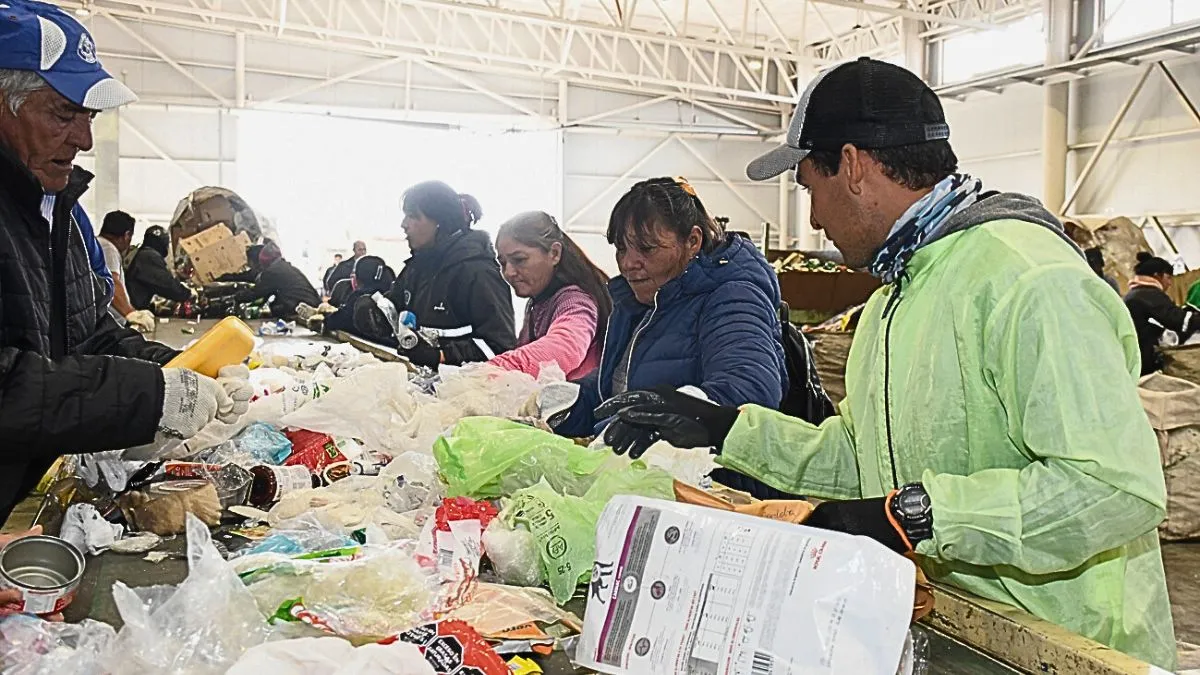
Currently, 160 people are being trained to be part of urban recyclers cooperatives, with practices at the Green Center of Guaymallén. There they work with:
- Sorting belts and baling machines
- Logistics trucks
- Protective clothing and footwear
- Communication and environmental awareness courses
The goal is to build a network of inclusive recycling, where each neighbor who separates waste at home contributes to environmental care and strengthens dignified jobs.
From informality to cooperative self-management
The new cooperatives will be able to sell recycled materials directly
The proposal does not aim to create municipal jobs but collective organization. People join cooperatives like Grilli and Aguaribay, which are already operating in the area. This allows them to:
- Sell recycled material directly
- Decide in assembly how to distribute profits
- Access insurance, mutual aid, and social benefits
“Together they have much more strength and better conditions than if they worked individually,” highlighted Jorge Rumbo, Deputy Director of Environmental Management of the municipality in an interview with Diario Uno portal.
Inclusion with a comprehensive approach: education, health, and rights
The program includes tutoring, medical care, and pension management for the elderly and people with disabilities.
More than half of those who join are women, many from families that have worked in landfills for generations. The program includes:
- Support to finish school
- Access to medical care
- Pension management for the elderly and people with disabilities
“We are changing the reality for people who have never received attention from institutions,” says Rumbo.
Community awareness: each separated waste is an opportunity
The initiative also aims to raise awareness in the community about the impact of their daily actions. Separating waste at home not only improves environmental management but creates real opportunities for those who used to work among the garbage.
“Each neighbor who separates waste helps build a fairer model, where recycling is synonymous with dignity,” concludes Rumbo.
Cover photo: Diario Uno


