



At the Technical School Nº 539 in Rosario, an innovative project is changing the way we see waste. Using the thermofusion technique, they transform plastics into design products.
High school students not only create colorful and original objects, including bags, wallets, and raincoats, but also raise environmental awareness. Additionally, they aim to finance the maintenance of their school.
How the project was born
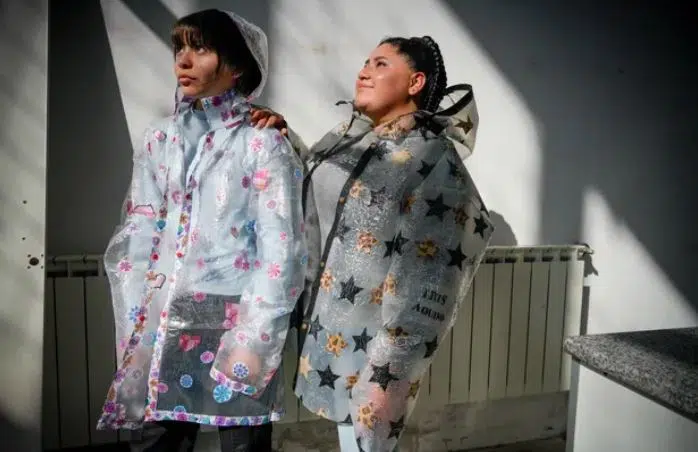 The designs created by students using thermofusion. (Photo: La Capital).[/caption>
According to the newspaper La Capital, the initiative emerged at the end of last year, driven by necessity. First and second-year students, who were preparing a play on dengue prevention, used cookie and alfajor wrappers to create their characters’ costumes.
This first step opened their eyes to the possibilities of recycling. The next advancement was learning thermofusion, a process that uses heat to bond plastics.
With this technique, they created flags with milk bags and cookie packages that still adorn the school.
The project took a big leap when it was selected for the “Youth in Climate Action Fund Rosario,” receiving funding of $4.5 million. With these funds, the school was able to acquire two thermofusion machines and three sewing machines. They equipped a workshop where fourth-year students work every morning.
Sofía Meza, one of the students, described in dialogue with the newspaper the excitement of winning the contest. “I never thought we would come this far,” she said. She and her classmates wrote the proposal with a clear objective: “to reduce waste and promote its reuse, promoting sustainability and environmental awareness.”
The initiative is completely voluntary and is led by teachers Celina Cassane, Roque Vázquez, and Gabriela Arabia.
From trash to opportunity
Teacher Gabriela Arabia highlights the potential of this project. “Plastic bags are a highly polluting element and represent the majority of waste. With thermofusion, we can create ‘ecofabrics’ and produce different products. The limit is set by imagination,” she points out.
Furthermore, the project aims to involve the entire community. The students have already visited other primary schools to ask them to save plastic bags and have visited the neighborhood fair to showcase their creations.
Looking to the future, the next goal is ambitious. They aim to produce and sell institutional T-shirts with the workshop’s teams to generate funds and ensure the maintenance of the school building. A clear example of how creativity and plastic recycling can go hand in hand with education and sustainability.



