



The international initiative The Ocean Cleanup achieved a historic record: more than 45 million kilograms of plastic removed from rivers and oceans, the largest volume achieved by a single project in the world.
This result demonstrates that floating waste capture technologies can operate on a large scale, although it also reveals the magnitude of the problem: millions of tons of plastic enter the sea each year.
Capture Technologies and Critical Areas
The systems deployed in oceans and rivers have allowed the identification of areas where plastic concentrates:
- Large ocean gyres, such as the Great Pacific Garbage Patch.
- River mouths.
- Coastal strips with slow currents.
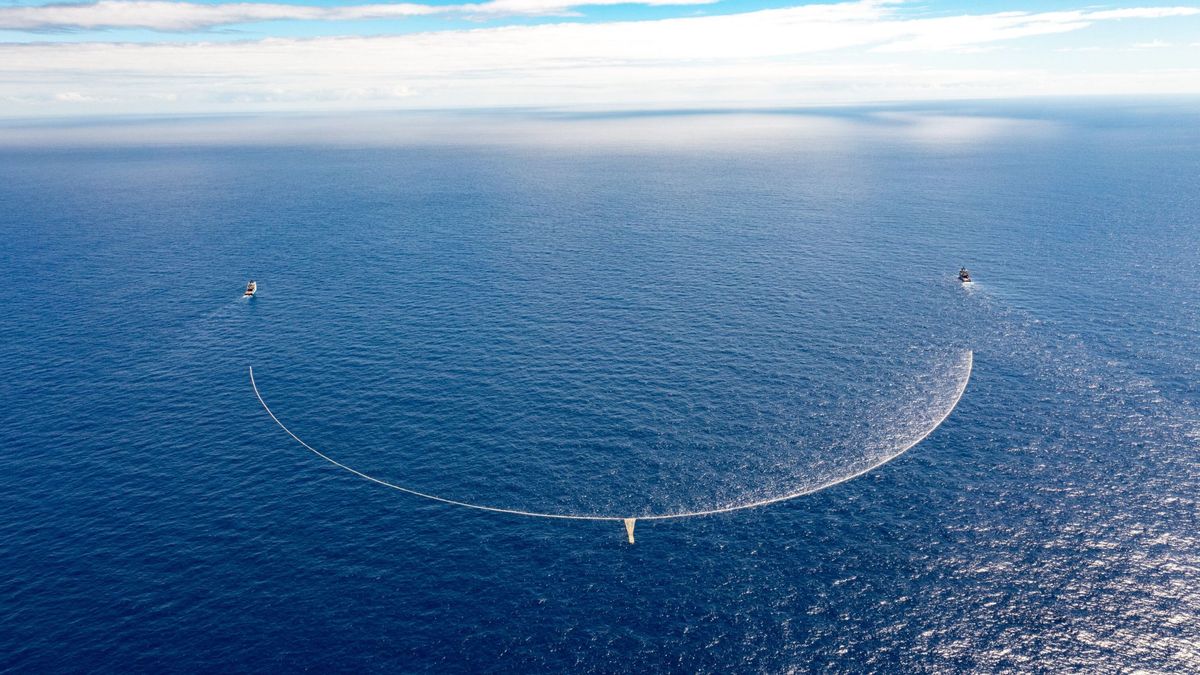
The floating barriers function as giant funnels that guide waste towards collection points. With each deployment, the amount of plastic recovered has increased, surpassing 45 million kg.
The Origin of Marine Plastic
Most plastic does not start in the sea but on land. A 2021 study estimated that more than 1,000 rivers generate 80% of global plastic emissions into the ocean, especially in cities with insufficient waste management systems.
Therefore, current strategies focus on prevention at the source, with programs like the 30 Cities Program, which intervenes in coastal cities and river basins to prevent waste from reaching the sea.
Circular Economy and Recycling
The cleanup does not end with the capture. The waste must be sorted and reincorporated into the production system. Part of the recovered material was turned into 118,000 kg of recycled plastic granulate, used to manufacture new products.
This approach prevents the removed waste from ending up in landfills or incinerators and reinforces the circular economy.
Ecological Risks and Balance
Some scientists warned that the nets could trap surface marine organisms. However, recent studies conclude that the risk is less than the damage caused by plastic. Nevertheless, uncertainties persist about the impact on the neuston, the community of organisms that inhabit the sea’s surface layer.
The Challenge of Microplastics
The Great Pacific Garbage Patch contains more than 100 million kg of floating plastic, much of it from abandoned fishing nets and packaging. Over time, these materials degrade into microplastics, tiny particles that are already part of the marine food chain.
Eliminating large waste before it fragments is key to reducing invisible pollution.
Citizen Science and Next Steps
The project reported collecting about 53 kg of trash per minute, but even with record numbers, the cleanup remains small compared to the constant flow of waste.
The coming years will be decisive:
- Extend urban cleanup programs to more cities.
- Reduce operational costs of capture technologies.
- Strengthen citizen science, with local communities providing data on the rivers that release the most waste.
The record of The Ocean Cleanup shows that environmental engineering can make a difference, but also that the true solution lies in reducing plastic at the source: less unnecessary production, better waste management, and more reuse.
Cleanup is necessary, but not sufficient. The fight against plastic pollution is a race between technology, information, and public policies.



