



The program “Separate Sum”, the recycling plan promoted by the province of San Juan, continues to advance in different municipalities. The program is consolidating as a key policy to promote recycling, responsible waste management and the circular economy.
Driven by the Provincial Ministry of the Environment, the plan promotes the separation of recyclable waste at the source and its differentiated collection. Everything is done in green points distributed throughout the San Juan territory.
What does the recycling plan in San Juan consist of: concrete data
With the aim of reducing the environmental impact of urban waste and improving the conditions of final treatment, “Separate Sum” is currently being implemented in the departments of Rawson, Santa Lucía, Rivadavia, Capital, Chimbas, Pocito, and Albardón.
Recycling stations were set up there so that residents can deposit materials such as paper, cardboard, plastic, glass, and metals.
The collected waste is then sorted and processed by local cooperatives, which allows for the creation of green employment opportunities and strengthens the circular economy in the region. In addition, the program includes educational campaigns and environmental awareness to promote sustainable habits from home.
 Waste separation at the source.
According to provincial authorities, one of the medium-term objectives is to extend the initiative to the entire province and significantly reduce the waste that reaches the landfill.
The strategy also includes strengthening recycling infrastructure and improving traceability systems. Thus, it ensures that the recovered materials return to the production chain.
The commitment of municipalities and the active participation of citizens are essential for the success of this program that aims to transform waste into resources and build a more sustainable development model.
Waste under control in the provinces: the technology Esquel incorporated
The Chubut city of Esquel is another example of how provinces consolidate intelligent and sustainable waste management. In this case, they are moving towards a more efficient management model.
The collection system incorporated satellite tracking technology in all trucks, allowing monitoring of their routes, fuel consumption, and operation times. This change aims to optimize the service and reduce its environmental impact.
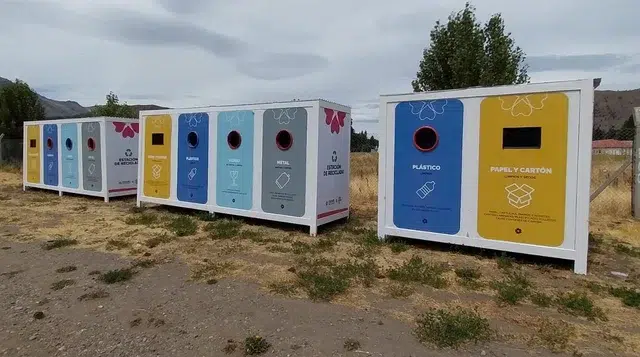 Esquel modernized its waste management system. Photo: EQS Notes.
The implementation of this tracking system facilitates the organization of collection circuits, avoiding unnecessary routes and improving resource usage. Real-time records allow monitoring how long each operation takes, as recently happened at a recycling station where unloading was completed in seven minutes, within the expected time.
Satellite tracking also provides key information about the status of vehicles. This allows anticipating maintenance and extending the fleet’s lifespan, avoiding failures that could affect collection or generate additional costs.


