



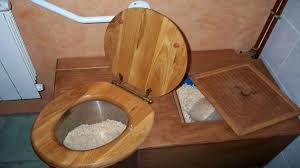
Bolivia became the stage for a novel invention that could help improve the quality of the land and, why not, the environment. It is an innovative toilet that turns human waste into compost, without using water in the process.
A resident of La Paz, named Pedro, built this “dry toilet” 17 years ago and still uses it, as he claims that this invention helps him save between 6 and 10 liters of water every time it is used.
Instead of water, the man uses coffee grounds, dry soil, or sawdust to cover his feces. These waste products fall into a bucket where a large number of California earthworms are responsible for transforming the excrement into fertile soil.
According to Pedro, in a single spoonful of the soil generated by the work of the earthworms in the feces, “there is more life than humans on the planet.”

What about urine?
While this “dry toilet” is a great tool for turning excrement into fertile soil, it also takes advantage of the benefits that urine can provide in this process. This is because the urine, separated and channeled, is used as a source of phosphate, one of the most important and scarce nutrients for plants.
The scarcity of this nutrient worldwide is such that Germany will require cities with more than 50,000 inhabitants to recover it through various methods.
In this sense, this system can become a great alternative, as it does not generate odor, does not pollute, does not waste, and teaches that even waste, such as excrement, can be transformed into a valuable tool for the environment if they are no longer viewed disparagingly and their benefits are learned.
An environmentally friendly toilet: a growing trend
In several countries in northern Europe, such as Sweden, Norway, and Germany, the trend of using dry or ecological toilets is growing. This alternative seeks to reduce the consumption of drinking water, avoid contamination of aquifers, and transform human waste into safe compost.
Also in rural areas of Canada, the United States, and Australia, this system is being adopted, especially in sustainable homes or off-grid. There, environmental awareness and the need to optimize natural resources drive its implementation.
The dry toilet does not require water to operate, and its maintenance is simple. With proper ventilation and waste separation, it can be a hygienic and sustainable solution to the increasing global water crises.



