



The deforestation in the Amazon would reach critical levels by the end of the century, according to a study projected by the Ludwig Maximilian University of Munich (LMU).
The world’s largest rainforest could lose up to 38% of its forest cover by 2100.
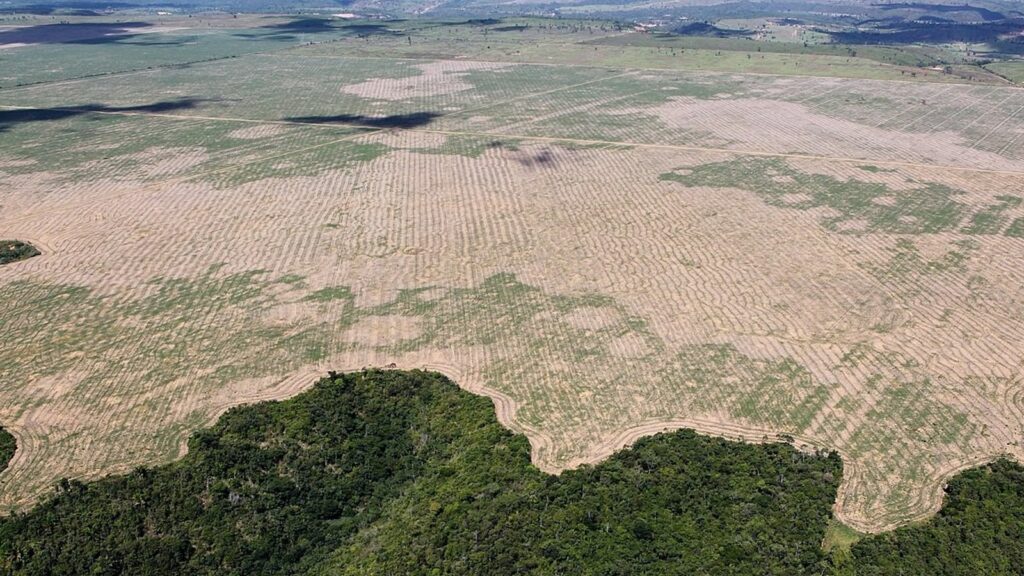
This projection arises from the combination of two main factors: the expansion of agricultural and livestock lands, and the advance of climate change.
The analysis, published in the Proceedings of the National Academy of Sciences, warned that the magnitude of forest loss would trigger an irreversible ecological tipping point.
The team led by geographer Selma Bultan conducted the first study that systematically evaluated the combined effects of land-use change and global warming on the Amazon rainforest.
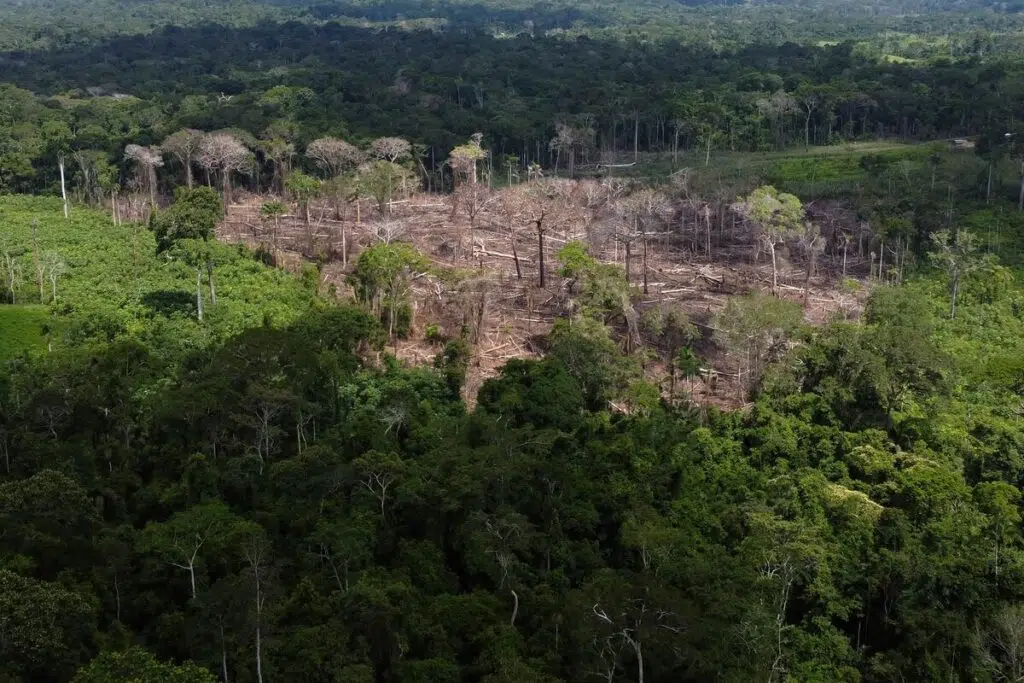
Agriculture and climate: the drivers of deforestation in the Amazon
The researchers analyzed the deforestation that occurred between 1950 and 2014 in the Amazon and projected future scenarios under different climate trajectories.
They used Earth system models with dynamic vegetation to obtain their conclusions.
The results showed that if current trends continue, the Amazon would lose up to 38% of the forest area existing in 1950 by the year 2100.
Of this figure, 25% would be attributable to the conversion of forests into agricultural and livestock lands.
The remaining 13% would correspond to the increase in global temperatures.
The research emphasized that this level of loss would exceed the critical threshold of 20% to 25% of deforestation identified in previous studies.
“This would take us beyond the 20% to 25% threshold, which previous studies warned was the tipping point for the Amazon rainforest,” explained Bultan.
The risk lies in the possibility of abrupt transitions from dense forest cover to open landscapes similar to savannas.
A dangerous temperature threshold
The study identified a particularly concerning global warming threshold: 2.3 °C.
Beyond this limit, forest decline would accelerate non-linearly and significantly increase the risk of an abrupt loss of forests.
Co-author Julia Pongratz, professor of Physical Geography and Land Use Systems at LMU, warned that “based on current policies and firm commitments to climate action, we are heading towards a global warming of at least 2.5 °C“.
This projection places the Amazon in a situation of extreme vulnerability, as the anticipated warming exceeds the identified threshold.
The rainforest harbors one-tenth of the total carbon stored in terrestrial ecosystems.
Its ability to absorb moisture from the ocean and recycle precipitation maintains the region’s water balance.
Additionally, it supports the life of countless species and indigenous communities.
The need for immediate action
The authors highlighted that the Amazon faces increasing pressures due to deforestation and global warming.
“Understanding the individual and combined impacts of these pressures is crucial to anticipate the risk of a widespread forest collapse,” they noted.
“We identified a global warming threshold of 2.3 °C, beyond which forest decline accelerates non-linearly. This is accompanied by a growing risk of abrupt forest loss,” the researchers added.
The research highlighted the urgency of expanding positive advances, such as the increased protection of the rainforest agreed upon at the Belém climate conference.
The experts insisted that “the value of the Amazon rainforest is too immense to risk its existence.”
The work concluded that if urgent and coordinated measures are not adopted, the region would cross an ecological threshold of no return before the end of the century.
The consequences would include the loss of biodiversity, ecosystem functions, and climate regulation capacity on a planetary scale.


