



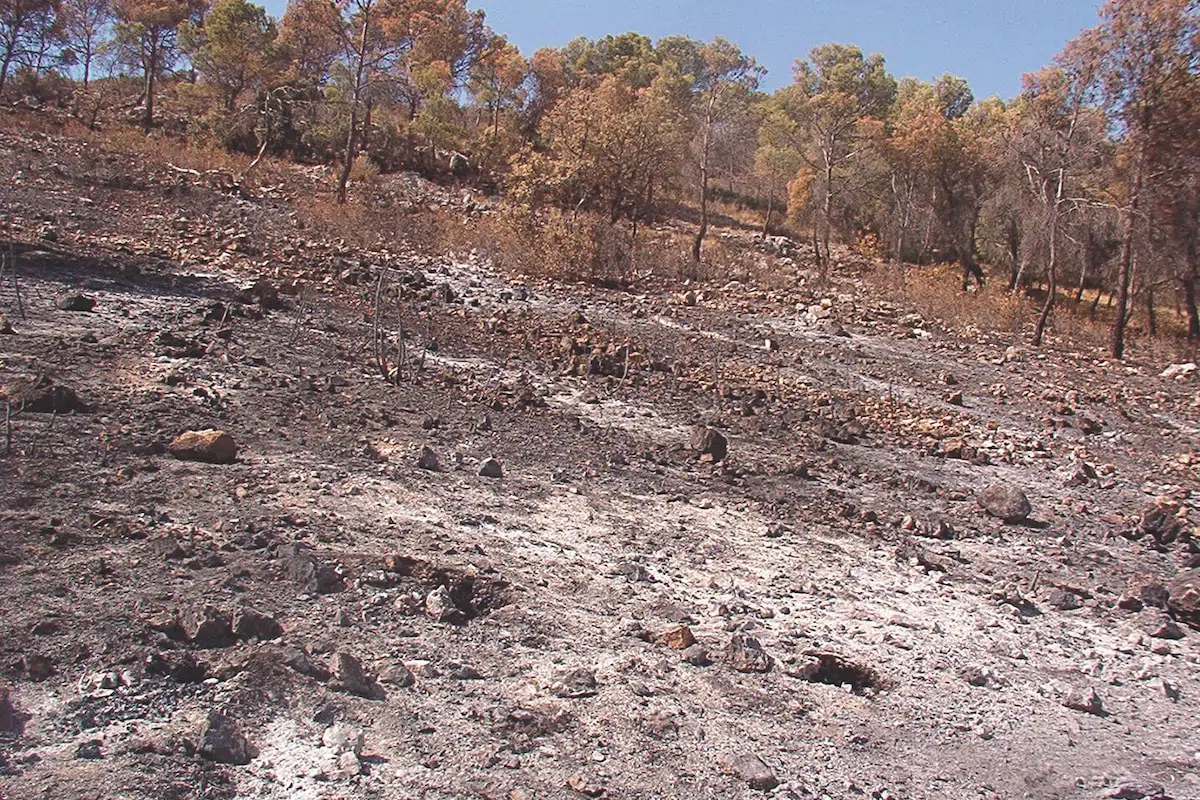
An international study led by the University of Göttingen, in collaboration with the University of Tübingen and teams in Chile and Berlin, reveals that wildfires not only destroy visible vegetation but also leave a persistent mark on the soil that can last for decades, altering its structure and nutrients long after the flames are extinguished.
Prolonged Impact on Soils Due to Wildfires
The research, conducted in central Chilean forests, demonstrates that the effects of fire vary according to the type of ecosystem and climate, posing new challenges for forest recovery in the context of climate change.
The scientific team applied the methodology of chronosequences, comparing soils burned at different times in the past to reconstruct the evolution of their properties. Samples were collected from the first ten centimeters of soil in two national parks: Nahuelbuta, representative of a humid temperate Araucaria forest, and La Campana, characteristic of a Mediterranean sclerophyll forest.
The samples included areas affected by recent fires (two days before) and soils that had experienced fire up to fourteen years ago, contrasted with neighboring soils without fires for several decades.
Detected Changes
The results, published in the journal Catena, show that fires compact the soil, redistribute ashes, and alter nutrient cycles. An increase in bulk density of up to 1.2 g/cm³ was detected, a temporary increase in pH due to ash accumulation, and variations in essential nutrients such as calcium, magnesium, and potassium.
- In humid temperate forests, the soil retained more organic matter and showed faster recovery.
- In Mediterranean forests, the loss of carbon and nitrogen was prolonged, hindering restoration even after more than a decade.
According to researcher Jhenkhar Mallikarjun, recovery “is not homogeneous”: while temperate forests benefit from resilient vegetation and higher rainfall, Mediterranean ones remain degraded for longer.
Implications for Forest Management
Professor Michaela Dippold emphasized that understanding how fire affects nutrient recovery is key to predicting forest response to more frequent fires. This has direct consequences on carbon storage, water regulation, and forest productivity.
Researchers warn that applying identical reforestation strategies across all ecosystems can compromise the effectiveness of restoration investments and the long-term resilience of forests and the communities that depend on them.
Additional Risks: Toxic Metals in the Soil
Fires can also transform soil minerals into dangerous pollutants. Research from the University of Oregon, published in Environmental Science & Technology, indicates that chromium, normally an essential micronutrient, can become chromium 6, a toxic and carcinogenic heavy metal, after exposure to high temperatures.
The study, led by soil scientist Chelsea Obeidy (California Polytechnic State University, Humboldt), showed how chromium 3, harmless under normal conditions, transforms into chromium 6, associated with lung and sinus cancers. This finding highlights persistent environmental risks in fire-prone areas.
Wildfires not only affect the visible surface of forests but leave an invisible and lasting footprint on the soil, altering nutrients, structure, and even the chemical composition of minerals. These findings reinforce the need to design differentiated restoration strategies according to the ecosystem and to consider the hidden risks that fire poses to water quality and environmental health.


