



Investigators from the Australian Museum confirmed the discovery of two species of marsupials that were believed to be extinct for more than 6,000 years.
They were found alive in the rainforests of the Vogelkop Peninsula, Papua (Indonesia), thanks to the joint work of scientists and the elders of the Tambrauw and Maybrat clans, who have protected the habitat for generations.
The identified marsupial species are:
- Long-fingered pygmy possum (Dactylonax kambuayai): a striped marsupial with one finger on each hand that is twice as long as the others, a unique evolutionary adaptation. It was thought to be extinct in Australia since the Ice Age.
- Ring-tailed glider (Tous ayamareunsis): a close relative of the greater Australian glider, it represents the first new genus of marsupial described in New Guinea since 1937. It is smaller than its Australian counterpart, with hairless ears and a strong prehensile tail.
Cultural Importance
The glider is known in Vogelkop as “Tous” and is considered sacred by some clans, who see it as a manifestation of ancestral spirits. Additionally, it plays a role in traditional initiation educational practices.
For the Tambrauw, kauri trees are the origin of animal and human life, reinforcing the spiritual connection with the environment.
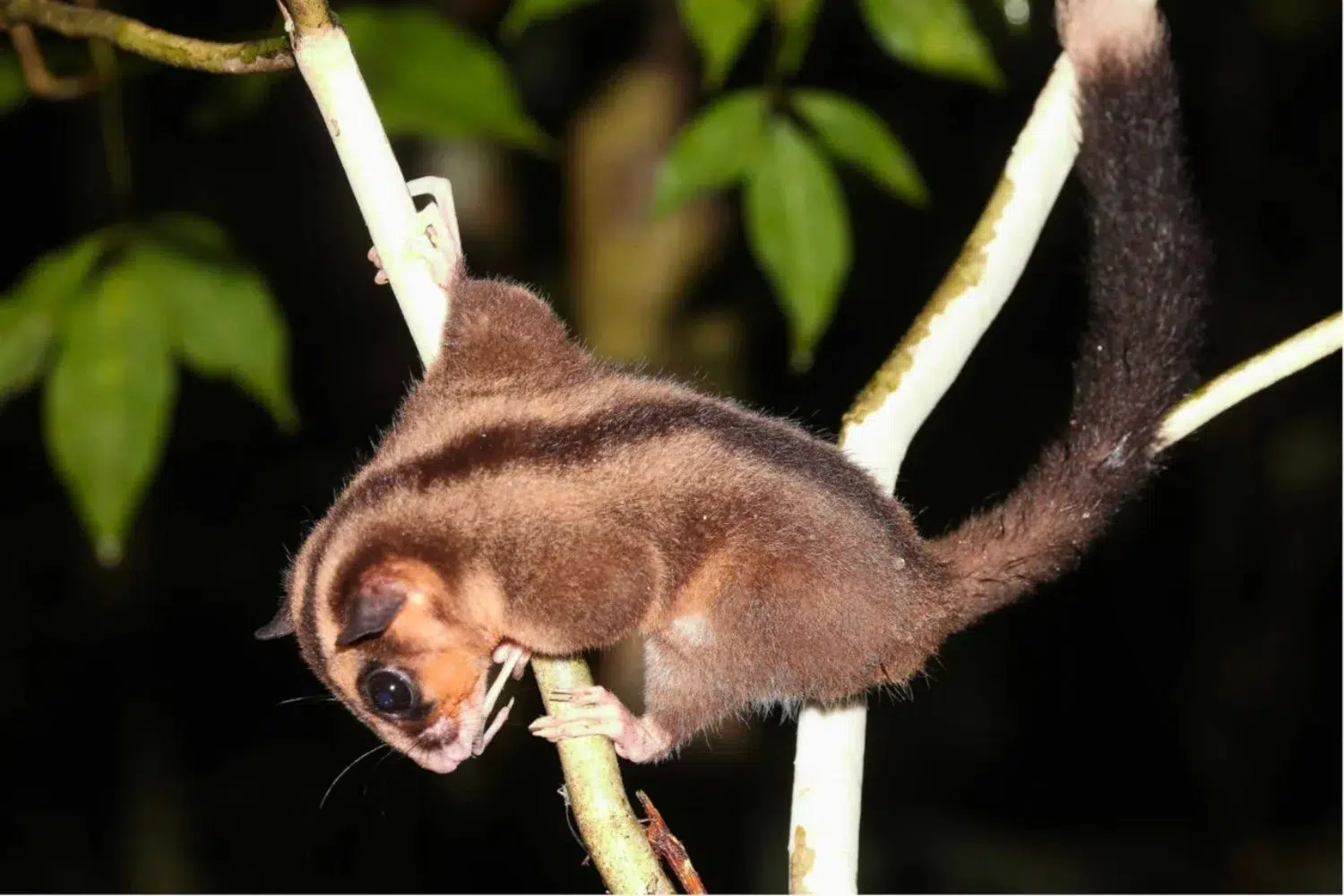
Lazarus Taxa
Both species are part of the so-called “Lazarus taxa”, organisms that seem to have returned from extinction.
The only known specimen of the glider was preserved in the Australian Museum since 1992, although it had been misidentified.
Scientific Implications
The discovery raises crucial questions:
- How many species considered extinct might still exist in remote forests?
- What other animals and plants might be part of this hidden biodiversity?
- How can science collaborate with local communities to protect habitats and discover new species?
Current Threats
Although rediscovered, these species face risks:
- Logging: a direct threat to the glider, which nests in hollows of tall trees.
- Human pressure: agricultural expansion and deforestation in Papua.
- Climate change: alteration of tropical ecosystems.
The discovery of the long-fingered pygmy possum and the ring-tailed glider in Indonesia is a reminder that nature still holds secrets.
Beyond their scientific value, these species reinforce the importance of collaboration between science and indigenous communities to protect biodiversity. They are a symbol of hope and the urgent need to conserve tropical forests in the face of global threats.


