



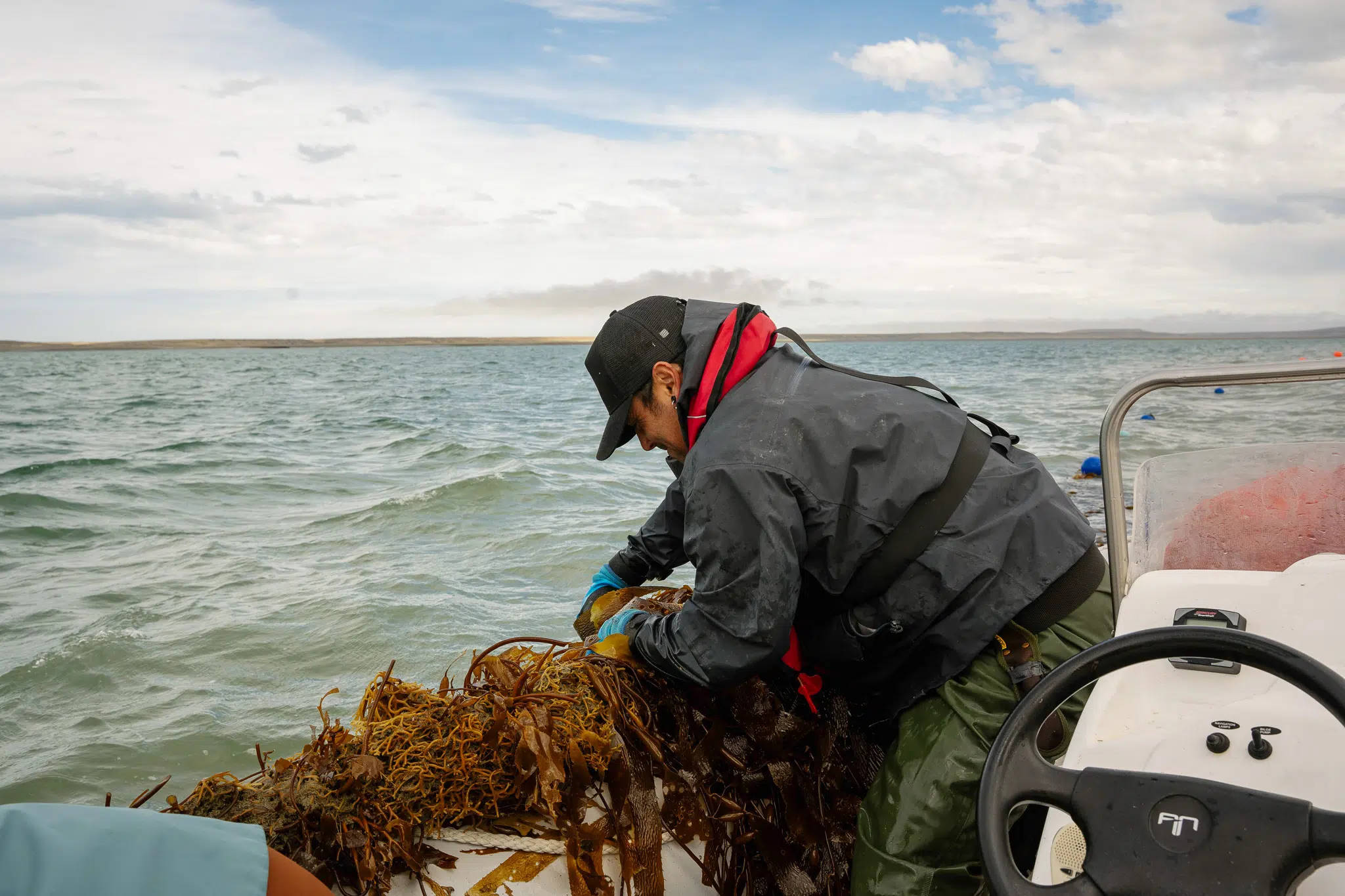
In the bay of Puerto San Julián (Santa Cruz), the first seaweed harvest in Argentina was carried out, a project led by the foundation Por el Mar that aims to pave the way for sustainable seaweed farming in Patagonia.
The cultivated species is Macrocystis pyrifera, known as cachiyuyo, a macroalga that forms underwater forests and plays a key role in marine ecosystems.
Project Development
The experience began two years ago with the cultivation of microscopic spores in a laboratory adapted in an old fish processing plant. After studies of water, sediment, and infauna, development in the San Julián bay was advanced.
In a few months, the seaweeds reached the expected size and allowed the first harvest, intended for the experimental production of agricultural biostimulants and pellets for animal feed.
Uses and Potential of Cachiyuyo
Cachiyuyo has multiple applications:
- Agriculture: natural biostimulants that improve soil quality without adding artificial nutrients.
- Industry: fertilizers, cosmetics, pharmaceutical products, and dietary supplements.
- Livestock: pellets for livestock feed, especially useful in Patagonia during winter.
Beyond its economic value, the project has a strong environmental goal: macroalgae forests produce oxygen, capture carbon, and support much of the coastal biodiversity. Scientific studies indicate that Patagonia’s algae forests could be considered global climate refuges.
Regulatory Framework and Sustainability
Since 2024, Tierra del Fuego has a law that establishes guidelines for the conservation and sustainable management of macroalgae marine forests. This regulation promotes seaweed farming as a productive alternative to indiscriminate extraction, ensuring the protection of ecosystems.
Regional Impact
The seaweed marine farms in Santa Cruz represent an opportunity for:
- Productive diversification: generate local employment and offer alternatives for artisanal fishermen.
- Blue economy: promote new sustainable activities linked to the sea.
- Conservation: prevent the overexploitation of natural algae forests.
- Innovation: apply cultivation techniques like longline, facilitating community participation.
Key Points of Importance
- Sustainability and conservation: protects local ecosystems and marine biodiversity.
- Economic development: diversifies the regional economy and generates employment.
- Added value: raw material for biostimulants, fertilizers, and cosmetics.
- Positive environmental impact: captures carbon and produces oxygen, mitigating climate change.
- Regulatory framework: the “Algae Law” regulates and enhances this sustainable industry.
The first cachiyuyo harvest in Puerto San Julián marks a milestone in Argentine aquaculture. This pioneering project combines productive innovation, environmental conservation, and local economic development, positioning Patagonia as a leader in sustainable macroalgae cultivation.



