



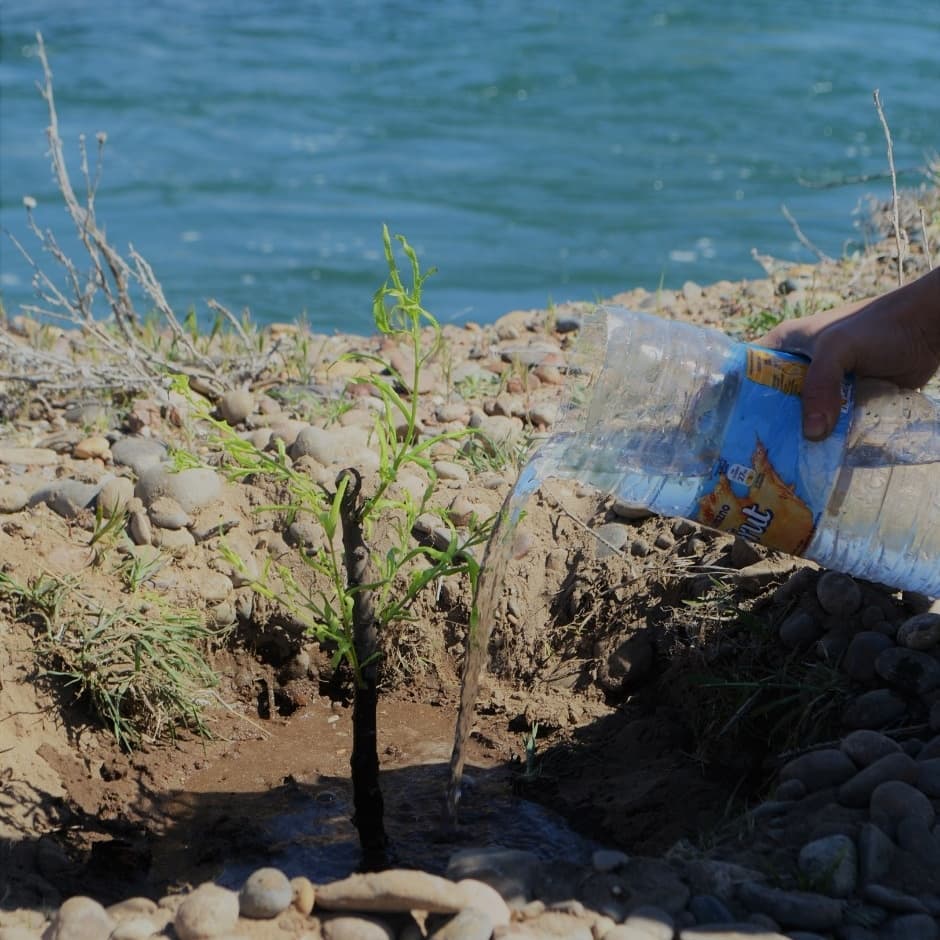
In 2018, UFLO University presented its project “Restoration Networks of the Creole Willow (Salix humboldtiana)” to the National Plan for the Restoration of Native Forests. Eight years later, the result is clear: more than 450 specimens planted in the Alto Valle, successfully bringing back a species that was on the brink of extinction in Northern Patagonia.
The Creole Willow is the only truly native willow of the region. For millennia, it stabilized riverbanks, provided refuge for wildlife, and was part of the ecological identity of the Limay River. However, in recent decades its presence drastically reduced, almost disappearing.
Applied Scientific Innovation
What distinguishes this project is that it did not remain theoretical. The Laboratory of Edge Ecology (LEB) at UFLO developed its own method of accelerated reproduction in the laboratory:
- Collection of cuttings from georeferenced native specimens.
- Rooting control under laboratory conditions.
- Production of seedlings ready for implantation in record time.
This system allowed the transition from slow restoration to a real operational scale. “Innovation was fundamental,” notes the LEB team.
Collaborative Environmental Governance
The Creole Willow Restoration Network became a national conservation model, integrating science, local governments, and the community:
- Science: UFLO, INTA, and CONICET provided technical assistance and genetic rescue.
- Territory: municipalities of Neuquén, Plottier, Centenario, and Cipolletti offered nurseries and technical teams.
- Community Action: NGOs, environmental guards, foundations, and volunteers participated in planting days.
Concrete Results
- 450+ trees planted in the Alto Valle.
- 30 additional specimens in Península Hiroki (2025).
- 4 municipalities actively collaborating.
- 3 scientific organizations working in a network.
- Dozens of academic publications generated.
- 1 native species rescued from the brink of local extinction.
Each implanted tree is now a source of new cuttings, each surviving specimen proves that restoration works, and each volunteer becomes an ambassador for conservation.
Expansion and New Initiatives
The project has germinated into other actions:
- The Secretariat of Environment of Neuquén maintains a permanent restoration program for Salix humboldtiana.
- The project “Native Willow”, driven by leaders from companies, provincial government, and civil society, seeks to consolidate the Creole willow as a cultural and environmental emblem of the region.
The Creole Willow is not just a tree: it is a symbol of environmental resilience. The experience shows that when science, the state, and the community work together, it is possible to reverse degradation and rescue native species.
Northern Patagonia now has a replicable model of ecological restoration that inspires the entire country.


