



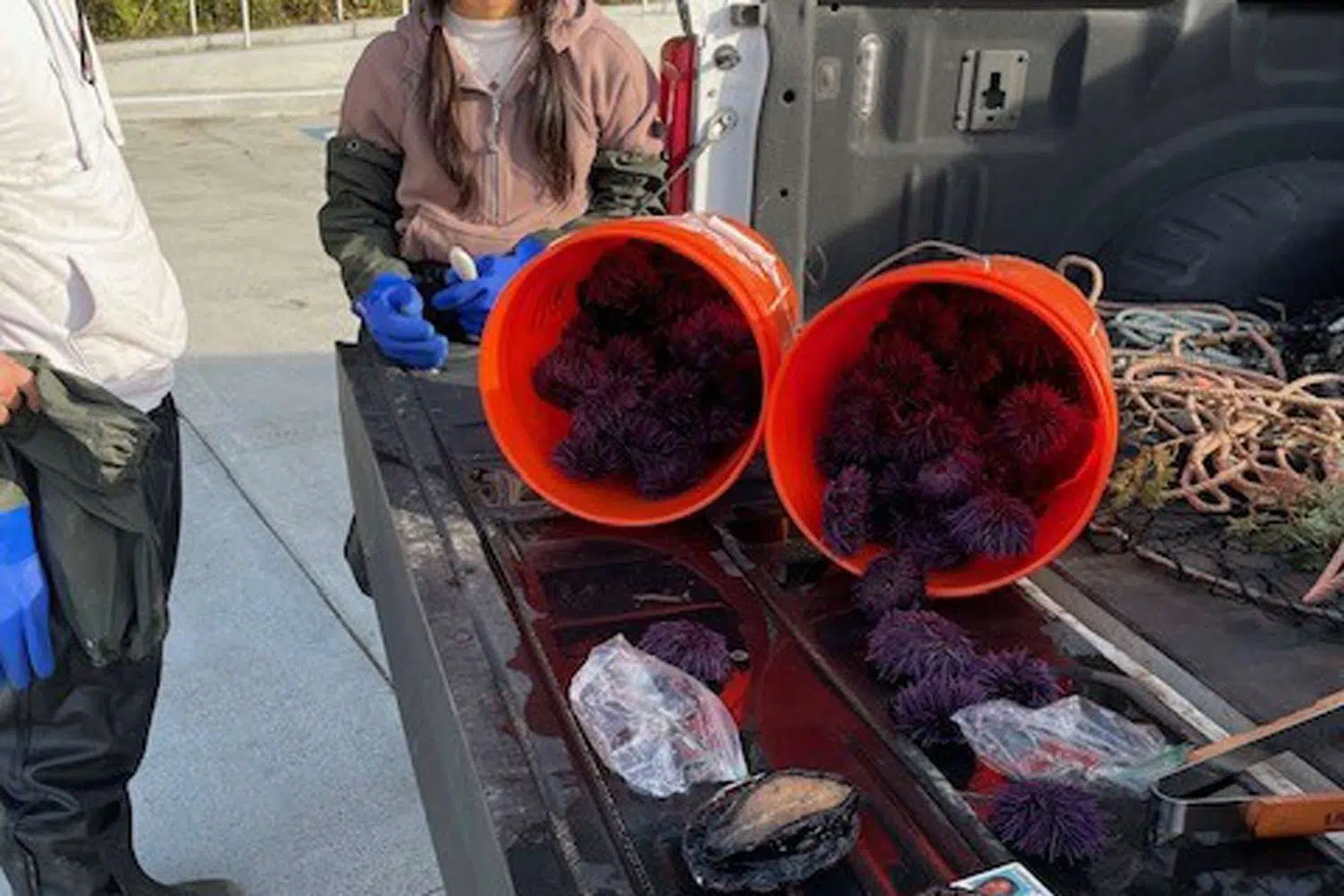
The California Department of Fish and Wildlife (CDFW) cited a woman after discovering her with two critically endangered abalone specimens hidden in her clothing at Van Damme State Park, Mendocino County. The discovery occurred on February 5, 2025, during a check in the protected coastal area.
The extraction of abalone has been prohibited throughout California since 2017, and this case reinforces the monitoring of threatened marine species on the west coast of the United States.
How the intervention occurred
A CDFW agent, using a long-range telescope, observed the woman and a companion collecting marine organisms in the intertidal zone. The agent witnessed the woman hiding a specimen in her pants, prompting an inspection in the park’s parking lot.
During the inspection, the involved party handed over a first specimen and, after the arrival of a female agent, handed over a second one. The companion was inspected but did not carry protected species, so he was not sanctioned.
Critical state of the abalone
The abalone is a marine mollusk that for decades supported a fishing and gastronomic industry in California. However, the seven species present on the Pacific coast, including the red variety (Haliotis rufescens), are classified as “critically endangered” by the IUCN.
The population collapse is attributed to:
- Marine heatwaves.
- Decline of kelp forests, their main food source.
- Diseases and habitat loss.
The California Fish and Game Commission determined the total closure of recreational and commercial fishing in 2017. The ban will extend, at a minimum, until 2036, according to current regulations.
Legislation and penalties
State regulations establish that any person who captures, possesses, or markets abalone commits a serious offense. Penalties include:
- Fines of up to 40,000 dollars.
- Prison sentences of up to one year.
Only authorized personnel can handle abalone in scientific or conservation contexts.
Surveillance and environmental education
The CDFW maintains regular patrols and a confidential reporting system (CalTIP) to detect illegal activities. Additionally, it disseminates information campaigns on the importance of respecting the ban and protecting marine biodiversity.
The recovery of the abalone depends on the reduction of illegal captures and the restoration of marine habitats. The policy of prolonged bans is supported by the scientific community and international conservation organizations.
The case in Mendocino reinforces the message of zero tolerance towards the capture of critically endangered species in California. The protection of the abalone is a priority to preserve the ecological integrity of the Pacific marine ecosystems and ensure their long-term recovery.

