



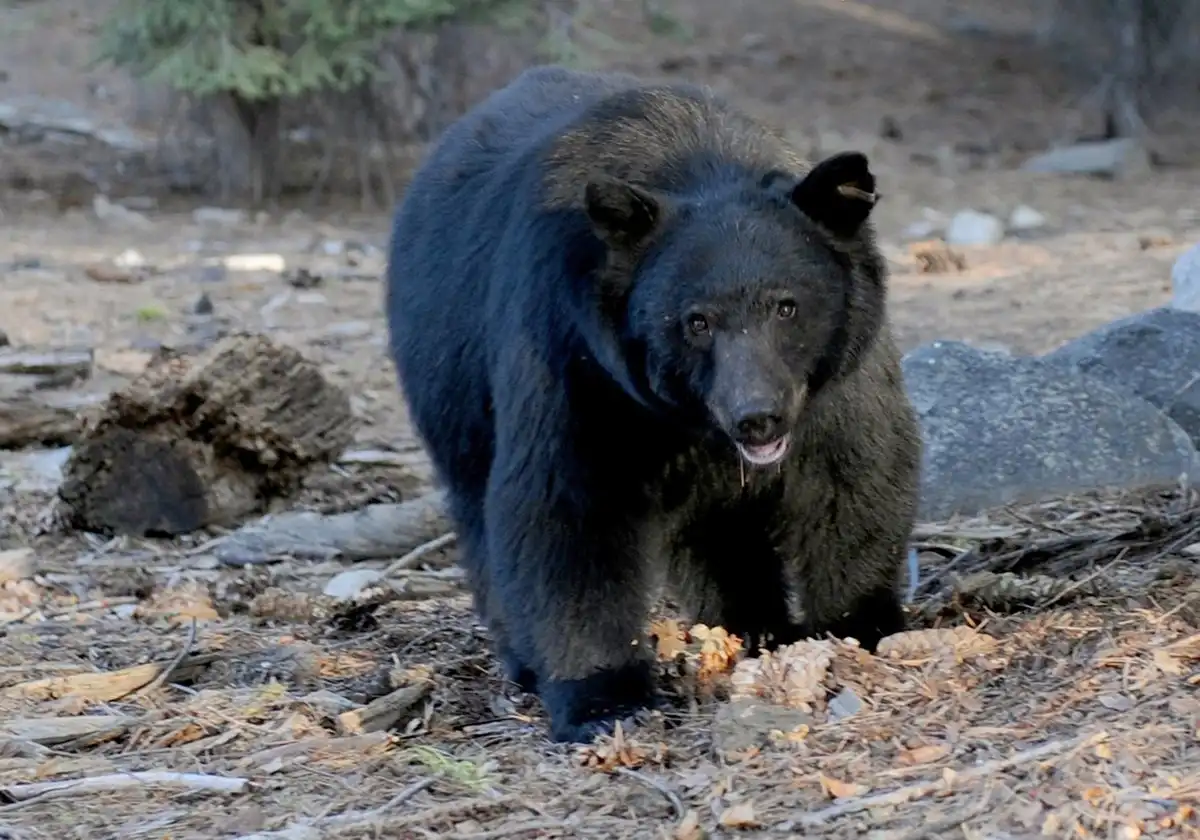
The organization **Bear Warriors United** filed a **lawsuit** against the **Florida Government** to stop the **hunting of 187 black bears**, authorized by the **Fish and Wildlife Conservation Commission (FWC)**.
The legal action, filed in the **Tallahassee Circuit Court**, aims to **halt the hunting season scheduled for December**, the first in ten years.
Legal and scientific arguments against hunting
Conservationists denounce **lack of updated data and non-evidence-based management**.
The **NGO** argues that the **Black Bear Management Plan** is not based on recent scientific studies and that **the hunting authorization will cause irreparable damage** to the species.
The current population is estimated at **4,000 individuals**, but **there is no updated census**, casting doubt on the need to control the population through hunting.
“The decision does not respond to technical criteria or the ecological reality of Florida’s black bear,” affirm the plaintiffs.
Controversial background and current risks
The last hunting season, in **2015**, was prematurely suspended after the **death of 304 bears in just two days**, including **38 females with cubs**.
Although the current plan includes **stricter regulations**, activists fear a repeat of a chaotic scenario and that it **jeopardizes the recovery of a species that was endangered until 2012**.
Ecological functions of the black bear in Florida
Black bears play key roles in ecosystems:
- They **disperse seeds** by consuming fruits and berries, favoring plant regeneration
- They **act as large carnivores**, regulating populations and maintaining ecological balance
Their presence is essential for the **biological diversity and environmental health** of Florida’s forests.
Conflicts with humans and management alternatives
The increase in encounters demands **non-lethal solutions and territorial planning**.
**Urban expansion** and **population growth** have increased **sightings in residential areas**, including a **fatal attack in May 2025**. However, experts propose **preventive measures** such as:
- Use of bear-resistant trash cans
- Improvement in waste management
- Community education and territorial planning
Ecological justice and responsible conservation
The lawsuit aims to **protect a native species** and promote consistent policies.
Activists demand that the state **comply with its own policy of protecting native species** and **prioritize science-based and environmental ethics-based solutions**.
Hunting, they argue, **is not a valid management tool**, but a **simplistic response to a complex problem**.
*Cover photo: Prensa Libre*



