



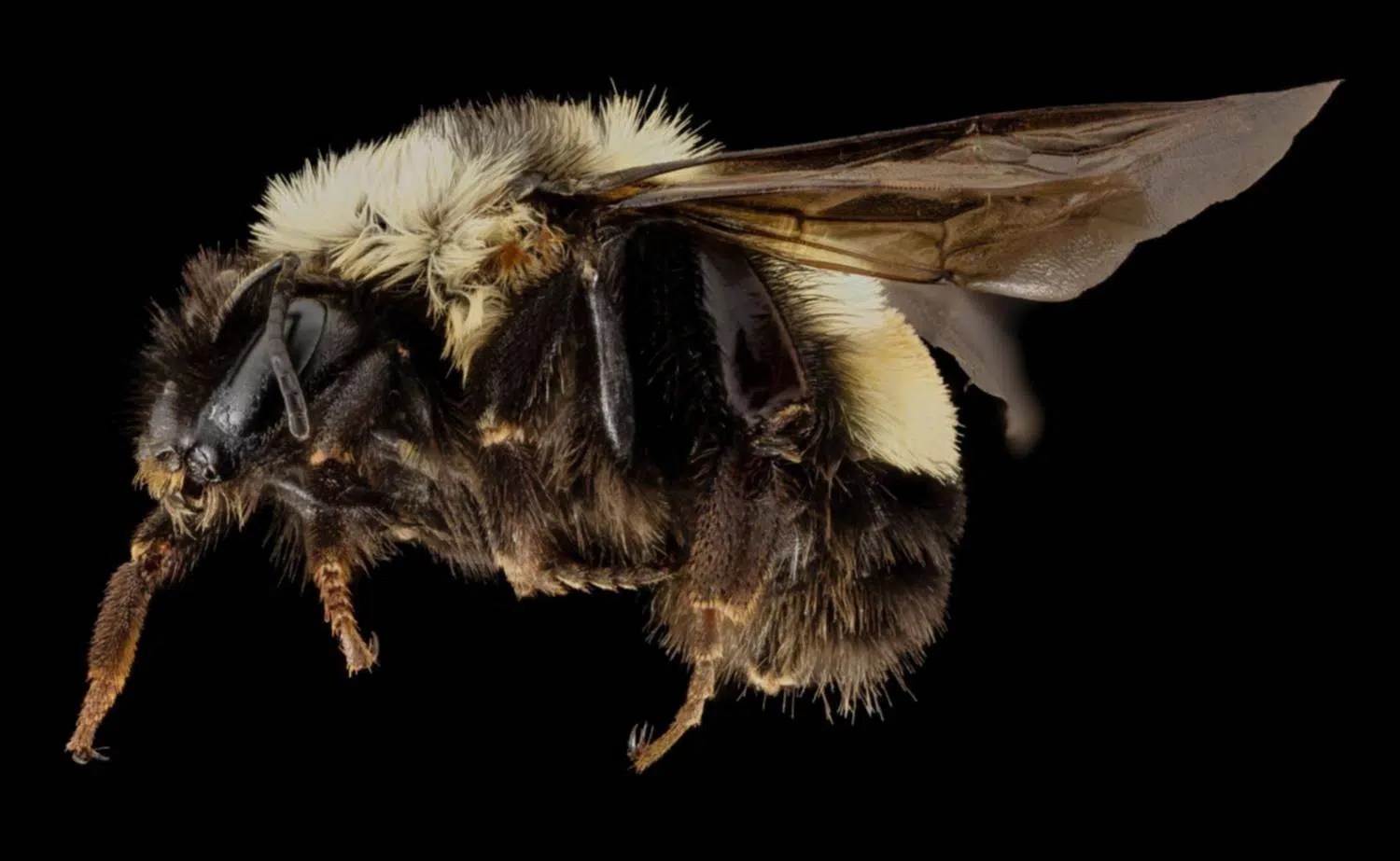
The Franklin’s bumblebee (Bombus franklini), an endemic species of the southern Oregon and northern California, has disappeared from the wild since 2006, with no new sightings recorded.
Its extinction, shrouded in mystery for years, has been clarified by a study published in the journal PNAS, which rules out diseases as the main cause and points to a combination of low genetic diversity, inbreeding, and extreme environmental events.
A limited geographical range and a fragile evolutionary history
This hymenopteran from the Apidae family inhabited a strip of just 34,437 km², making it one of the most vulnerable pollinators on the continent.
Between 1998 and 2005, observations dropped from 94 specimens to just one, before disappearing completely in 2006, when it was last seen on Mount Ashland, Oregon.
Museum DNA: reconstructing the genetic past
The team led by Rena Schweizer (USDA) and including Lynn Kimsey and the late expert Robbin Thorp, analyzed DNA from females collected between 1950 and 1998, preserved in the Bohart Museum of Entomology. The results revealed:
- Extremely low genetic diversity
- High levels of homozygosity, evidence of repeated inbreeding
- Population decline started over 11,000 years ago, in the late Pleistocene
Fires and droughts: accelerators of an announced extinction
Although the collapse began long before modern human activity, researchers identified that in the last 400 years, factors such as forest fires and prolonged droughts worsened the situation, affecting its restricted habitat.
“We found no evidence that pathogens were responsible for the initial decline,” the authors noted.
Pollination habits and life cycle
Described by Henry J. Franklin in 1912, this bumblebee pollinated species such as:
- California poppies
- Lupines, clovers, wild roses, mint, and peas
Its annual cycle extended from May to September, but today it is conspicuously absent from western U.S. ecosystems.
Lessons for pollinator conservation
The case of Bombus franklini demonstrates that extinctions can be gestating for millennia, and that silent genetic loss can be as lethal as visible threats. Scientists recommend:
- Complementing genetic studies with field monitoring
- Strengthening surveillance of native species with reduced geographical ranges
- Developing preventive strategies to avoid similar collapses
A warning for the future of biodiversity
The disappearance of Franklin’s bumblebee was not solely the result of recent human action, but it was accelerated by contemporary environmental factors.
This case provides tools to anticipate and mitigate extinctions in other pollinators that perform essential functions in the reproduction of wild plants and agricultural crops.


