



Hundreds of jellyfish invaded the beaches of Puerto Madryn at the start of the summer season and surprised the first bathers who arrived at the coast of Chubut.
The phenomenon forced extreme precautions to avoid annoying and painful stings.
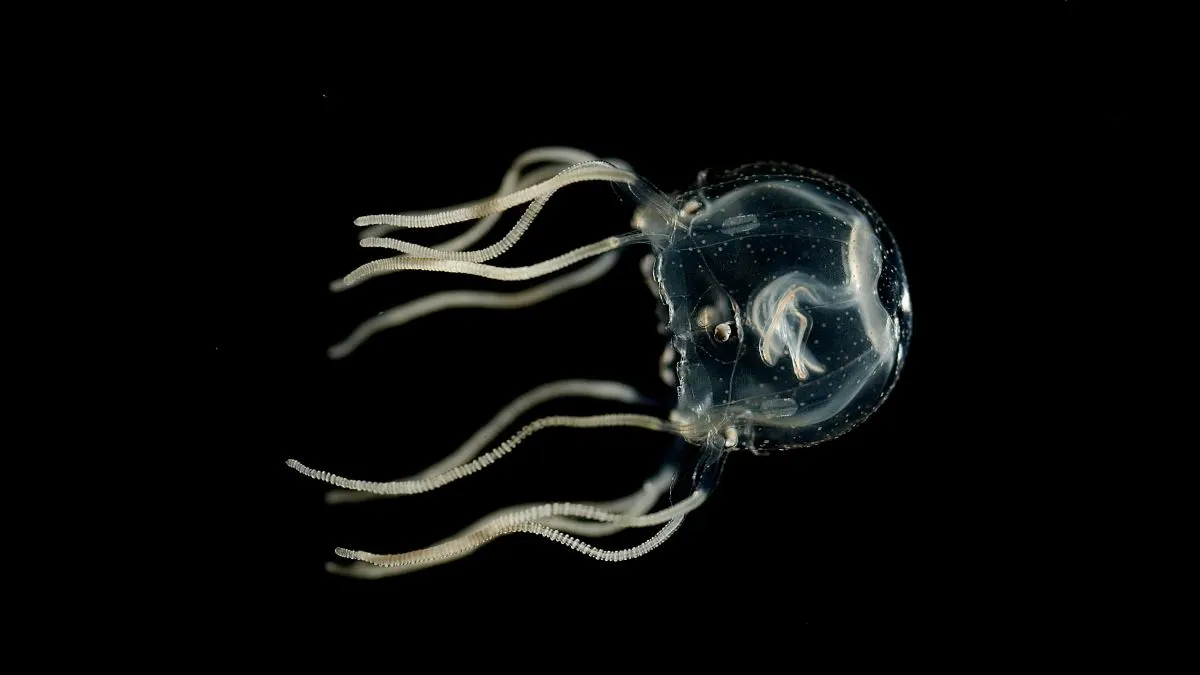
The species that gathered on the shores over the last weekend is the Chrysaora plocamia, one of the largest inhabiting the Golfo Nuevo.
Pedro Barón, a biologist from the Oceanography Laboratory of Cenpat-Conicet, explained that this bloom phenomenon does not occur every year.
“This bloom phenomenon does not happen every year. In certain summers yes, in certain summers no,” indicated the scientist.

Jellyfish on the beaches of Cubut, a phenomenon that responds to environmental conditions
The jellyfish that appeared in large quantities on the beaches of Chubut are due to the abundance of plankton in the area.
Barón emphasized that the density this year is greater than that of the previous year.
“Jellyfish feed on plankton. In years where there is a lot of plankton, many more larvae survive and form very dense populations, like the ones we are seeing now on the beaches,” added the researcher.
This phenomenon occurs when the conditions are favorable during the larval stage.
The jellyfish that appeared on the beaches have an annual life cycle that alternates between two phases: a microscopic one in autumn and winter, and a macroscopic one in spring and summer.
“They generally appear in large quantities in December and the peak occurs in January or February. From April onwards, they are no longer seen on the coast,” detailed Barón.
Historical background of the phenomenon
The Chrysaora plocamia is a common species of jellyfish in the Golfo Nuevo, scientifically recorded since the 1970s on the beaches.
The biologist recalled three previous occasions when the Madryn beaches were filled with these “sea nettles“:
- Significant bloom in 1978
- Massive appearance in 1998
- Invasion between 2000 and 2001, when they even filled the beaches
What to do in case of a jellyfish sting
Although contact with their venom can cause burning, Barón clarified that it is not among the most dangerous species.
“It has filaments with stinging cells that release a venom to capture prey. It causes itching and discomfort, but not severe burns like other species,” he indicated.
In the event of suffering a jellyfish sting on the beaches, the expert recommended following these steps:
- Get out of the water immediately
- Remove the filaments with an object, not with your hand
- Rinse with seawater
- Apply cold or diluted vinegar
- Consult a doctor if possible
Hydrocortisone creams, such as Hipoglós or Demacort, can also be used to relieve inflammation.
“There is no need to fear them, but respect and caution are necessary. They are part of the marine system and their presence is due to natural processes that have been repeating for decades,” concluded the specialist.


