



A court has issued a prison sentence and a financial penalty against a citizen for the importation and commercialization of remains of protected wildlife, operating through a global network with connections in the United States, Indonesia, and Cameroon.
The illicit trade of endangered animal parts resulted this month in the conviction of Adam Bied. The Massachusetts resident received a sentence of eight months in prison and a fine of 75,000 dollars after being found guilty of illegally importing and selling skulls, skins, and claws.
The judicial process, concluded on April 2 at the Boston District Court, highlighted the damage these clandestine structures inflict on species on the brink of extinction, according to the U.S. Fish & Wildlife Service (USFWS).
Bied admitted his guilt on January 5, 2026 for four felonies: two counts of conspiracy to violate the Lacey Act and the smuggling statute, and two others for trafficking under the cited law. In addition to imprisonment, he was sentenced to two years of supervised release and the forfeiture of all seized items.
Investigation and dismantling of the international network
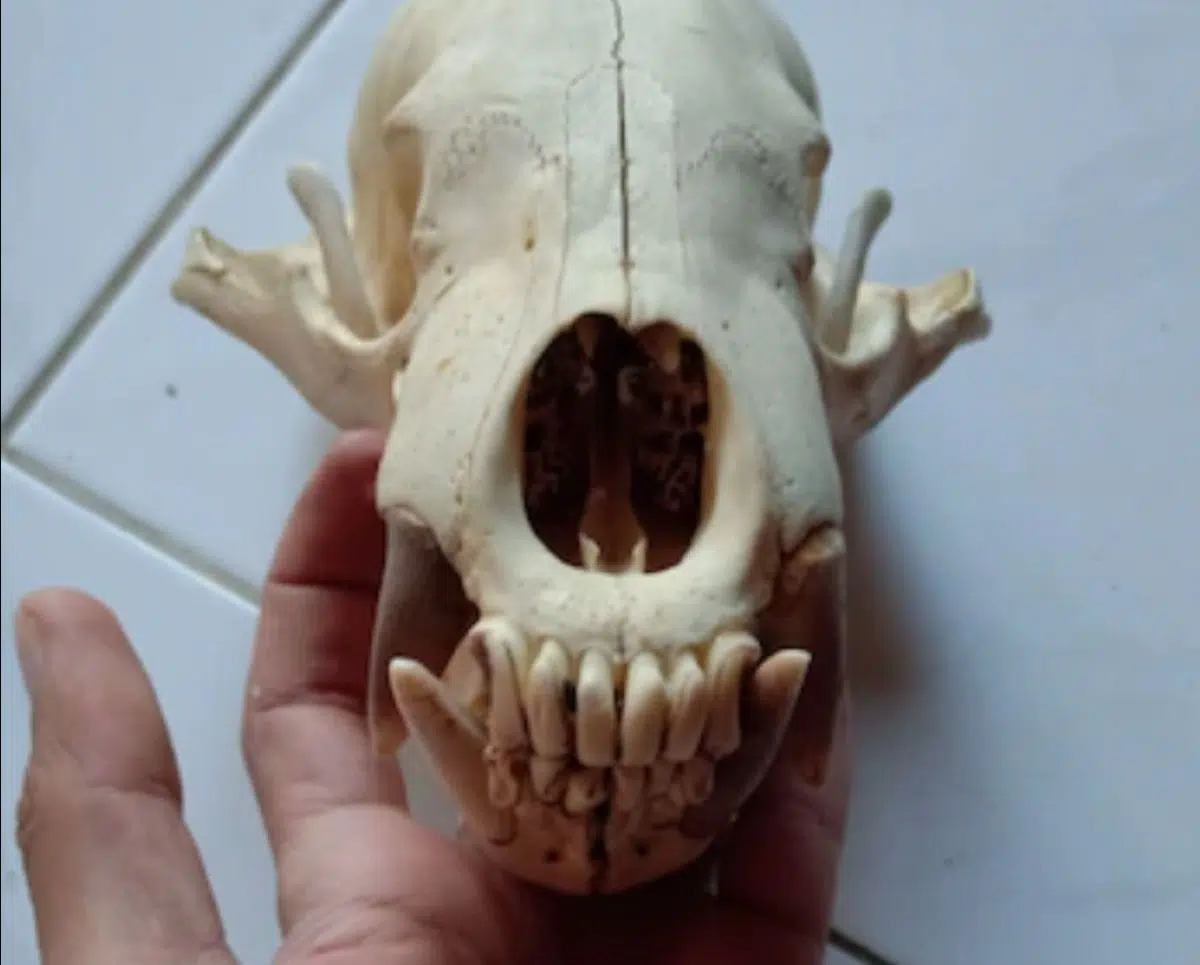
The investigation began in March 2021, when authorities intercepted a package at the postal hub in Louisville, Kentucky. Through an X-ray inspection, a skull was detected hidden beneath ceramic crafts.
Agents from the Wildlife Inspection Office confirmed it was the remains of an orangutan —a species in critical danger— and three big cats.
The shipment, originating from Indonesia, lacked the permits required by the Endangered Species Act and the international treaty CITES (Convention on International Trade in Endangered Species).
The subsequent investigation showed that since 2018, Bied had transacted hundreds of protected animal parts, lying about their origin.
The accused coordinated with suppliers in Cameroon and Indonesia, who hunted or collected specimens to meet his demand.
Among the extensive list of affected species are the pangolin, narwhal, tiger, African lion, jaguar, polar bear, elephant seal, and various primates. To strengthen the evidence, undercover agents conducted controlled purchases of leopard skulls, confirming they came from illegal shipments.
Recruitment strategies and luxury market
Bied recruited his suppliers by exploiting situations of poverty abroad, inducing them to capture local wildlife. In his communications, the convicted demanded pieces in perfect condition, explicitly requesting large skulls without bullet holes to maximize their commercial value.
The network’s focus was on species with vulnerable populations, such as the orangutan. These apes are protected under Appendix I of CITES, the most restrictive level, due to their low reproduction rate and habitat loss.

Authorities emphasized that this type of organized exploitation nullifies global conservation efforts.
Destination of seized goods and education
As part of his judicial agreement, Bied relinquished ownership of the confiscated items. A portion of the remains will be repatriated to Indonesia in an effort of international cooperation. The rest will be sent to the National Wildlife Property Repository in Colorado.
This federal institution uses the seized items for scientific research, police training, and environmental education programs.
Prevention and citizen reporting
The USFWS emphasized the importance of being an informed consumer to curb this market. The agency urges citizens to verify the legality of any animal-origin product before purchasing it and to use official channels to report crimes against wildlife, even if they occur on digital platforms.
The resolution of this case seeks to mitigate the devastating impact of illegal trade on the planet’s biodiversity.



