



The recovery program for the brown bear (Ursus arctos) in the Pyrenees, initiated in 1986, marks 40 years with a count of 108 specimens distributed over 7,100 km².
Monitoring conducted by the Transboundary Brown Bear Group (GSTOP) —which includes the Generalitat of Catalonia, the Conselh Generau d’Aran, and the governments of Andorra, France, Aragon, and Navarre— confirms sustained growth compared to previous censuses, although with warning signs in reproduction.
Population Evolution
Data shows that in 2025, 108 bears were counted, compared to 96 the previous year. However, the birth rate dropped significantly:
- In Catalonia, only 3 cubs were born.
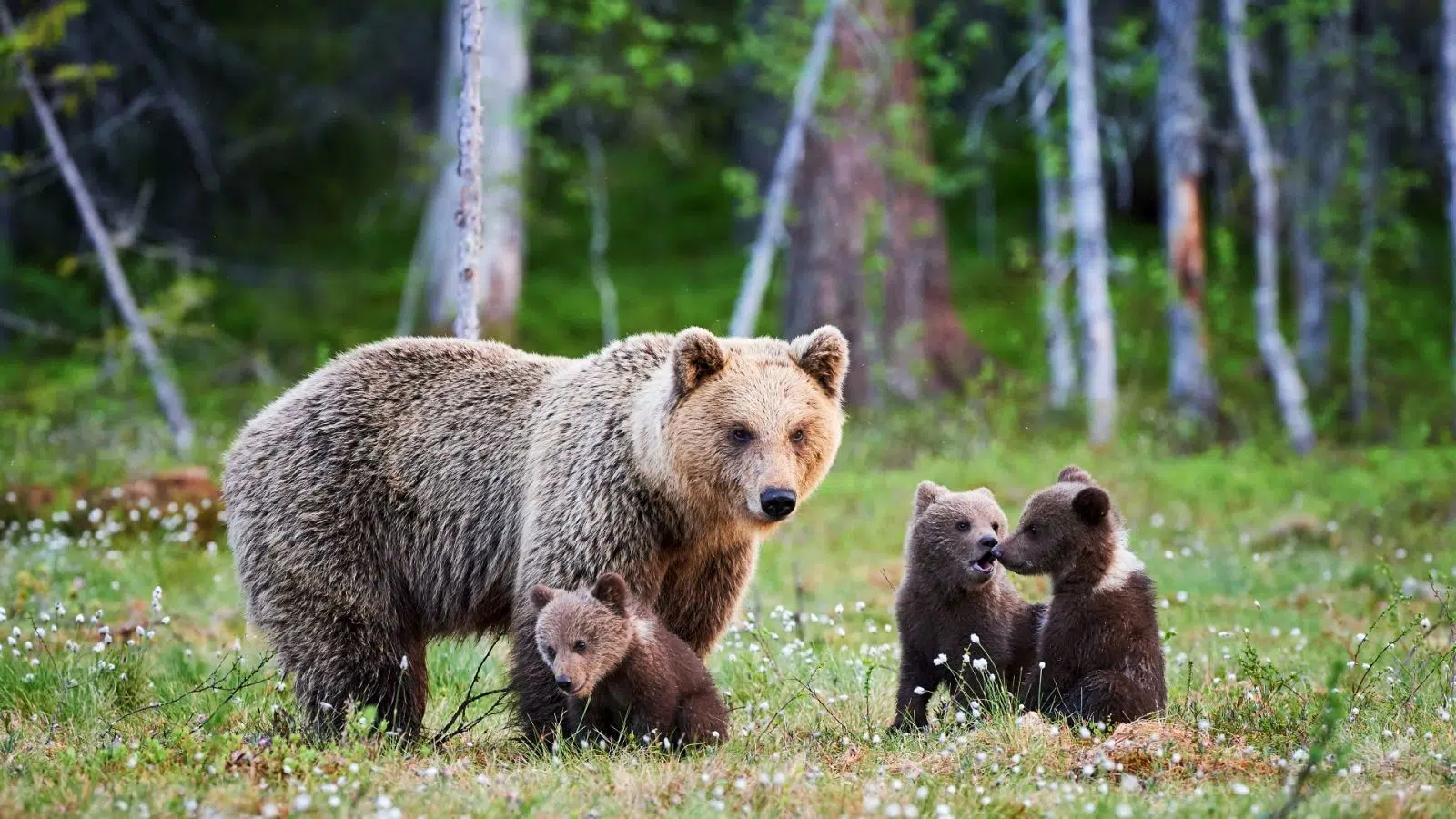
- Throughout the Pyrenees, the number was 8 cubs, well below the 24 recorded in 2024.
The report warns that inbreeding could be a key factor: nearly 90% of current bears descend from the male Pyros, which limits genetic diversity.
Distribution by Sex and Age
Of the total specimens identified in 2025:
- 54 females (35 adults, 15 subadults, and 4 cubs).
- 52 males (24 adults, 25 subadults, and 3 cubs).
- 2 individuals with undetermined sex.
In Catalonia, the census stands at 54 bears, with an expansion of the distribution area to 1,963 km², 150 more than in 2024.
Mortality and Disappearances
During 2025, 10 specimens were reported dead or missing, while another 5 were not detected, although they are not yet officially considered missing.
Mortality and lack of detection are factors that concern technicians, as they affect the stability of the population.
Genetic and Reproductive Context
Since 1996, the GSTOP has recorded the reproductive participation of 35 females and 21 males, in addition to 15 litters from unidentified males. For 2026, it is estimated that between 29 and 31 females could be in a condition to reproduce.
The French report Etat des lieux de la population d’ours (Pays de l’Ours–Adet) highlighted in 2024 that most current bears descend from only three individuals from Slovenia, which indicates a poor and deteriorating genetic situation.
Occupied Territory
The total area occupied by the brown bear in the Pyrenees is estimated at 7,100 km², a reduction of 100 km² compared to 2024, although similar to that of 2023. The general trend since 1996 is of sustained expansion, reflecting demographic growth, although with recent fluctuations.
The recovery program for the brown bear in the Pyrenees has achieved remarkable progress over four decades, transitioning from a critical population to more than a hundred specimens. However, current challenges —such as low birth rates, inbreeding, and mortality— highlight the need to strengthen conservation strategies, diversify genetics, and ensure habitat protection. The future of the bear in the Pyrenees will depend on maintaining a balance between territorial expansion and genetic sustainability.


