



Solar energy has become the driving force of the energy transition, but the dominant technology —silicon panels— presents high environmental costs: energy-intensive manufacturing processes, use of hazardous chemicals, and a recycling process that is still unresolved. In this context, organic solar cells emerge as a lighter and more flexible alternative, although their Achilles’ heel has always been the rapid degradation.
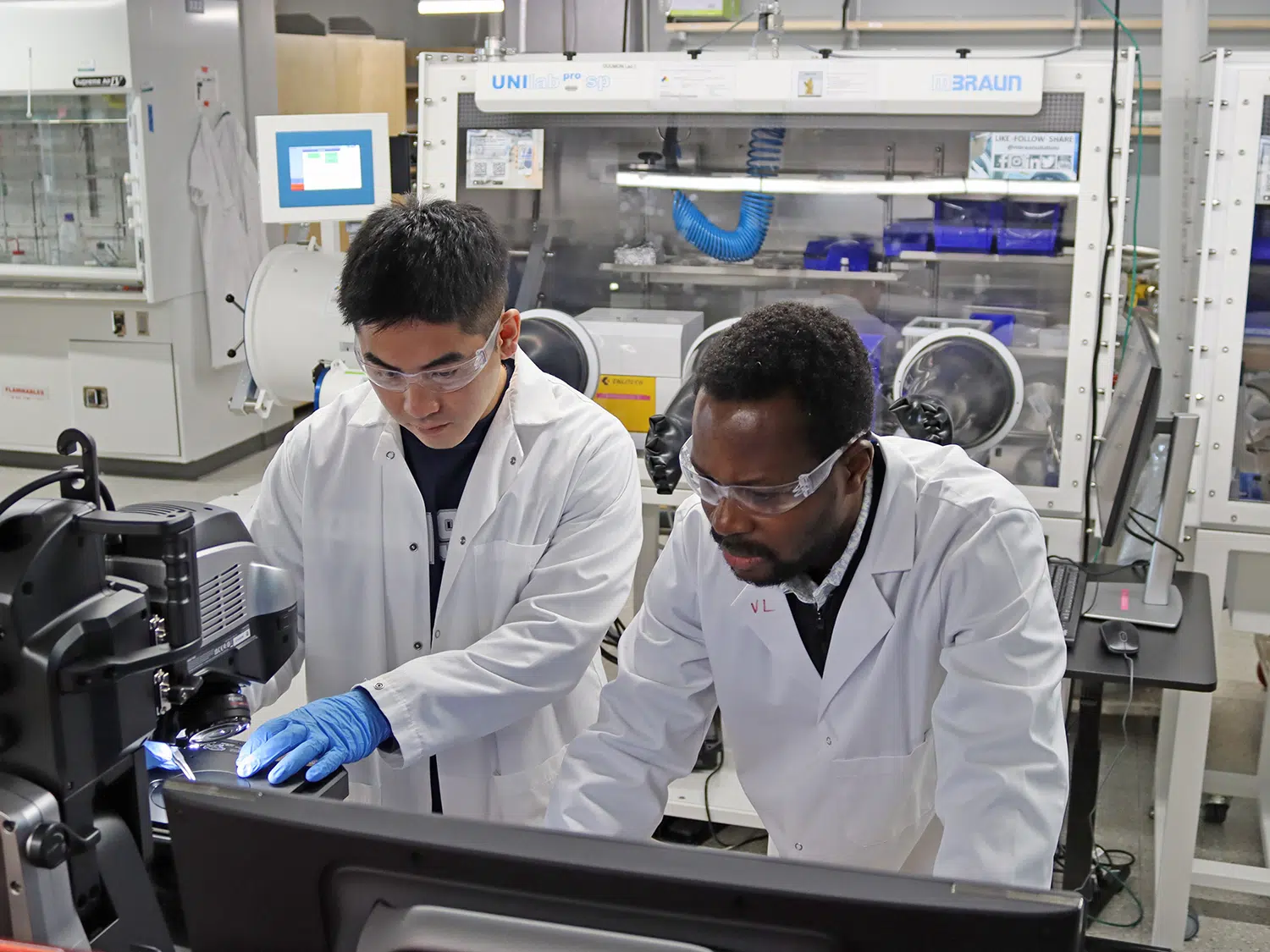
A team from Penn State University, led by Professor Nutifafa Doumon and PhD candidate Souk Yoon “John” Kim, has found a promising way to improve their stability: the use of a solid additive called 9,10-phenanthrenequinone (PQ).
The role of the PQ additive
PQ is a carbon and hydrogen-derived compound, economical, commercially available, and with a safer environmental profile than other common additives in organic photovoltaics. Its incorporation into the active layer of the solar cell —where radiation is absorbed and electricity is generated— reduces degradation processes and improves efficiency.
The study, published in ACS Materials Au and featured in the special issue 2025 Rising Stars in Materials Science, demonstrates that this approach not only increases conversion efficiency but also extends the devices’ lifespan.
Test results
The tests were conducted under demanding thermal conditions, simulating realistic operating scenarios:
- Devices with PQ retained more than 93% of their initial efficiency after 180 hours of continuous heat exposure.
- In comparison, similar cells with a common toxic additive maintained only about 76% over the same period.
This increase in stability is crucial: in still-emerging technologies, moderate improvements can make the difference between a lab prototype and a viable commercial product.
Complementary uses to silicon
The research team is cautious: they do not propose that organic photovoltaics will replace silicon in large solar plants or rooftops. Its potential lies in specific niches:
- Lightweight and flexible surfaces.
- Integration into buildings (facades, semi-transparent windows).
- Portable and autonomous electronic devices.
- Sensors and mobile applications where weight and adaptability matter more than maximum efficiency.
In these scenarios, the additional durability provided by PQ can be decisive.
Environmental and economic implications
The incorporation of solid additives like PQ is not a miraculous solution, but it is a pragmatic step towards a more diverse and sustainable photovoltaics. More stability means fewer replacements, less waste, and lower operating costs. Additionally, it avoids resorting to more hazardous substances, aligning with the principles of the circular economy.
The advancement achieved by Penn State with organic solar cells shows that research into stable and safe additives can consolidate a new generation of solar energy that is lighter, more versatile, and with a lower environmental impact. It will not solve the climate crisis on its own, but each incremental improvement adds up in the energy transition.



