



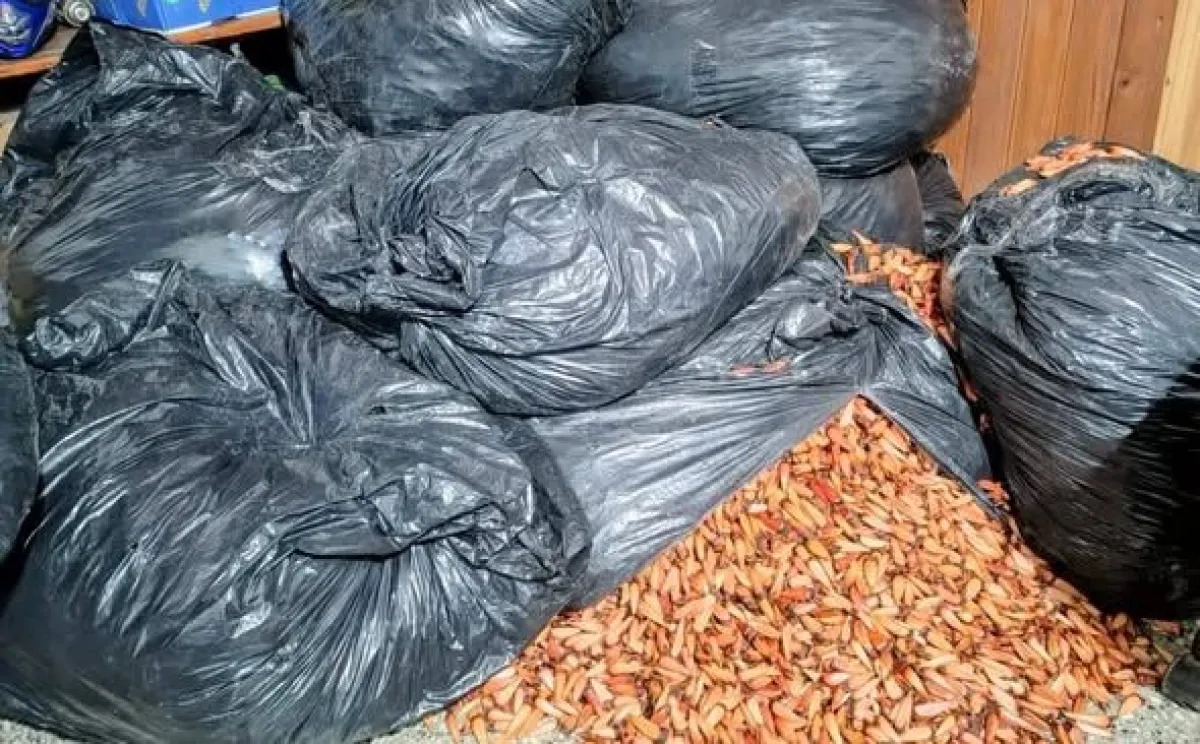
During a routine check on Route 40, at the height of Puente La Rinconada, personnel from the Delegation of Fauna of Junín de los Andes intercepted a truck carrying 600 kilos of araucaria pine nuts without documentation.
The cargo was intended for illegal commercialization, which constitutes a violation of the Provincial Fauna Law No. 2539 and its regulatory decree 1777/07.
The operation ended with the seizure of the pine nuts and the drafting of the corresponding report. As established by the regulations, the fruits will be donated to public welfare institutions.
The importance of pine nuts in the ecosystem
The pine nuts of the Araucaria araucana (pehuén) are essential for the balance of the Andean Patagonian forest:
- Natural regeneration: the araucaria is a slow-growing species that can take up to 40 years to produce seeds. Moreover, it does not bear fruit abundantly every year, so massive extraction reduces the possibilities of forest renewal.
- Food for fauna: birds and mammals depend on the pine nuts as an energy source in autumn and winter. These animals play an ecological role by dispersing the seeds, favoring regeneration.
- Natural and cultural heritage: the araucaria is a symbol of the Andean Patagonian region, and its protection ensures the continuity of a unique ecosystem in the world.
Cultural and economic dimension
The pine nut has a profound value for the Mapuche-Pewenche people, who have historically used it as a staple food. It is consumed boiled or roasted and is used in gastronomy to make flours, pâtés, and alfajores. Additionally, it provides nutrients such as fatty acids and vitamin E.
However, unauthorized extraction in protected areas is prohibited and sanctioned, as it directly affects forest regeneration and biodiversity.
Reminder from Lanín National Park
The administration of Lanín National Park reminded that the collection of pine nuts within the protected area is prohibited. They explained that leaving the pine nuts on the ground is essential for the continuity of the Andean forest and to guarantee food for native fauna.
The seizure of 600 kilos of pine nuts in Neuquén reflects the seriousness of the illegal trafficking of natural resources. Pine nuts are not simple fruits: they are the basis for the regeneration of the araucaria, essential food for fauna, and cultural heritage of the region.
Protecting them means ensuring biodiversity and natural heritage for future generations. As the authorities pointed out: “The araucarias are a natural and cultural symbol of the Andean Patagonian region. Respecting the regulations is protecting biodiversity today and for future generations”.


