



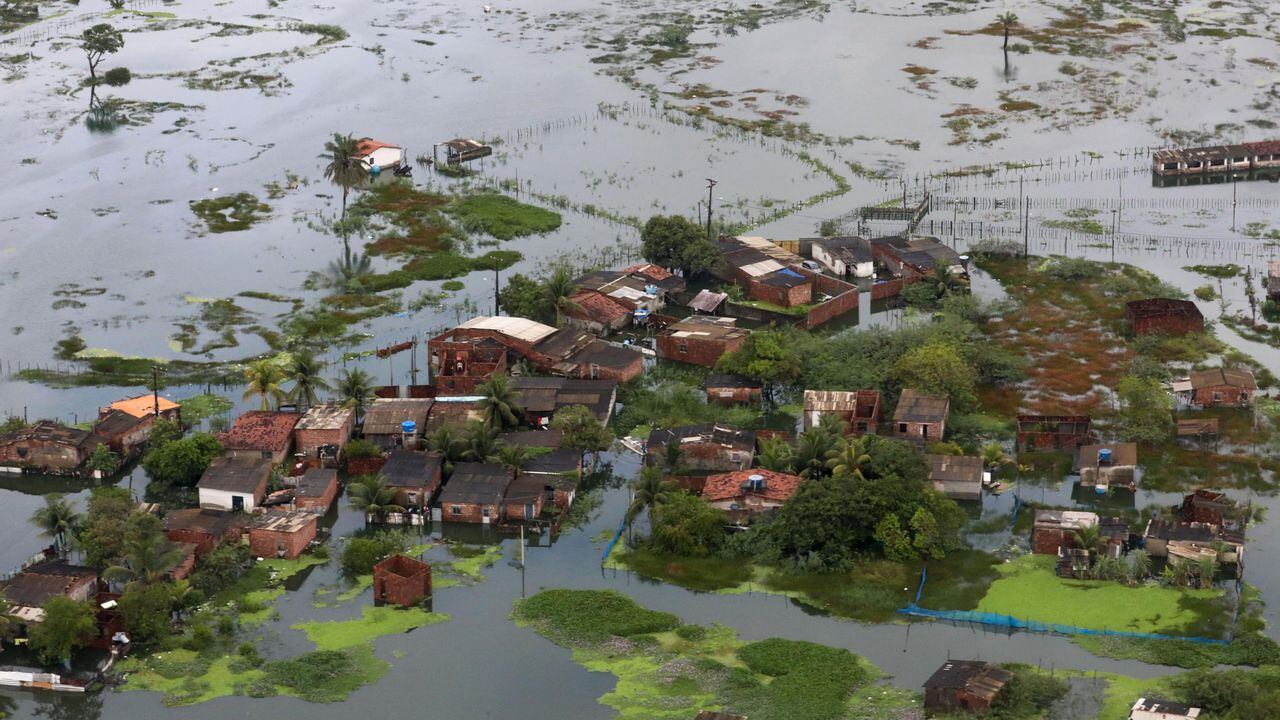
A new report titled Seasons of the Waters: The Growing Challenge of Extreme Rains, prepared by the program Maré de Ciência of the Federal University of São Paulo (Unifesp) in collaboration with the Brazilian Alliance for Oceanic Culture, revealed that between 2020 and 2023, Brazil faced 7,539 climate-related disasters associated with intense rainfall, a figure representing an increase of 222.8% compared to the 1990s, when 2,335 episodes were recorded.
The events include increasingly frequent and devastating torrents, floods, storms, and landslides. The analysis is based on data from the Integrated Disaster Information System (S2ID) and covers a period of 32 years (1991–2023), with a total of 26,767 extreme events.
Four out of five municipalities affected by extreme events
According to the report, 4,645 Brazilian cities (83% of the total) have already been hit by at least one climate disaster due to precipitation. In the 90s, only 27% had experienced this type of events.
- 64% of the disasters were hydrological in nature, with a predominance of torrents (55%) and floods (35%)
- 31% were meteorological, with storms being the dominant phenomenon
- Only 5% were geological, mostly landslides
Researchers warn that, in many cases, the effects include material losses, service interruptions, displacement of people, and deterioration of collective mental health, whose long-term impacts are not always quantifiable.
The ongoing change in rainfall patterns
The report corroborates previous projections by the Brazilian Panel on Climate Change (PBMC), which anticipate by the end of the century:
- 30% increase in precipitation in the South and Southeast regions
- Reduction of up to 40% in the North and Northeast
“We already see these altered patterns: catastrophic events in places where they didn’t occur before, and deeper droughts in historically arid areas,” explained Ronaldo Christofoletti, lead researcher of the study. He also pointed out that phenomena like extreme rains in Rio Grande do Sul or the desertification of the sertão nordestino are manifestations of this transformation.
Towards urban and territorial adaptation strategies against climate disasters
From the Boticário Group Foundation, specialist Juliana Baladelli Ribeiro emphasized the urgency of incorporating nature-based solutions as urban infrastructure:
- Rain gardens
- Floodable parks
- Multifunctional artificial lagoons
These solutions not only regulate water runoff but also provide thermal comfort, recreation, and biodiversity, as seen in Barigui Park in Curitiba.
Juliana stressed that while they are not a “silver bullet,” they are highly effective tools against climate change and can be applied at multiple urban scales.
Hydric inequality, forced migrations, and new thresholds
The National Water and Basic Sanitation Agency (ANA) also foresees a drop of over 40% in water resources availability in much of Brazil by 2040. This situation, combined with the recurrence of disasters, could trigger new internal migration waves.
“The increase in climate refugees will be inevitable if no action is taken. We are talking about families that will no longer be able to sustain their lives or agricultural production in their territories,” warned Christofoletti.
The report concludes that Brazil needs a comprehensive climate strategy, addressing everything from protecting biodiversity to urban water security, understanding that the crisis is not confined to isolated biomes but linked to global dynamics like polar ice melting and the alteration of cold fronts.


