



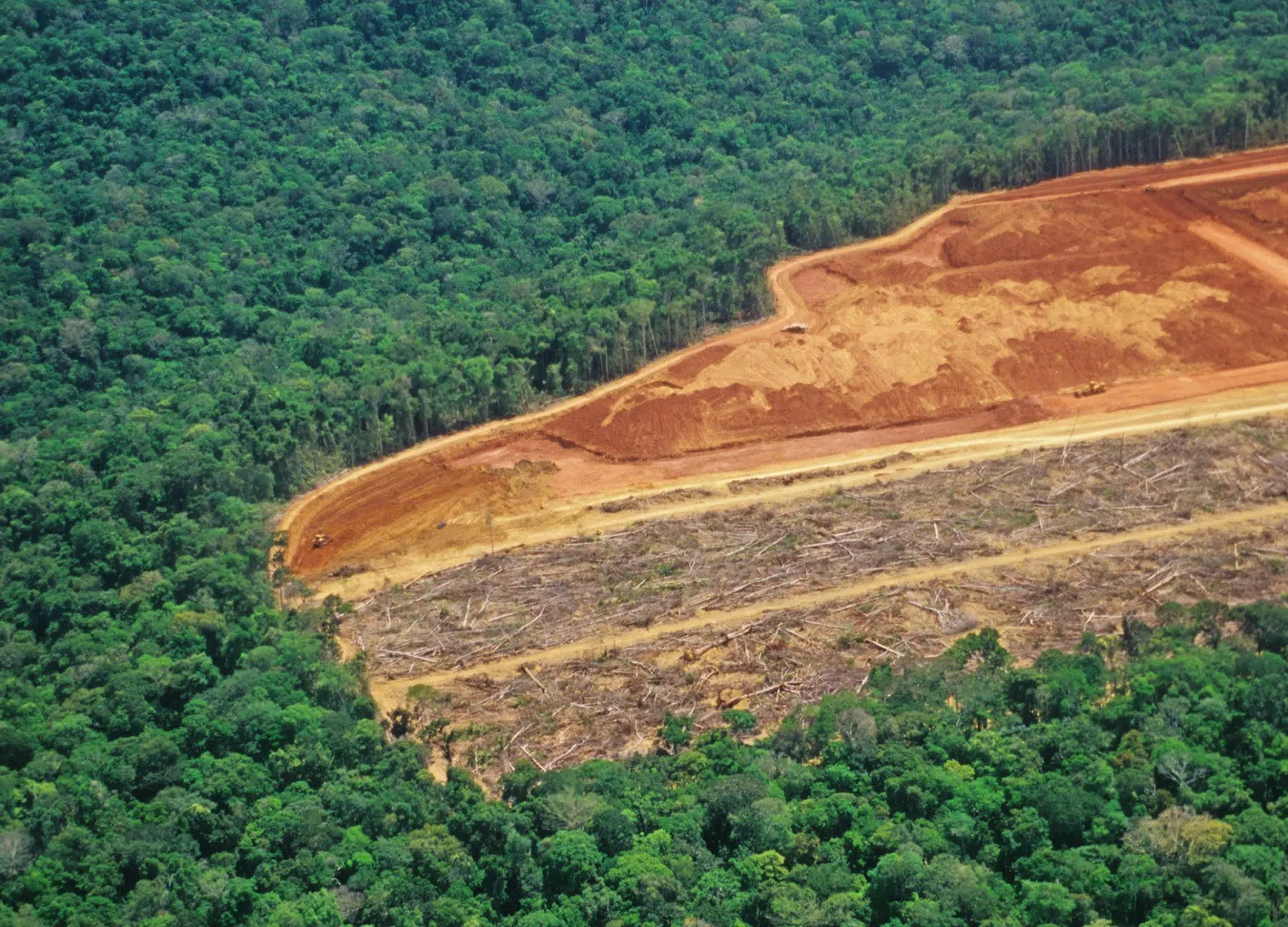
The Government of Brazil has decided to directly involve the banking system in the fight against deforestation in the Amazon and other biomes. Starting April 1, banks granting subsidized rural credits must verify in the official Prodes database whether the applicant property has recorded logging since 2019.
The measure turns each bank manager into an indirect deforestation inspector, as explained by Andre Lima from the Ministry of Environment. If the detected logging is not within the legally permitted percentage, the agricultural producer will not be able to access the subsidized credit.
The scope of the regulation
The provision affects about 53 billion dollars, equivalent to one-third of Brazilian rural credit. A study by the Climate Policy Initiative revealed that nearly one-fifth of subsidized credits between 2020 and 2023 were granted to recently deforested properties.
Banks have supported the measure, considering it a mechanism of legal security that reduces the risk of defaults. In contrast, the agricultural lobby and the Confederation of Agriculture and Livestock (CNA) have criticized the regulation, citing possible false positives in the satellite images.
Satellite technology as a control tool
The Prodes system, operated by the National Institute for Space Research (INPE), uses satellites that photograph plots of three meters every 16 days, allowing constant monitoring of the Amazon and other biomes.
Thanks to this surveillance, the latest annual report showed that the Amazon lost 5,796 km² of native vegetation, 11% less than the previous year. Since Luiz Inácio Lula da Silva returned to power, deforestation has been reduced by 50%, reinforcing the promise to eliminate it completely by 2030.
International context
The measure is framed within a global scenario of increasing pressure:
- The European Union is preparing a law that will ban products such as cocoa, coffee, soy, beef, wood, and derivatives if they come from deforested areas. Its entry into force is expected by the end of 2026.
- Brazil and Mercosur have closed a trade agreement that will come into effect in May, reinforcing the need to meet environmental standards to maintain international competitiveness.
Political and environmental leadership
President Lula has once again placed Marina Silva at the head of the Ministry of Environment and Climate Change, who already in the 2000s managed to drastically reduce illegal logging. Her management has been key to repositioning Brazil as a central player in the fight against climate change, following the environmental setbacks experienced during Jair Bolsonaro’s administration.
The incorporation of banks as overseers marks a structural change in Brazilian environmental policy. The measure seeks to block the financing of illegal activities and ensure that public resources are allocated to responsible producers.
In a context of international pressure and climate commitments, Brazil is betting on combining satellite technology, financial regulation, and political will to achieve the goal of zero deforestation by 2030.



