



The global fast fashion industry generates over $100 billion annually, and its presence is particularly strong in Europe, where consumers allocate most of their clothing budget to this type of products.
A recent study published by Kaiia analyzed buying behavior in several countries, revealing the absolute dominance of fast fashion in European textile markets.
Key indicators: online searches, revenues, and market share
The research considered variables such as:
- Volume of online searches per 100,000 inhabitants
- Total revenue of the textile market
- Revenue generated by fast fashion
- Percentage of fast fashion’s participation in the total textile market
Countries were classified according to the proportion of the market controlled by fast fashion retailers, revealing a dominant trend in Western Europe.
Consumption ranking: Spain, the United Kingdom, and Belgium at the top
Shein leads online interest in several countries, surpassing local brands like Zara and H&M.
| Country | Fast fashion share | Fast fashion expenditure | Most searched brand |
|---|---|---|---|
| Spain | 91.5% | €27.4 billion | Shein |
| United Kingdom | 88.5% | €73.4 billion | Shein |
| Belgium | 86.1% | €9.0 billion | Shein |
| Germany | 85.1% | €61.8 billion | Shein |
| France | 84.1% | €33.6 billion | Shein |
| Austria | 83.1% | €8.9 billion | H&M |
| Poland | 74.8% | €12.3 billion | Various |
| Netherlands | 74.7% | €15.6 billion | H&M |
| Turkey | 70.0% | €12.8 billion | Less navigation |
| India | 49.3% | €50.0 billion | Traditional textiles |
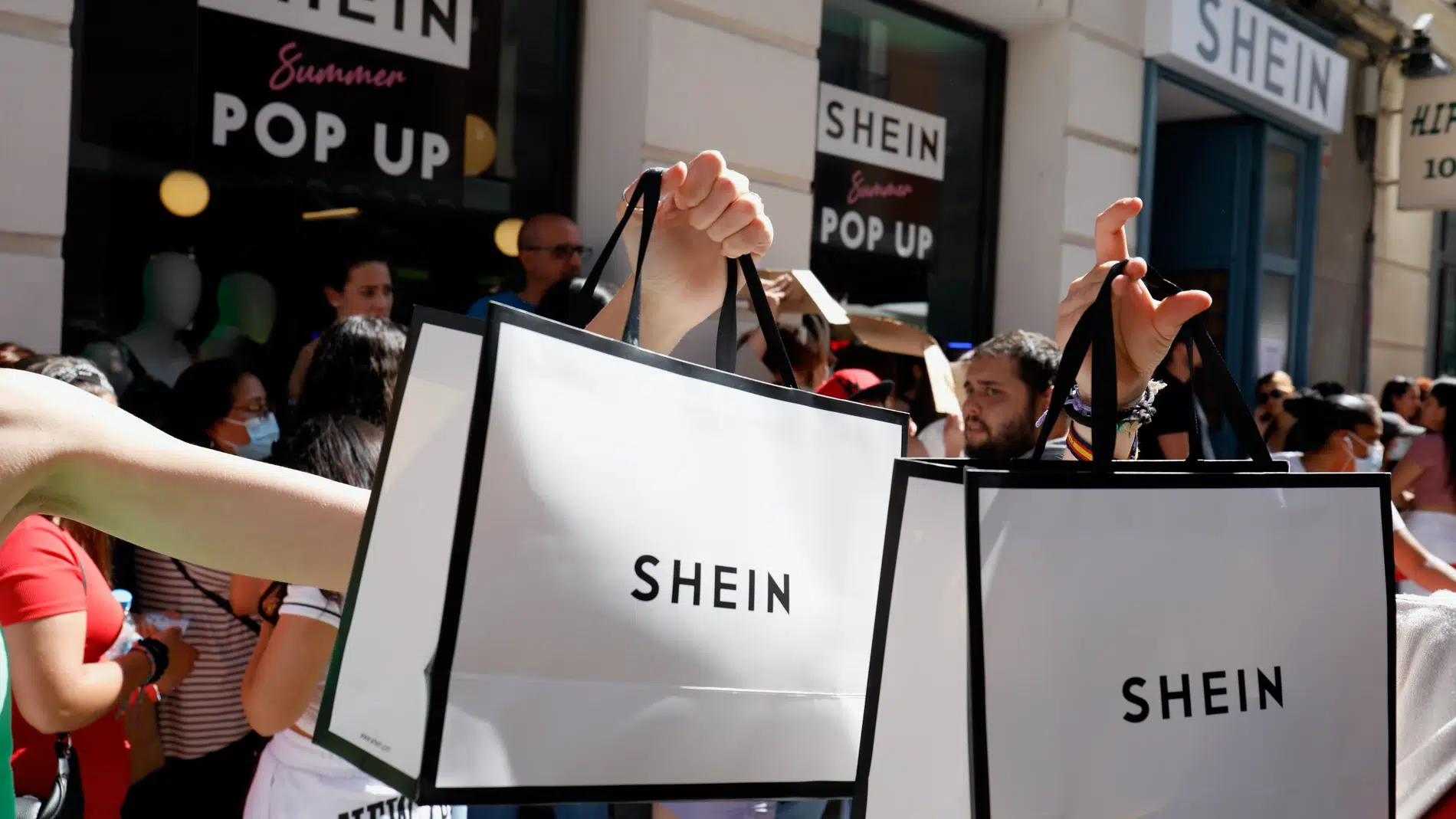 Shein is one of the most sought-after brands for fast fashion</caption]
India: lower share, but higher absolute volume outside of Europe
With a textile economy valued at over €101.4 billion, India represents the largest fast fashion market outside of Europe, despite having a lower market share.
The cultural preference for traditional textiles moderates the advance of global retailers, although the revenue volume remains significant.
Contradictions between sustainability and actual consumption
“The 91% share in Spain demonstrates the absolute dominance of fast fashion retailers,” says the Kaiia spokesperson. “The most surprising aspect is the contradiction between the public defense of sustainability and the real consumer behavior.”
Despite environmental awareness campaigns, data shows that European consumers have not changed their buying habits in favor of more sustainable options.
The online interest in brands like Shein even surpasses local giants like Zara, reflecting a preference for low prices and high turnover, over ethical or environmental criteria.
Reflections for the future of responsible consumption
How can we close the gap between environmental awareness and purchasing decisions? The study poses challenges for public policies, brands, and consumers:
- Educating about the environmental impact of fast fashion
- Promoting local and sustainable alternatives
- Strengthening coherence between environmental discourse and consumption behavior


