



The government of Quintana Roo, Mexico, announced a new strategy to address the massive influx of sargassum seaweed affecting the coasts of the **[Mexican Caribbean](https://noticiasambientales.com/medio-ambiente/mexico-transforma-toneladas-de-sargazo-en-una-herramienta-util-de-amenaza-ecologica-a-recurso-verde/)**. Through a special permit, fishermen and citizens will be able to collect this macroalgae in open sea, with the aim of reusing it and keeping the beaches clean. The measure, published in the Official Gazette of the Federation, aims to turn the **sargassum** into a **productive resource** and, at the same time, preserve the region’s tourist appeal.
The collection will be regulated by the **Secretary of Agriculture and Rural Development**, which will enable the process at specific times. It is expected that this action will generate economic opportunities for coastal communities and alleviate the **environmental pressure** caused by the massive accumulation of algae.
In destinations like Tulum, the presence of sargassum was **particularly critical**. By the end of July, service providers reported that the occupancy on the beaches of the National Park did not exceed 50%. This phenomenon, along with the entrance fee to the Jaguar Park, significantly reduced the influx of visitors.
The **accumulation of algae** not only affects the destination’s image but also the tourists’ experience. Despite previous efforts, the implemented solutions were temporary and did not manage to stop the problem.
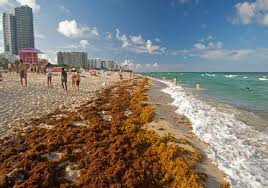
## Causes of the Massive Arrival of Sargassum on Mexican Coasts
The increase of sargassum in the Mexican Caribbean is linked to a combination of **natural and human factors**. Firstly, the rise of nutrients such as nitrogen and phosphorus in the ocean, coming from wastewater and fertilizers, fuels the accelerated growth of these algae in open sea.
Another determining factor is **climate change**, which has raised the sea temperature and altered ocean currents patterns. These alterations favor the **proliferation of sargassum** and its displacement towards the coasts.
The **natural transport** of algae masses from the so-called “Great Atlantic Sargassum Belt,” an extensive strip that extends from West Africa to the Caribbean, also influences. Winds and ocean currents drag these accumulations towards the Mexican coast, intensifying the influxes during certain seasons.
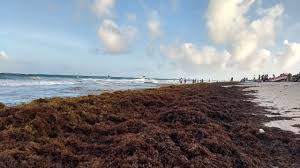
## **Its Consequences**
The environmental consequences of the influx are concerning. When decomposing on the shore, sargassum releases compounds that affect water quality, reduce oxygen, and **[damage coastal ecosystems](https://noticiasambientales.com/medio-ambiente/el-sargazo-en-el-caribe-mexicano-origen-impacto-y-estrategias-de-control-contra-este-fenomeno-cada-vez-mas-frecuente/)** such as reefs and **seagrasses**. This directly impacts **marine species** and fishing activities.
The initiative to allow its collection in open sea represents a change in how the problem is managed. If implemented in an orderly manner, it could help reduce ecological damages, restore the tourist image, and promote a circular economy based on the **transformation of this algae into useful products**.
With proper management, sargassum could shift from being a symbol of **environmental crisis** to a valuable resource, benefiting both coastal communities and the conservation of the ecosystems in the Mexican Caribbean.



