



More than 85 constitutionalists and academics sent a letter to Congress rejecting the reform of the Glacier Law that the Government intends to address in extraordinary sessions.
The specialists warned that the initiative is unconstitutional, regressive and compromises the right to a healthy environment.
The reform of the Law that protects the glaciers in Argentina generated a strong reaction in the legal and environmental fields.
Among the signatories are recognized figures such as Daniel Sabsay, Roberto Gargarella, Leila Devia, Andrés Gil Domínguez, and Florencia Saulino, among others.

The reform to the Glacier Law, unconstitutional and an environmental setback
The document highlighted that Article 41 of the National Constitution grants Congress the power to enact minimum budgetary standards for environmental protection.
Therefore, provinces can complement these rules, but never diminish them nor undermine the protection floor.
The specialists emphasized that the provincial competence in managing glacier areas “must be maximizing, aimed at reinforcing environmental protection according to the particularities of each ecosystem and jurisdiction”.
However, the reform of the Glacier Law promoted by the Casa Rosada allows each district to define which glaciers and periglacial environments to protect according to their own criteria.
This discretion puts at risk local water sources and provinces downstream.
“The reform of the Glacier Law is not a mere modification, but completely subverts the current system. Its wording dismantles the essence of the Minimum Budget Laws,” the specialists explained in the letter.
Impact on the National Inventory
Another critical point highlighted is the impact on the National Glacier Inventory, a technical-scientific tool of public access that identifies the country’s ice bodies.
According to the specialists, subordinating that knowledge to provincial political decisions in the reform empties the minimum protection budget established by the Glacier Law.
Furthermore, experts warned that the proposal breaks with the ecosystem approach, which recognizes that glaciers and water basins do not respect administrative boundaries.
“The elimination of the protection of a glacier in one jurisdiction can directly affect the access to water and the environmental rights of others,” they noted in the document.
In this regard, they recalled that the Supreme Court of Justice of the Nation has already ratified the operational nature of the minimum environmental budgets.
But, if the reform to the Glacier Law is approved, the common national criterion would be eliminated and each district could set different rules and generate inequalities in the protection of the water resource.
The risks to the environmental regulatory framework
The signatories warned that the potential approval of the project would set a dangerous precedent for the rest of the environmental regulatory framework.
The fear is that, if the reform of the Glacier Law is approved, similar setbacks could then be enabled in other key laws.
The current regulations, enacted 15 years ago, are considered pioneering at the regional and global level.
This defines minimum budgets to safeguard glaciers and periglacial environments as strategic water reserves.
Furthermore, it creates the national inventory and prohibits activities that could affect their natural condition, especially those related to mining and the hydrocarbon industry.
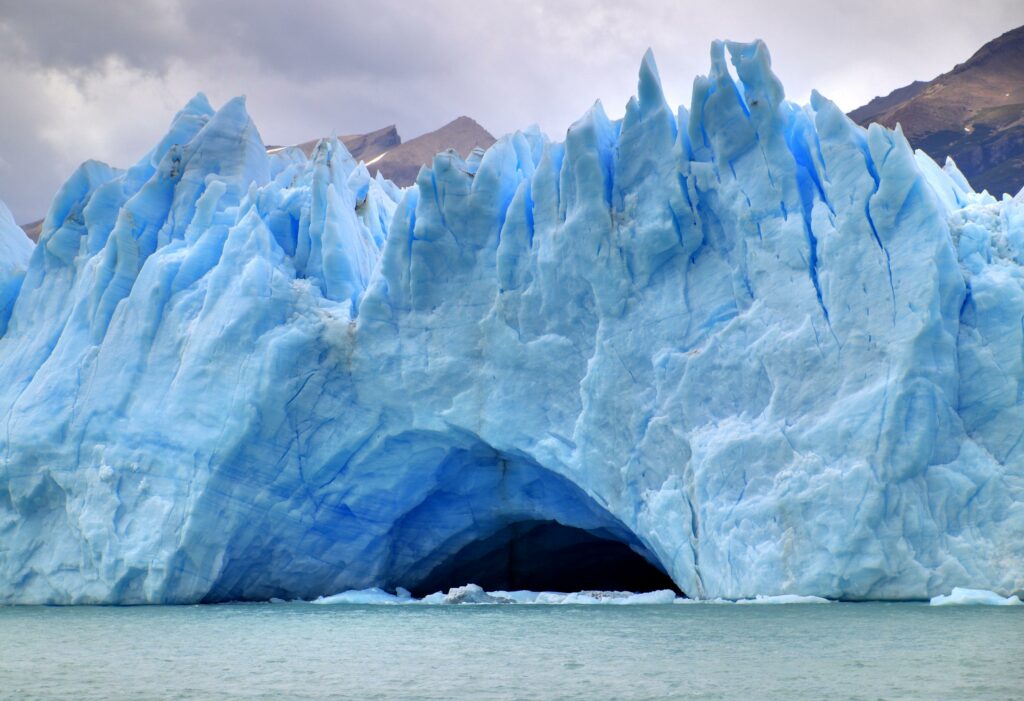
Argentina has one of the most extensive glacier heritages on the planet. It has nearly 17,000 ice bodies distributed from Jujuy to Tierra del Fuego, including Antarctica and the South Atlantic Islands.
However, these reserves are highly vulnerable: in the last decade, the glacier surface has been reduced by about 17%.
Therefore, approving the Glacier Law was fundamental at the time, and now it is at risk with a reform that would ease hydrocarbon exploitation.
This setback is part of a global trend of ice loss due to climate change.
According to a study by the journal Nature, published in 2025, between 2000 and 2023 the world’s glaciers lost an average of 273 billion tons of ice per year as a result of burning fossil fuels.
Organizations such as FARN, Greenpeace, and Aves Argentinas demanded that a reform that weakens the current Glacier Law not be advanced.
They warned that “weakening it will not generate sustainable development, but rather greater climate vulnerability, water loss, social impacts, and increasing economic costs.”



