



In the geography of the world, mountains play a silent but vital role. They act as large natural reservoirs, like the snow in the Andes, where water accumulates to sustain rivers, cities, and entire economies.
This happens because the mountain ranges force clouds to rise. As they do, the vapor cools, condenses, and precipitates as snow. Then, that white mantle becomes a strategic reserve that summer gradually releases.
A dependency that crosses territories
It is estimated that about 1.6 billion people depend on the water that originates in mountain regions. Although distant, these peaks determine daily life in arid areas.
Mendoza is a clear example of this relationship. Also Rawson, in Patagonia, depends on the Andean melt through the Chubut River. Thus, the snow that falls hundreds of kilometers away becomes drinking water, irrigation, and energy.
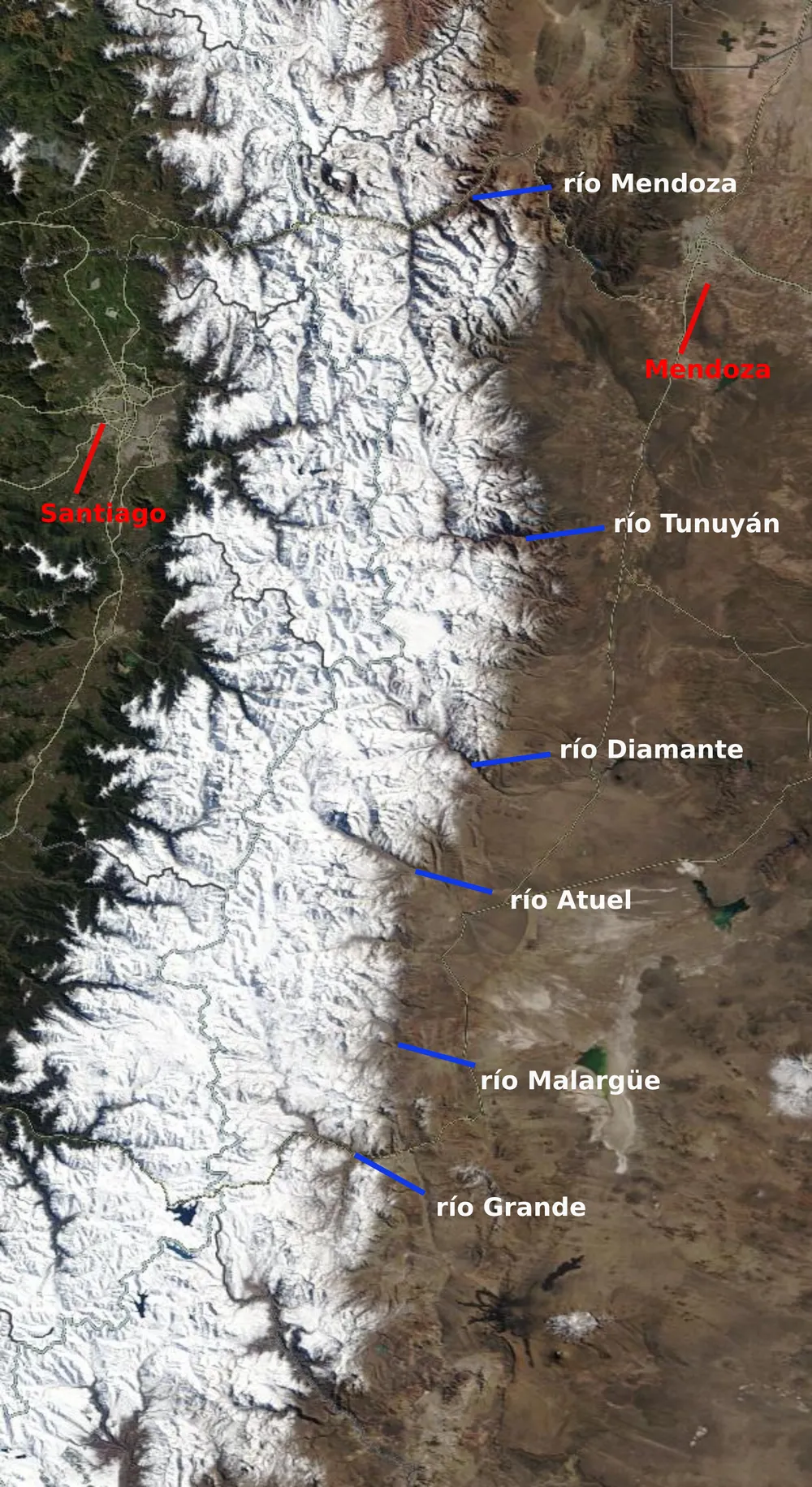
Mendoza and its link with the Mountain Range
Between April and September, the Andes Mountain Range receives most of its snowfalls. If these persist, they compact and form glaciers.
Mendoza is home to more than 4,000 glaciers, covering an area close to 1,200 square kilometers. This ice mass functions as a long-term reserve. In years with little snowfall, these glaciers are essential to sustain the rivers.
Characteristics of the snow in the Andes Mountain Range
The Andean snow is dry, light, and accumulates at high altitudes. Its permanence depends on temperature, the orientation of the slopes, and the frequency of storms.
When it remains for months, it acts as a natural sponge. It releases water slowly and prevents sudden floods. This process allows for recharging aquifers and maintaining stable flows during the summer.
The climate that explains the scarcity
Mendoza lives under the influence of the semi-permanent Pacific anticyclone. This high-pressure system blocks the entry of storms.
During the winter, that blockage shifts slightly. Then, some snowfalls manage to reach the high mountains. However, records show that dry years are more frequent than wet ones.
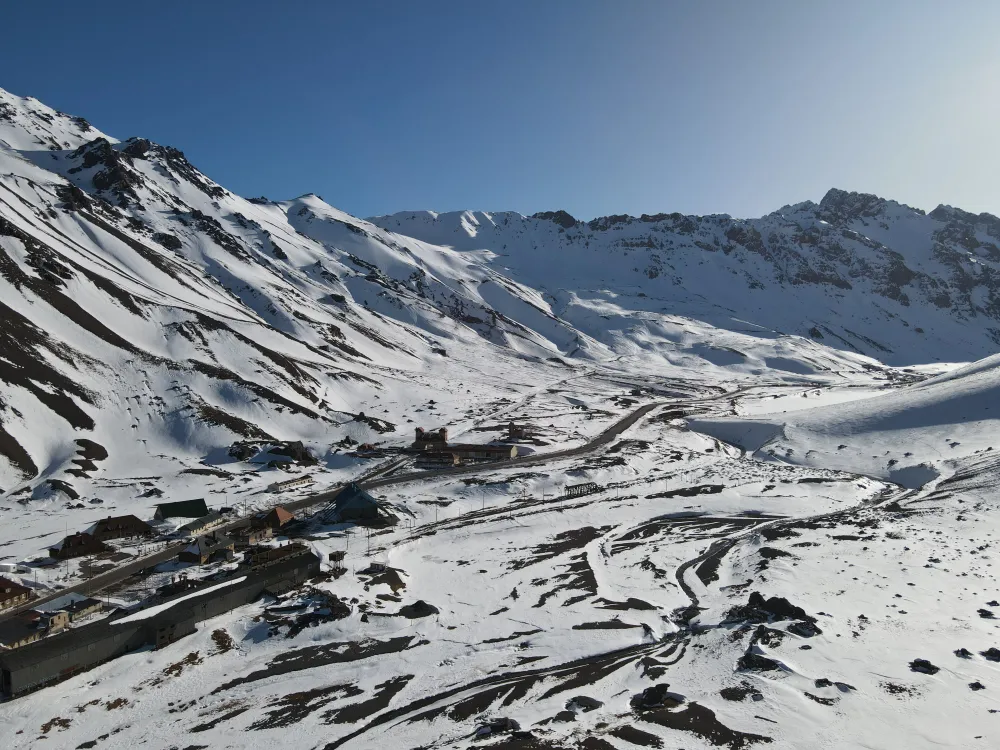
A drought that prolongs
Since 2010, the region has been experiencing an unprecedented megadrought. The snowfalls were, on average, 30% lower than historical values.
This scenario can no longer be explained solely by natural variability. Global warming intensifies the high-pressure systems. As a result, fewer storms arrive and the temperature increases.
When glaciers sustain the rivers
In extreme periods, glaciers can contribute up to 30% or even more of the flow of rivers like the Mendoza.
This was evident in 1968, when despite the lack of snow, the rivers maintained their flow. That episode prompted the creation of the Argentine Institute of Snow and Glacier Studies.
Understanding how snow and Andean ice work is not an academic exercise. It is a necessity for planning the future.
In a semi-arid region, with more heat and less snow, scientific research is crucial. Defending science is, ultimately, defending the water and the life that depends on it.



