



The Supreme Court of Justice of the Nation of Argentina declared inadmissible a request to once again suspend the construction of two hydroelectric dams on the Santa Cruz River.
The decision keeps the construction works enabled for the President Néstor Kirchner Dam and Governor Jorge Cepernic Dam while the main lawsuit continues in lower courts.
The claim had been filed by the Banco de Bosques Foundation along with environmental organizations that question the ecological impacts of the project.
However, the court considered that the appeal was not directed against a final judgment, a necessary condition to enable an extraordinary review. Therefore, the case returns to the federal courts, which must analyze the core of the environmental conflict.
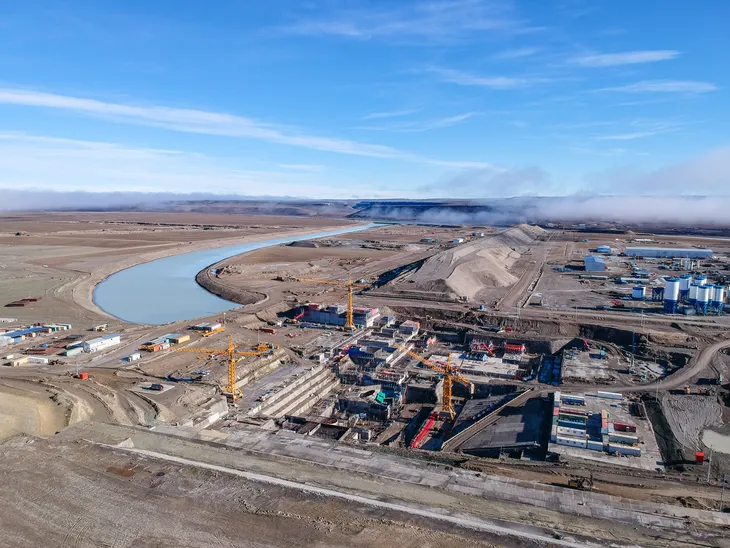
An environmental conflict dragging on since 2016
The judicial controversy began in 2016, when environmental organizations managed to suspend the construction of the dams. The measure sought to ensure that the State complied with environmental impact studies and held mandatory public hearings.
These requirements are established in Argentine legislation for large-scale hydroelectric projects. Over the years, the Government presented technical reports and carried out the required procedures.
Based on this documentation, the courts considered that the condition to lift the suspension had been met. Subsequently, the National Chamber of Appeals in Federal Administrative Litigation confirmed the lifting of the precautionary measure.
Scientific reports incorporated into the case
During the judicial process, studies prepared by various scientific and technical organizations in the country were incorporated. Among them are reports from the Argentine Institute of Snow Research, Glaciology, and Environmental Sciences and the National Institute of Seismic Prevention.
The National Parks Administration also participated with evaluations related to nearby protected areas. These studies analyze key aspects such as geological stability, the impact on glaciers, and the possible effects on Patagonian ecosystems.
According to the Court, this technical information will be fundamental for the final analysis of the case in the lower courts. Additionally, the judges indicated that the environmental debate remains open and may be resolved in future rulings.
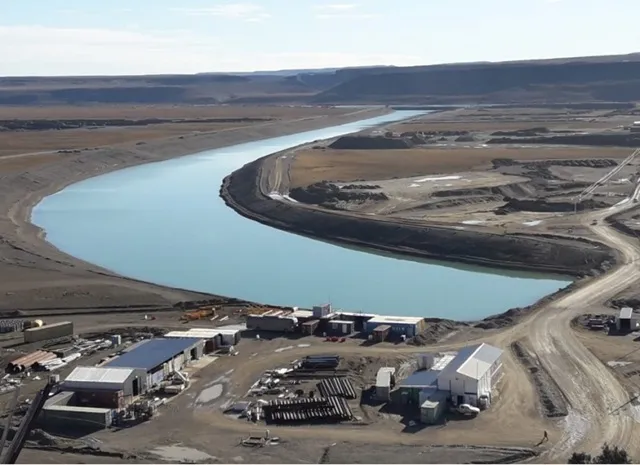
Environmental implications of the dams on the Santa Cruz River
The hydroelectric dams represent one of the largest energy projects planned in Argentine Patagonia. Their construction on the Santa Cruz River generates debate due to the potential impacts on natural ecosystems and glacial landscapes.
One of the main concerns is related to the alteration of the river’s natural flow, which could modify aquatic habitats and ecological processes. Additionally, specialists warn that changes in the water regime may affect the fauna that depends on these environments.
Another point of concern is the proximity of the project to glacier zones and protected environments in the Patagonian region. Changes in the river’s flow and sediment dynamics could also influence the balance of these natural systems.
At the same time, project advocates highlight that hydroelectric energy produces electricity with lower carbon emissions than fossil fuels. For this reason, the challenge is to balance the generation of renewable energy with the protection of sensitive ecosystems.
A judicial process that has no final resolution yet
Following the decision of the Supreme Court of Justice of the Nation of Argentina, the case returns to the first instance court involved in the case. The courts must evaluate the environmental evidence and determine if the construction complies with the current regulations.
Meanwhile, the authorization to continue with the dam works remains in effect. The final outcome of the trial will be decisive in defining the future of the hydroelectric project in Patagonia.
Additionally, the case has become a key precedent on how to reconcile energy infrastructure and environmental protection in Argentina.



