



The experimental aircraft **X-59 QueSST**, developed by **NASA**, recently began its **taxi tests** on the runway. It marks the first autonomous movement of this [unique aerial vehicle](https://noticiasambientales.com/innovacion/francia-se-prepara-para-un-vuelo-de-avion-impulsado-por-hidrogeno-que-circunnavegara-el-mundo-en-9-dias/).
The test took place on **July 10th** at the facilities of the **United States Air Force Base in Palmdale (California)**. This allowed engineers and specialized technicians to **verify its performance on the ground** before the official flights scheduled for 2025.
The test consisted of a **low-speed taxi**, captured in a video broadcasted on the official YouTube channel of the space agency. This step represents the final significant ground evaluation before the **X-59 enters the operational phase** as part of the **Quest mission**. Its purpose is to **demonstrate a quiet supersonic flight**.
Thanks to its streamlined structure and **delta wing configuration**, the aircraft aims to reduce the **traditional sonic boom** to a mere **”soft thump”**, opening the possibility of **supersonic flights over land** without [acoustic disturbances for the population](https://noticiasambientales.com/medio-ambiente/ruido-que-enferma-el-exceso-de-sonido-un-enemigo-ambiental-y-silencioso-que-contamina-los-espacios-y-el-oido/).
## The NASA aircraft and its impact on international regulations
The **X-59 QueSST** incorporates multiple technical innovations along with **components from existing military aircraft**.
Among them are: the **landing gear from the F-16**, the **life support system based on the F-15**, and an **engine from the F/A-18 Super Hornet**, capable of generating **22,000 pounds of thrust**.
The aircraft is designed to fly at **over 18,000 meters altitude**, reaching speeds close to **1,500 kilometers per hour**, while limiting the generated noise to just **75 decibels**, comparable to **closing a car door**, instead of the typical thunder of supersonic flights.
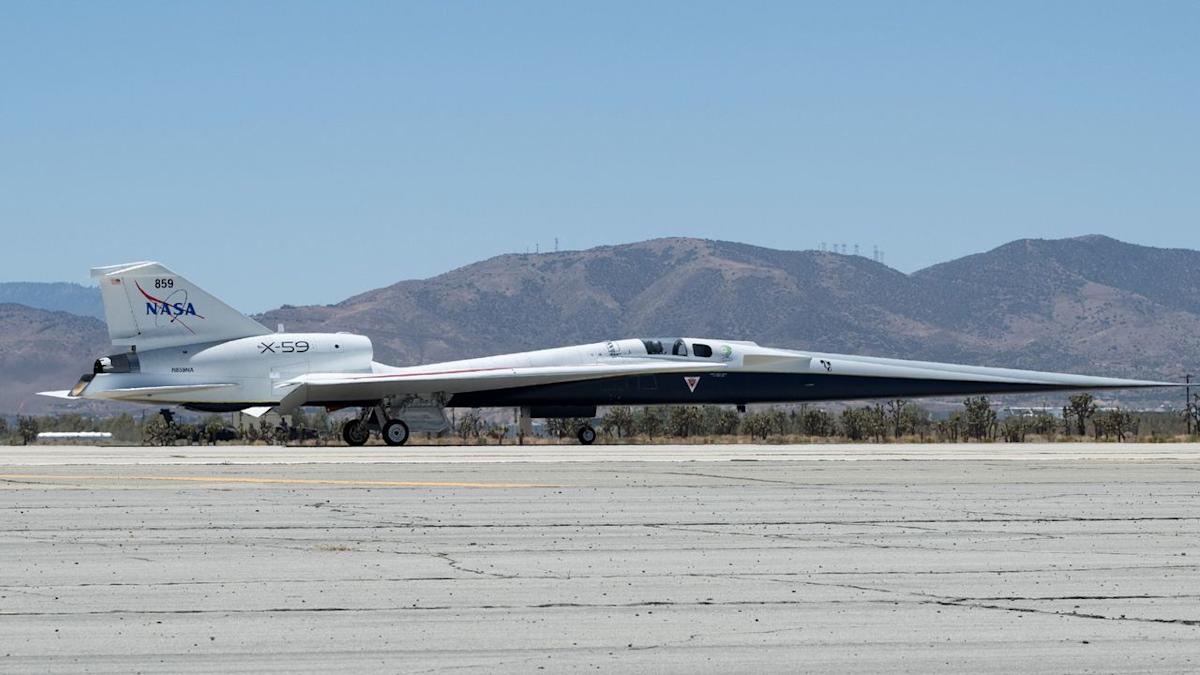
Measuring **29 meters in length** and **9 meters in wingspan**, the X-59 is intended to be **piloted by a single occupant**.
The data obtained during its flights will be shared with **national and international aeronautical authorities** to review and update the **permitted acoustic limits**, especially for commercial flights that exceed the sound barrier.



