



Argentine researchers from the CONICET identified a new species of dinosaur sauropod in Patagonia.
The discovery of this giant titanosaur provides valuable information about the diversity of these animals that inhabited the region 83 million years ago.
The new species of dinosaur, named Yeneen houssayi, lived during the Late Cretaceous in what is now Neuquén.
The discovery was led by Leonardo Filippi, a researcher at the Municipal Museum “Argentino Urquiza” of Rincón de los Sauces, and presented in the journal Historical Biology.
The characteristics of the new dinosaur species
The Yeneen houssayi measured between 10 and 12 meters long and weighed between 8 and 10 tons. This new species of dinosaur had a small head in proportion to its body, as well as a long neck and tail, characteristic features of giant titanosaurs.
Scientists identified the Yeneen as a new species of dinosaur thanks to the unique characteristics of its dorsal vertebrae, the sacrum, and the first caudal vertebra.
All these elements were preserved in excellent condition, allowing for a detailed anatomical analysis.
The name of the dinosaur combines two traditions: “Yeneen” comes from the Tehuelche culture and means “spirit or entity related to winter,” while “houssayi” honors Bernardo Houssay, Nobel Prize in Medicine and first president of the CONICET.
A rescue that took more than a decade
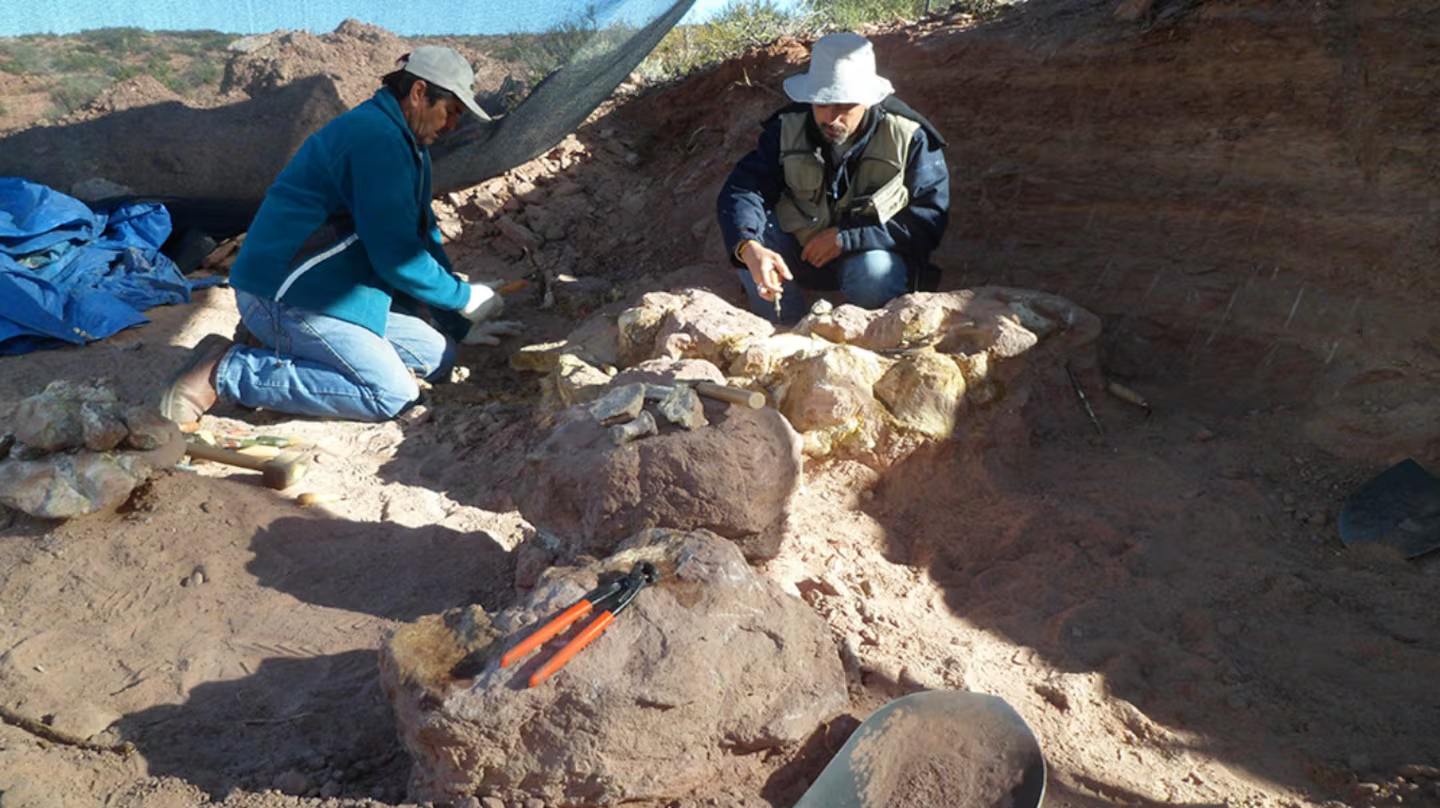
The path to the discovery of this new species of dinosaur began in 2003, when a National Gendarmerie officer reported the finding of fossil remains in the Cerro Overo – La Invernada area. However, access difficulties prevented the immediate rescue of the bones.
It wasn’t until 2013, thanks to the opening of new roads alongside the company ExxonMobil, that the scientific team organized two excavation campaigns between 2013 and 2014.
The paleontologists, technicians, and volunteers worked to extract the fossils, which due to their size and weight required the use of a crane truck.
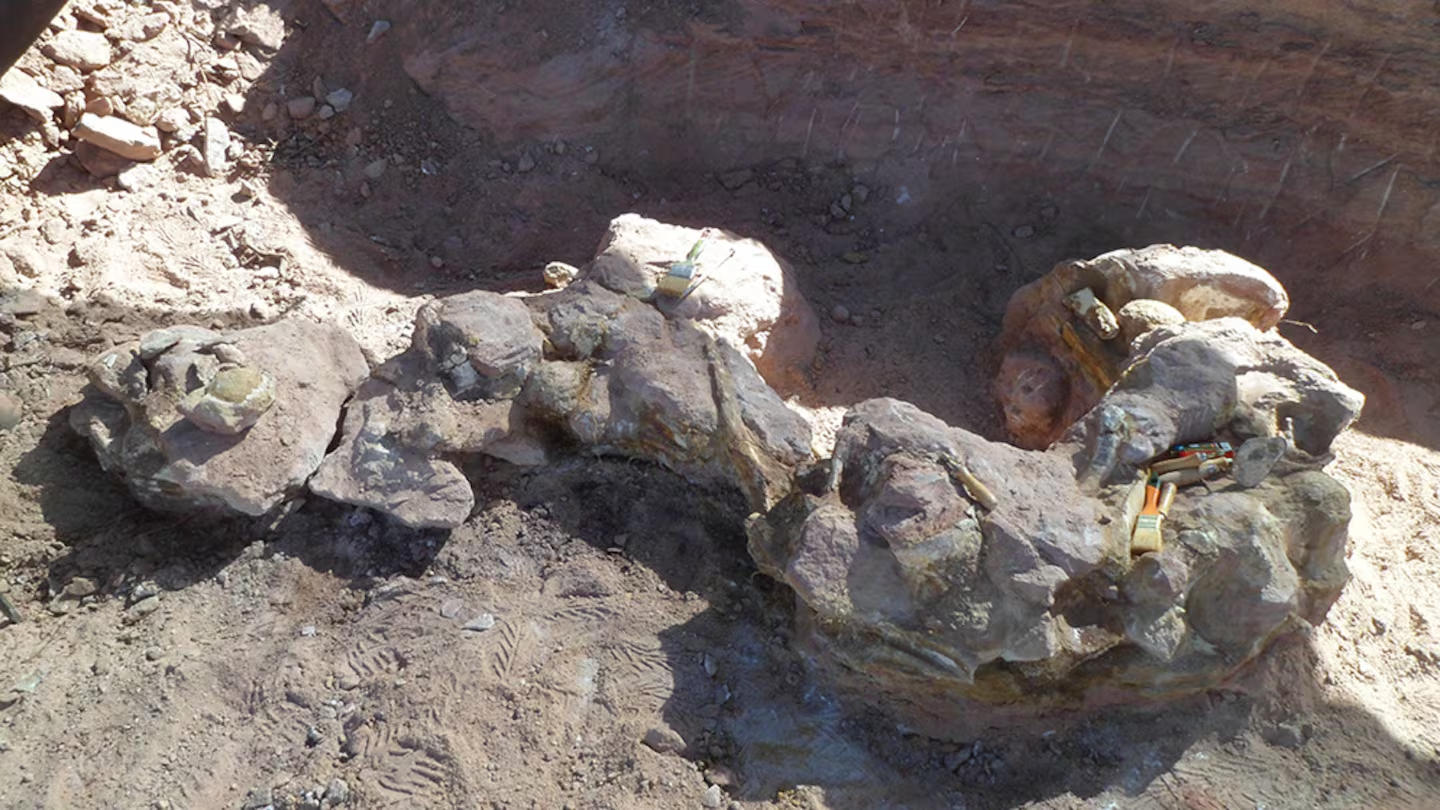
The recovered materials were transported to the MAU laboratory, where they dedicated months to the cleaning and preparation of the bones. The result was a specimen that preserves:
- Six cervical vertebrae
- Ten dorsal vertebrae with associated ribs
- The complete sacrum
- The first caudal vertebra
The implications of the discovery for Argentine paleontology
The discovery of this new species of dinosaur adds to other titanosaurs from the area, such as Overosaurus paradasorum and Inawemtu oslatus.
This allows experts to compare anatomical details and develop new hypotheses about the evolution of these animals.
“The differences we found in the vertebrae and other bones help us understand how these dinosaurs might have developed different feeding strategies, or even if there was a replacement of species in the region,” explained Filippi about the new discovery.
In addition to the main specimen, the team found a second juvenile individual, identified by a small hip bone, and a third specimen with vertebrae and limb bones.
This last one could belong to another giant titanosaur species not yet described.
The study involved the participation of Flavio Bellardini, José Luis Carballido, Ariel Méndez, and Alberto Garrido.
The discovery reinforces the role of Patagonia as one of the great natural laboratories for understanding the history of dinosaurs and opens the door to new research on the life and diversity of titanosaurs in the southern continent.



