



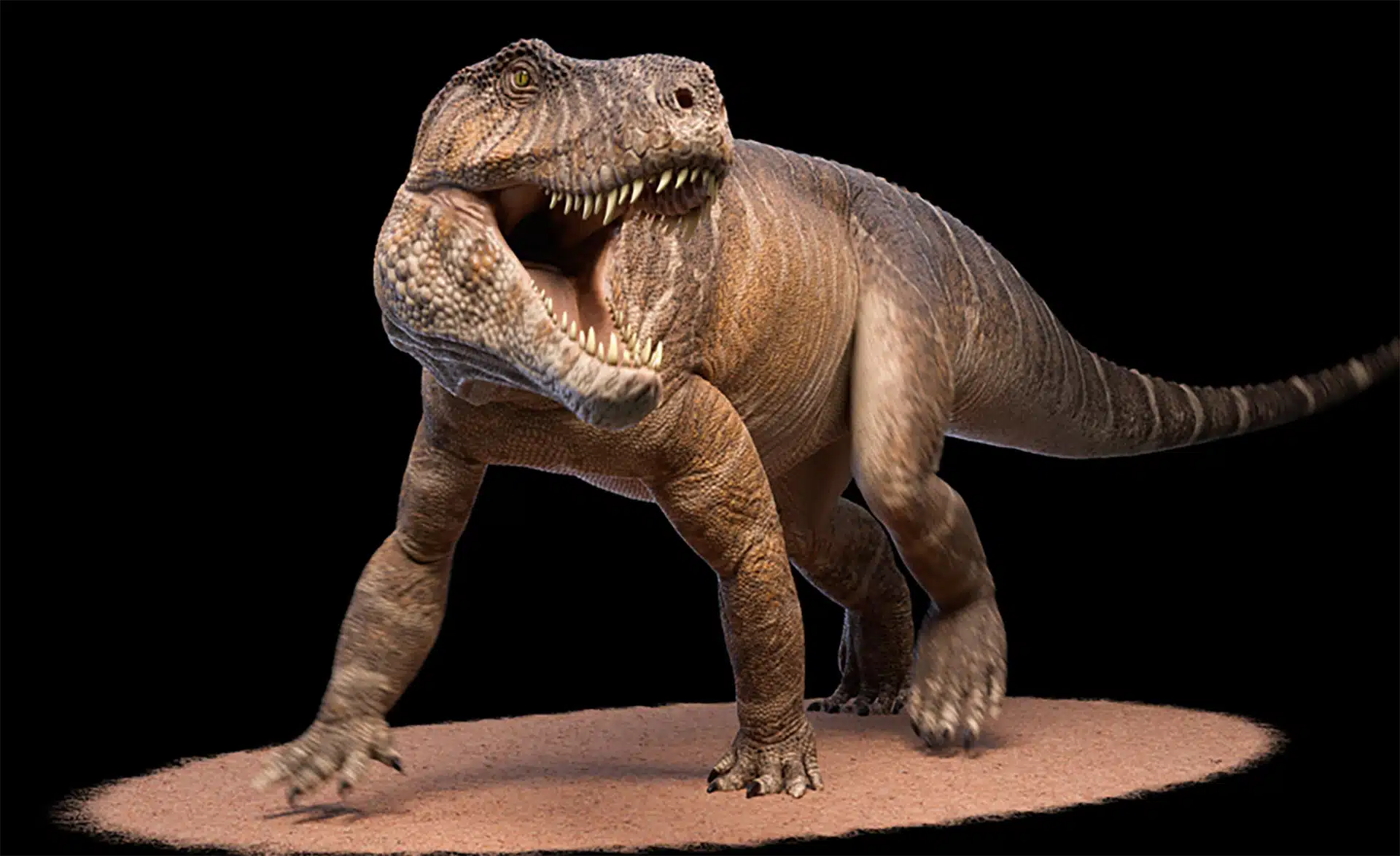
An interdisciplinary team of scientists from the Conicet, the national universities of La Plata and La Rioja, the CNEA and the Museo Argentino de Ciencias Naturales Bernardino Rivadavia discovered fossils of a reptile in the Talampaya National Park that lived 237 million years ago, during the Late Middle Triassic, before the appearance of dinosaurs.
The specimen, named shakajlura riojanensis (“blessed lizard” in the Cacán language of the Diaguita people), belongs to the group paracrocodylomorpha, with a distant relationship to modern crocodiles.
Characteristics of the fossil
The analysis of the 60-centimeter skull found in the Chañares formation established that the animal measured about 6 meters long and was a carnivorous predator.
- It presents differences with the luperosuchus fractus, a similar fossil found in the 1970s in the same site.
- The shape of the snout, the bones around the eye, and the prearticular of the jaw distinguish it as a unique species.
The first clue about this reptile was detected in 2017, within the framework of systematic investigations in Chañares, an area rich in fossils of mammals, reptiles, plants, and arthropods.
Paleontological context
In the time of shakajlura riojanensis, the territory was part of Pangea, the supercontinent that united Gondwana and Laurasia. Therefore, this specimen has evolutionary links with species found in Brazil, Tanzania, and India.
Geologist and biologist Lucas Fiorelli, a Conicet researcher at CRILAR (La Rioja), highlighted that the province is a privileged area for paleontology, with projects in Talampaya, Sanagasta, and Santo Domingo. The Chañares formation, within the National Park, is an intangible scientific reserve, accessible only to researchers accompanied by park rangers.
Argentina, a paleontological powerhouse
Argentina holds a central place in world paleontology, along with the United States and China, thanks to the quality and quantity of its findings. Iconic examples include:
- Giganotosaurus carolini (Neuquén, 1993), the largest known carnivorous dinosaur at the time.
- Amargasaurus, Carnotaurus sastrei, Argentinosaurus huinculensis, Patagotitan mayorum, and Herrerasaurus ischigualastensis, all found in Patagonia and northwestern Argentina.
These discoveries continue the tradition initiated by Florentino Ameghino, who resumed Charles Darwin’s observations in the 19th century and opened a path that remains active.
The discovery of shakajlura riojanensis in La Rioja provides a key piece to understanding the evolution of fauna before the dinosaurs. Its study reinforces Argentina’s role as a world reference in paleontology and demonstrates that each recovered fossil is an invaluable testimony of a vanished universe that still has much to reveal.


