



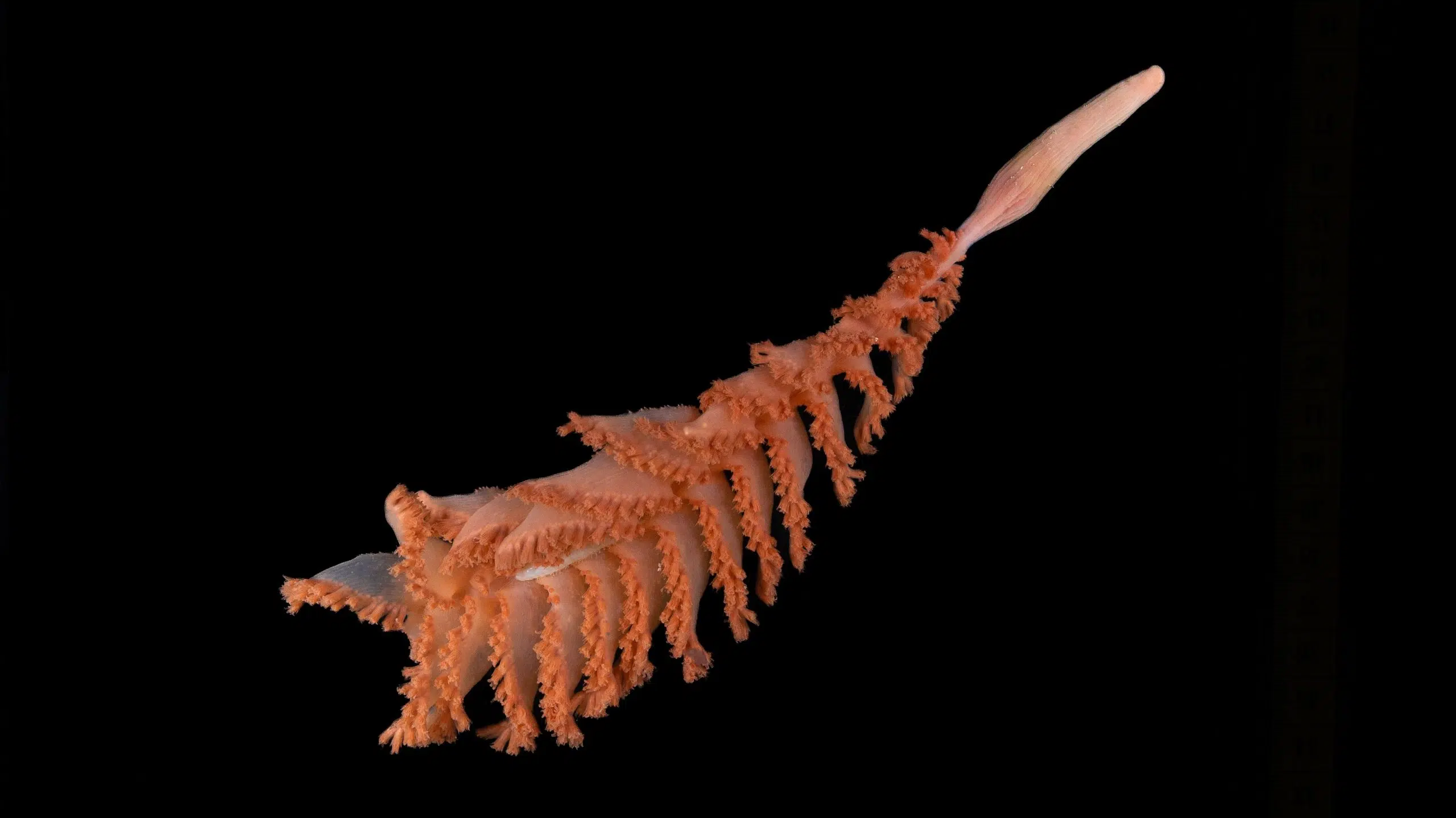
The initiative Ocean Census, which brings together more than a thousand researchers from 85 countries, announced the discovery of 1,121 unknown marine species at various ocean depths.
The expeditions reached up to 6,575 meters in some of the least explored oceans on the planet.
Astonishing Species
Among the most striking findings are:
- A “ghost shark”, found in the Coral Sea Marine Park (Australia), belonging to an evolutionary lineage of nearly 400 million years.
- A carnivorous sponge nicknamed “death ball,” located in the South Atlantic, capable of trapping small crustaceans with velcro-like structures.
- A symbiotic worm found in East Timor, whose toxins could have medical applications in treating diseases such as Alzheimer’s and schizophrenia.
Importance of Ocean Exploration
The project’s chief scientist, Michelle Taylor, warned that many species could become extinct before being studied. Marine exploration is crucial because:
- Medical advances: marine organisms produce unique chemical compounds that can become antibiotics or cancer treatments.
- Climate understanding: oceans absorb much of the planet’s heat and CO₂, regulating the climate and mitigating natural disasters.
- Ecological conservation: more than 90% of marine species have yet to be discovered; identifying them helps protect vulnerable habitats.
- Biodiversity knowledge: understanding new forms of life allows for the analysis of food chains and essential environmental services.
The Argentine Case: CONICET in the Argentine Sea
Argentina has also been involved in significant discoveries thanks to CONICET:
- Cutting-edge expeditions: campaigns in the Mar del Plata Submarine Canyon alongside the Schmidt Ocean Institute.
- Unprecedented findings: more than 40 new species recorded at depths of up to 3,900 meters, including cold-water corals, sea urchins, and jellyfish.
- Public outreach: live broadcasts that allowed the public to observe abyssal ecosystems and colloquially name the species.
- Environmental awareness: confirmation of human impact through the presence of microplastics and waste in the deep seabed.
The discovery of more than a thousand new species in the ocean depths confirms that the sea remains a territory full of mysteries.
These findings not only enrich scientific knowledge but also open doors to medical innovations, reinforce environmental conservation, and highlight the need to protect ecosystems from human threats.
The marine exploration, both global and regional, demonstrates that there is still much to learn about life on our planet and that each expedition can change our understanding of the natural world.



