



The death of the orca Kshamenk, the last in captivity in Argentina, brought back memories of the story of Keiko, the orca star of Free Willy. If you don’t know it, we’ll tell you about it below.
On November 5, 1979, Keiko, a male orca just two years old, was captured in Ingólfshöfði, Iceland, and separated from his family. Along with him, another group member named King was also captured. After a complex maneuver, both were transferred to an aquarium in Hafnarfjörður, where they stayed for a short period before being sent to other centers.
A month before his capture, the Marineland of Canada aquarium had ordered five orcas. On November 30, 1979, Keiko, King, Kiska, Caren, and another unnamed orca were flown to Ontario. There, they were distributed to different aquariums; Keiko was received at the King Waldorf Stadium, where he began his destiny as an entertainment animal.
From Canada to Mexico: the rise of a captive star
In Ontario, Keiko learned to perform spins, jumps, and pirouettes that would later give him international fame. However, he contracted a papillomavirus that affected his skin and weakened him.
In 1985, he was sold for $350,000 to the theme park Reino Aventura in Mexico City. There he became the main attraction, winning over the public and generating significant income for the entertainment center.
The leap to cinema: Free Willy
In 1993, film talent scouts noticed Keiko and chose him as the star of the movie Free Willy, a feature film that told the story of the friendship between a boy and a captive orca that needed to return to the ocean.
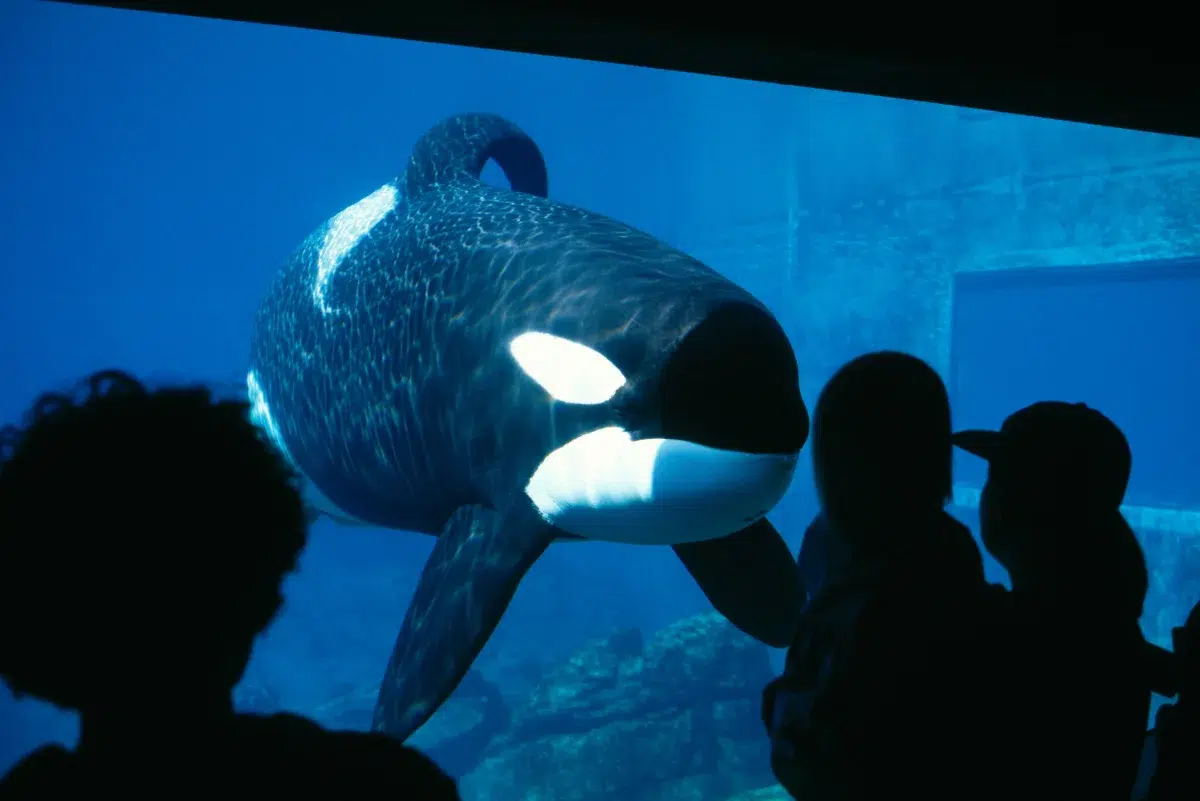
The success was immediate: two sequels and a television series were produced. However, while the world enjoyed the film in theaters, Keiko remained captive in Mexico. The contrast between fiction and his reality generated an international movement for his release, led by children and families who demanded that the orca return to the sea.
Attempts to purchase and relocate
Even Michael Jackson tried to buy him for his Neverland park but gave up upon learning the high cost of his medical treatments. Social pressure led to Keiko being relocated to Iceland in 1996, after a stay at a theme park in Oregon, United States.
The journey was carried out in a C-17 Air Force plane, adapted with a pool. According to The Guardian, veterinarians placed ice on his body to maintain the water temperature. “Perhaps he felt he was returning to his waters,” commented environmentalist David Phillips of the Earth Island Institute.
Rehabilitation and life in partial freedom
In Iceland, a process began for Keiko to learn the basic survival skills. He was placed in a pen with access to the sea and was forced to swim several kilometers daily to strengthen his lung capacity.
Although he practiced with boats and occasionally hunted, he still showed dependence on humans. In 2002, during a storm, he lost contact with the training boat and swam to Norway, where he lived with local fishermen and remained active in the fjords.
The end of Keiko and his legacy
On December 12, 2003, Keiko died of pneumonia at the age of 27. Experts noted that orcas usually show signs of illness only in advanced stages, making diagnosis difficult.
His story became known worldwide and gave rise to movements and organizations fighting against the captivity of marine mammals. Keiko became a global symbol of animal defense, demonstrating that cetaceans should not be objects of entertainment but should live freely in their natural habitat.
Keiko’s life, from his capture in Iceland to his death in Norway, reflects the impact of captivity on marine mammals and the need to rethink the relationship between humans and wildlife. His time in cinema made him a cultural icon, but his true legacy lies in the environmental awareness he awakened in millions of people.



