



The oldest ice cave in the world, named A294, has been melting and losing frozen mass at an unprecedented rate in over 6000 years.
This ice deposit, located in the Cotillea massif of the central Pyrenees, now faces a critical crisis due to global warming.
This was revealed by a recent international study conducted by the National Museum of Natural Sciences (MNCN-CSIC) of Spain.
As of today, the ice deposit is 6100 years old and preserves invaluable climatic information, making this particularly serious.
“The acceleration of the disappearance of ice not only means the loss of a unique natural heritage, but also of valuable information about the climatic and environmental history of the region,” explained Miguel Bartolomé, researcher at the MNCN.

The key to accelerated melting: record temperatures inside the cave
The research, published in the journal The Cryosphere, was based on a stratigraphic analysis of the ice cave and paleoclimatic records of the environment.
For this, the team extracted ice cores and analyzed their geochemical composition to understand the climatic conditions during the formation of these deposits over millennia.
According to the analysis, the average air temperature inside increased between 1.07°C and 1.56°C since 2009, when the monitoring program began in collaboration with the Scientific-Speleological Association of Cotiella (ACEC).
This increase adds to the drastic reduction in the number of days with below-zero temperatures.
Meanwhile, the Pyrenees recorded an average temperature increase of +1.3°C since 1949, almost twice the global increase.
While this rise accelerated the retreat of Pyrenean glaciers, many already disappeared, the dynamic was less pronounced in the caves.
This is because their isolation conditions allow the ice accumulated over centuries to be better preserved. However, they are also at risk.
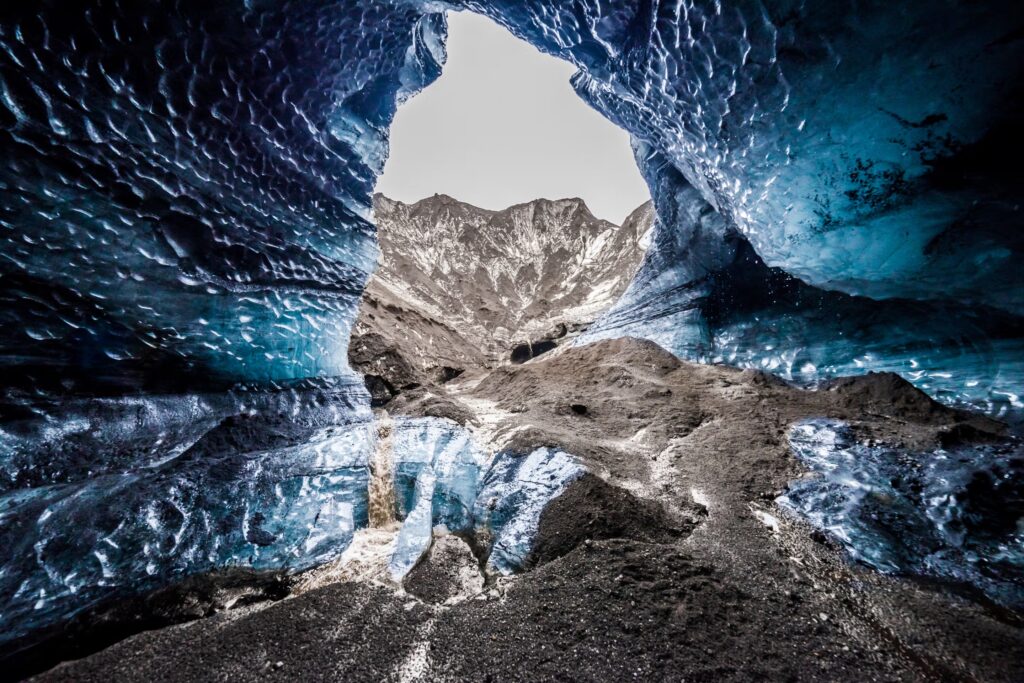
How the massive ice loss in the cave was documented
The comparison between historical topographies, old photographs, and annual measurements of the ice retreat revealed a loss that varies depending on the area of the deposit.
The melting rates range between 15 and 192 centimeters per year, depending on the specific location within the ice cave.
The main factors accelerating the melting include:
- Warmer winters that reduce ice accumulation
- Increased summer rainfall that raises internal temperature due to water dripping
- Significant decrease in the amount of snow
- Shorter duration of the seasonal snow cover
“As can be seen in the compared photographs, the result is a notable disappearance of the ice mass,” lamented Bartolomé.
A natural heritage at critical risk
The scenario presents a critical situation for the conservation of this deposit and serves as a new wake-up call about the impact of warming.
The increase in temperatures, the accelerated melting and changes in the precipitation regime in the Pyrenees threaten this unique climatic record.
The ice cave A294 not only represents a natural heritage of incalculable value but also constitutes a historical archive of the environmental conditions of the last six millennia.
Its progressive disappearance implies the irreversible loss of scientific information about the climate evolution in the Pyrenean region.
Researchers emphasize that this ice cave functions as an early indicator of the effects of climate change on mountain ecosystems.
The isolation conditions that protected the ice for centuries are no longer sufficient to counteract the increase in temperatures recorded in recent decades.



