



The Asociación Civil de Vivienda Económica (AVE) presented the project of biofabrication of insulating panels with mushroom mycelium and recycled cardboard, funded by the municipal program Ciudad Activa.
The initiative, based on the postdoctoral research of Conicet fellow Natalia Fernández, seeks to replace petroleum-derived insulators with a 100% renewable and sustainable alternative.
The goal is to produce enough panels to insulate a wooden housing prototype on the AVE premises, located in the Villa Siburu neighborhood, Córdoba.
How the biopanels work
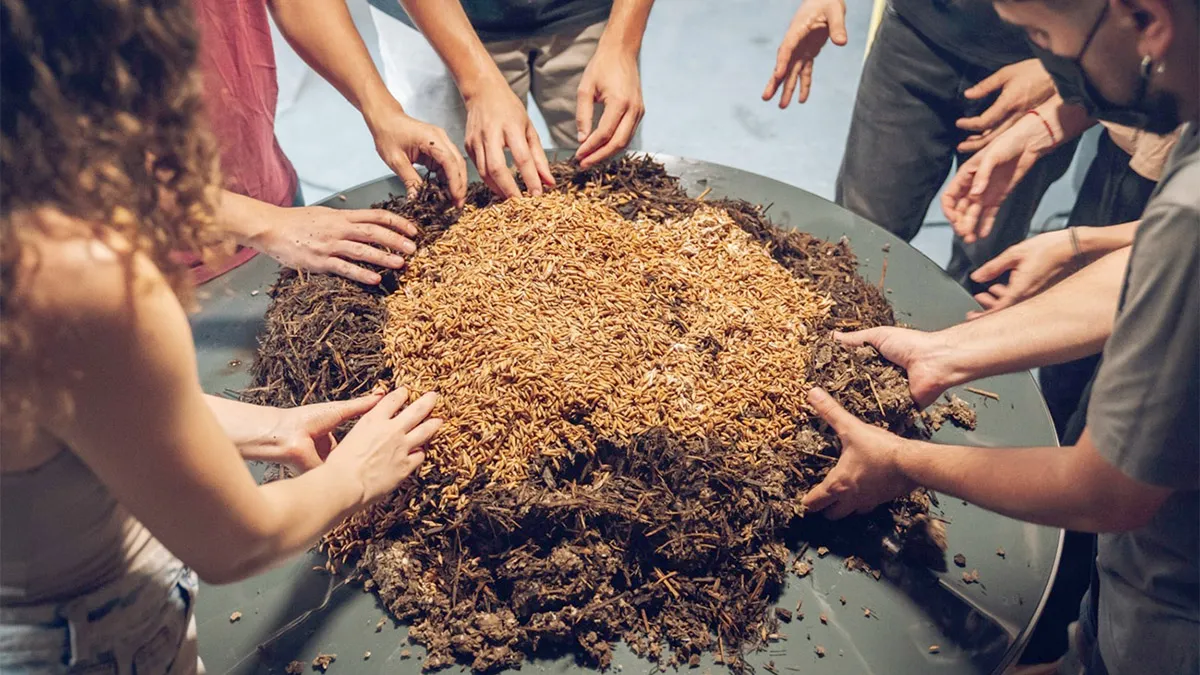
The panels are made with a substrate composed of urban pruning waste and recycled cardboard, bound by the mushroom mycelium, the vegetative part of the strain. This process prevents fruit formation and generates a compact and resistant material.
- Manufacturing process: lasts two months, includes dehydration to inactivate the growth of the fungus.
- Benefits: reduction of urban waste, lower energy consumption for heating homes, and reduction in the use of polluting materials.
- Network of actors: involves biologists, bioinput producers, informal recyclers, and cooperatives.
Production and training
The project includes the manufacture of 30 m² of panels, installation of machinery, and training for the work team. The training is also aimed at people involved in construction and those seeking to build environmentally friendly spaces.
The cooperative La Esperanza provides the cardboard and urban waste, while the enterprise ProFunga supplies the mushroom seeds. The team plans to learn how to reproduce these seeds to reduce costs and increase the project’s feasibility.
Social and environmental impact
The president of AVE, Julián González Laria, emphasized that the prototype will allow validating the technology on a real scale. He also highlighted that the widespread use of these panels could transform urban waste management and improve the energy efficiency of homes.
Fernández, for her part, highlighted the value of working from the social economy, integrating diverse actors and generating employment opportunities.
AVE and the CEVE
The Asociación de Vivienda Económica is a non-profit civil entity that promotes access to habitat for popular sectors. It is part of the Centro Experimental de la Vivienda Económica (CEVE), dependent on Conicet, and acts as a Unidad de Vinculación Tecnológica, articulating scientific research with production and civil society.
The project of insulating panels with mycelium and recycled cardboard represents a step forward towards sustainable construction in Argentina. By reducing waste, utilizing renewable resources, and promoting the social economy, this initiative combines scientific innovation with positive environmental and social impact.


