



A group of scientists identified a new species of giant long-necked dinosaur in Thailand, which is already considered the largest found so far in Southeast Asia.
The discovery, made from fossils unearthed a decade ago in the province of Chaiyaphum, also provides new clues about the relationship between the prehistoric climate and the evolution of animals of colossal dimensions.
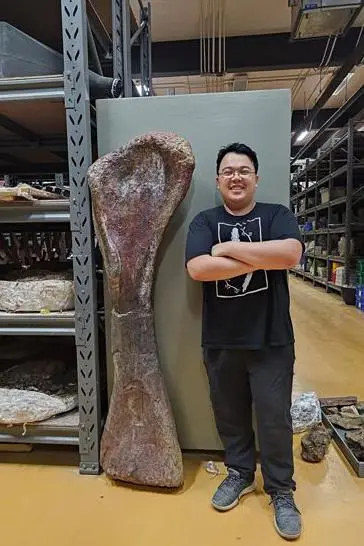
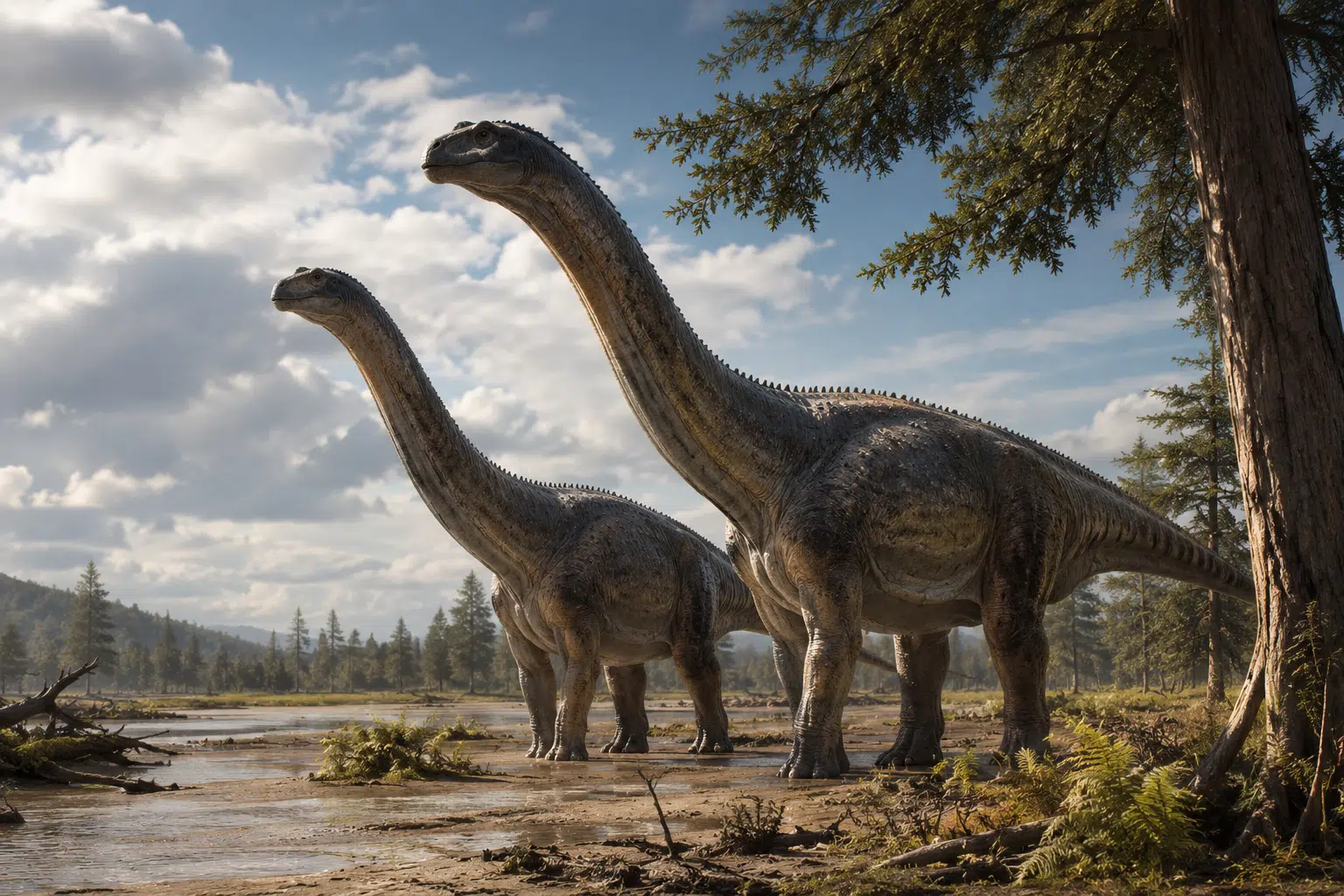
The species was named Nagatitan chaiyaphumensis and belonged to the group of sauropods, long-necked herbivorous dinosaurs that dominated various ecosystems for millions of years.
Researchers estimate that the specimen reached about 27 meters in length and a weight close to 27 tons, equivalent to nine adult Asian elephants. The study was conducted by specialists from Thailand and the United Kingdom, who analyzed fossil remains found near a pond in northeastern Thailand.
A prehistoric giant emerged from ancient tropical lands
The Nagatitan inhabited the Earth between 100 and 120 million years ago, long before the appearance of the Tyrannosaurus rex. During that period, the current territory of Southeast Asia presented environmental conditions very different from the current ones.
According to the researchers, the region was marked by high temperatures, abundant vegetation, and elevated levels of carbon dioxide in the atmosphere, factors that favored the development of large herbivorous ecosystems.
Furthermore, the discovery holds special value for regional paleontology. The remains were found in one of the most recent rock formations in Thailand that still preserve terrestrial dinosaur fossils.
Scientists believe it is likely one of the last great sauropods that inhabited Southeast Asia before large areas became covered by shallow seas.
Ancient climate and the enormous size of sauropods
The study also refocuses on the link between climatic changes and the evolution of gigantic species during the dinosaur era. Specialists explain that, although enormous bodies retain more heat, sauropods managed to thrive in extremely warm environments thanks to the abundance of available vegetation.
Consequently, the high concentrations of carbon dioxide would have driven more productive ecosystems, capable of sustaining large animals for millions of years.
Additionally, researchers argue that such discoveries allow for a better understanding of how environmental changes affect biodiversity and the dynamics of ecosystems in the long term.
The case of the Nagatitan also serves as a scientific warning in times of accelerated global warming, as it shows how climatic variations can profoundly transform life on the planet.
What is known about this extinct species?
The name Nagatitan chaiyaphumensis combines cultural and geographical references from Southeast Asia. The word “naga” refers to the mythological serpents present in the regional folklore, while “titan” alludes to the gigantic deities of Greek mythology.
Meanwhile, “chaiyaphumensis” directly refers to Chaiyaphum, the Thai province where the fossils were found.
The species became the fourteenth officially named dinosaur in Thailand, a country that boasts one of the largest diversities of dinosaur fossils in Asia.
Currently, researchers continue to study the remains to reconstruct more precisely how this enormous herbivore lived and what environmental characteristics allowed animals of such size to dominate ancient tropical landscapes.



