



A study published in the scientific journal Nature Food, covering 186 countries, revealed an unexpected fact: Guyana is the only country in the world self-sufficient in all basic food groups —fruits, vegetables, dairy products, fish, meat, legumes, and starchy foods—.
Not even giant economies like the United States, China, or the United Kingdom have achieved this level of food independence. Guyana, with just 830,000 inhabitants, feeds itself without relying on the outside and does so without destroying its forests.
A small country with great resources
Guyana is located on the Atlantic coast of South America, between Venezuela and Brazil, and is characterized by its dense tropical forests. Its official language is English, and its culture is reflected in traditions such as cricket and calypso music.
The capital, Georgetown, preserves British colonial architecture, like the painted wooden Anglican St. George’s Cathedral and the Stabroek Market, where a large clock presides over the sale of local agricultural products.
Agriculture in harmony with nature
85% of Guyana’s surface is covered by virgin jungle, while most of the population is concentrated in a narrow coastal strip. Despite this territorial limitation, the country utilizes its resources with unique efficiency:
- Fertile soils enriched by the Amazon river system.
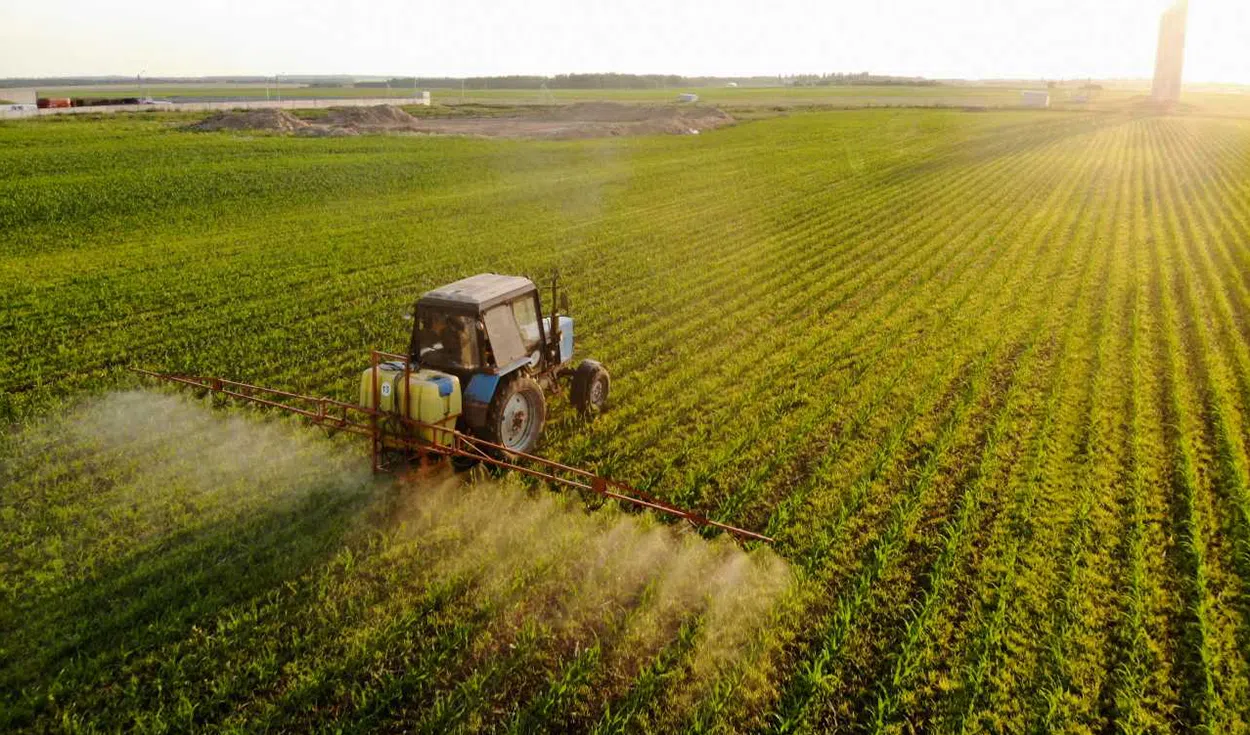
- Diversified agriculture, where crops are combined in the same field (pineapples and tomatoes under coconut trees), keeping the soil healthy and reducing risks.
- Integrated livestock, which increases fertility without the need for chemicals.
- Soil protection with live roots throughout the year.
While other South American countries have sacrificed forests to expand agriculture and livestock, Guyana has preserved more than 85% of its original forest cover, according to the BBC’s Science Focus. Experts highlight that its success lies in “working with nature, not against it.”
International comparison
The study shows that Europe, although above the global average in food security, performs poorly in total independence:
- Most European countries are self-sufficient in only 2 or 3 of the 7 basic groups.
- Germany and the Benelux countries, despite their advanced agricultural technology, are also limited to 2 or 3 groups due to lack of land and high population.
Even global giants lag behind Guyana:
- China and Vietnam: self-sufficient in 6 of the 7 groups.
- United States: self-sufficient in 4 groups.
- United Kingdom: self-sufficient in only 2 groups (meat and dairy).
The global outlook is concerning: more than a third of the countries in the world are self-sufficient in only 2 or fewer food groups.
A recipe for food security
Food policy experts warn that total self-sufficiency is not always necessary or advisable. However, Guyana’s strategy based on crop diversification and investment in local seeds is presented as an inspiring model to ensure global food security.
Guyana demonstrates that a small country can achieve what great powers have not: feeding its population sustainably and without destroying its forests. Its example reinforces the idea that working with nature and betting on agricultural diversity is one of the keys to facing the challenges of global food security.


