



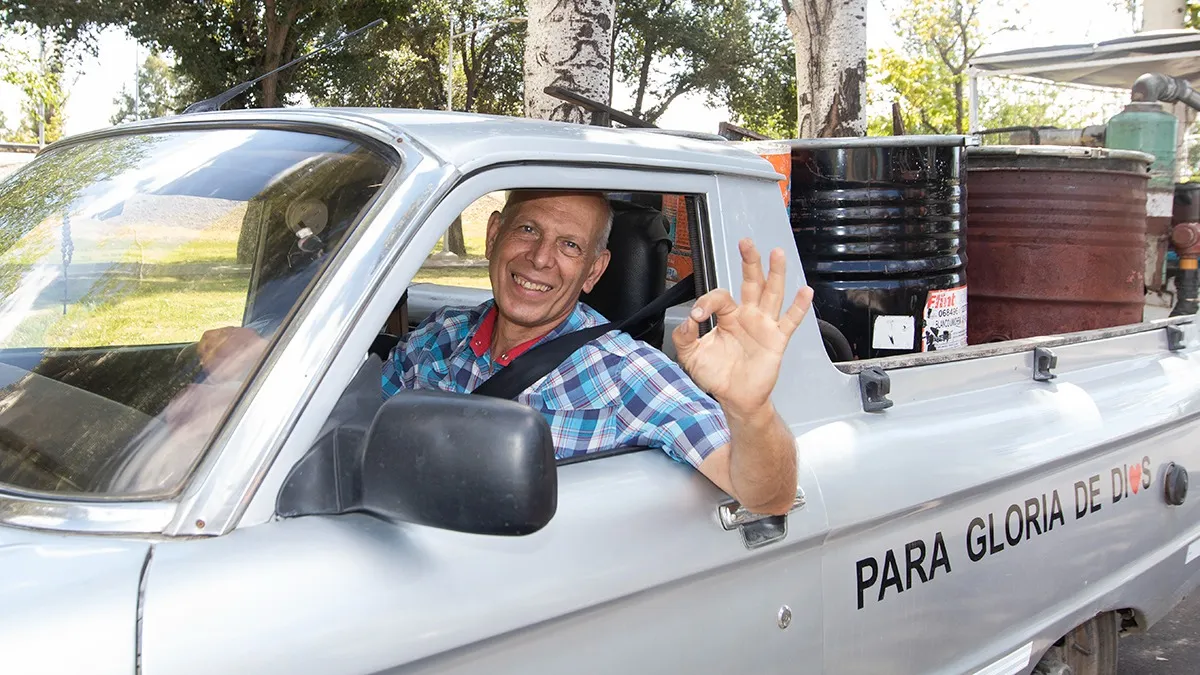
Edmundo Ramos, an electromechanical engineer nearly 70 years old and a resident of Anisacate, Córdoba, is preparing for a new challenge: traveling to Brazil in a car that runs on organic waste. The engine is ready, the waste sorted, and the map marked with precise stops. The only thing missing is company: a co-driver with a license or even other vehicles to join in a caravan.
This is not an improvised adventure, as revealed in a conversation with TN, Ramos has been working on this system for over 15 years, which converts dry and carbonized organic waste into fuel gas. He has already traveled thousands of kilometers within Argentina, demonstrating that his invention works and that another way of traveling is possible.
How the vehicle works
The car has an approximate range of 500 kilometers per load, although the planned segments are shorter. The engine is powered by waste such as shells, pits, pruning remains, and vegetable waste with good calorific value. Not all waste yields the same, and Ramos knows from experience which materials offer greater power and stability.
The system is based on a gasifier that transforms the waste into fuel gas. The process requires temperature control, filtering, and a precise mixture of air and gas. Once stabilized, the vehicle responds with efficiency and autonomy, something unthinkable in the project’s early attempts.
Philosophy and journey
Ramos never sought to patent or commercialize his invention. He published plans, explained processes, and shared mistakes and successes. His logic is clear: if the knowledge serves to clean the planet or provide energy where there is none, it should circulate freely.
In every city he visited, the reaction was similar: surprise, curiosity, and collaboration. Neighbors approached with bags of waste, lent warehouses, asked technical questions, or simply shared mate and conversation. The journey to Brazil follows that same logic but with a greater challenge: crossing borders and taking the message further.
The open call
His wife will accompany him to the border, but after that, he will continue alone… unless someone joins. Ramos is looking for ordinary people, with curiosity and patience, who understand that this journey is not traditional tourism nor a race against time. It is a demonstration in motion, a car that stops to load waste and invites reflection on what we discard.
The accompaniment can be as a co-driver —with a license and money for basic expenses— or as part of a caravan. If someone joins with their own vehicle, Ramos will cover the fuel costs.
A message about energy and the future
The journey has no set return date. It will be marked by the route, the people, and the car. What it does have is a clear objective: to demonstrate that the energy transition is not just a discourse of major international summits, but something that can start in a workshop, in a small town, with remnants that others discard.
From Anisacate, Ramos appeals to word of mouth and the media to spread his goal. He is not asking for sponsors or investments: he is asking for company. Someone to get in, to drive when needed, to accompany the unforeseen. The engine is already tested. the use of organic waste as well.



