



The Brazilian government revoked this week a decree that allowed the construction of ports on the rivers of the Amazon for grain transportation.
The decision came after more than a month of indigenous protests that escalated to the occupation of a terminal of the company Cargill.
The decree, signed in August by President Luiz Inácio Lula da Silva, designated the main Amazonian rivers as priorities for cargo navigation and the expansion of private ports.
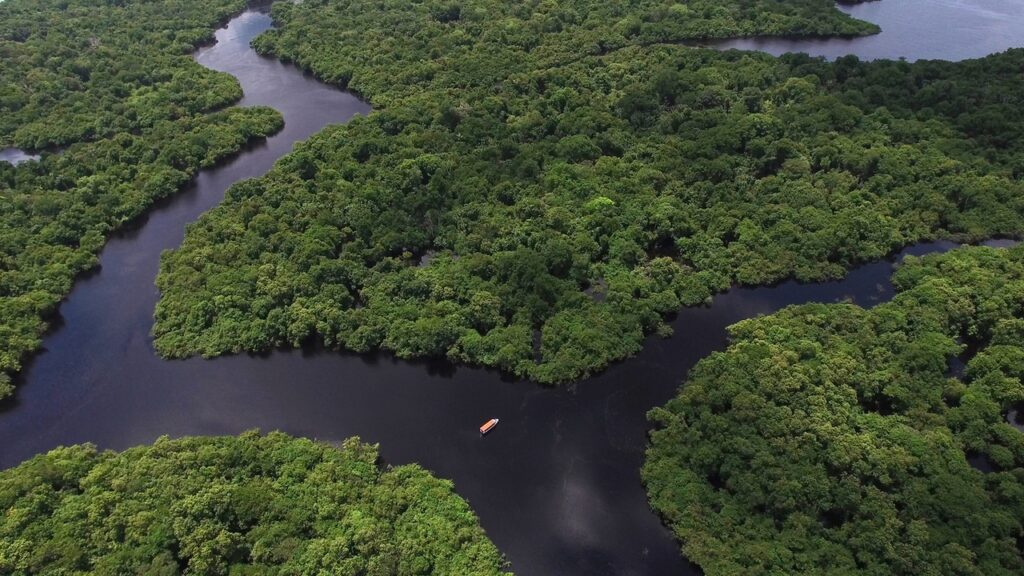
The communities consider these waterways vital for their way of life and oppose the dredging that such development entails.
The indigenous protests that forced the decision
More than 1000 indigenous people from 15 communities camped for weeks in protest against the decree that allowed ports on the rivers of the Amazon.
Most settled in front of the terminal of the American agribusiness company Cargill, in the city of Santarém, state of Pará.
The protests continued even after the government announced, two weeks earlier, the suspension of dredging in the Tapajós river, a tributary of the Amazon.
The weekend before the announcement, the protesters even entered and occupied the terminal, which increased the pressure on the authorities.
“They can criminalize us, but we know that the river is ours, the forest is ours,” said Alessandra Korap, leader of the Munduruku people, from the Cargill facilities.
Following these incidents, the Brazilian government finally decided to revoke the decree that allowed the installation of ports on the Amazon rivers.
The Minister of the General Secretariat of the Presidency, Guilherme Boulos, confirmed the measure at a press conference in Brasilia: “The decision to revoke the decree was signed.”
“This government listens even to the point of reversing its own decision by understanding the position of these indigenous peoples,” added Boulos.

What the decree revoking the installation of ports on the Amazon rivers implied
The decree to establish ports generated opposition because it allowed a series of interventions in the Amazon rivers with direct impact on the ecosystems and communities of the region:
- Expansion of private ports on the main Amazonian rivers
- Dredging of rivers to facilitate the navigation of cargo vessels
- Designation of these waterways as priorities for grain transportation
- Greater presence of agribusiness in sensitive territories
The organization Amazon Watch reported that during the protests, demonstrators managed to prevent the entry and exit of trucks from the Cargill terminal.
Brazil is the world’s largest exporter of soy and corn, and the expansion of river ports in the Amazon aims to reduce transportation costs for that production.
Critics pointed out that the project represented a clash between economic development and the environmental commitment that Lula promoted in various international forums.
The indigenous people had already expressed their opposition to the decree at the UN’s COP30 climate conference, held in November in Brazil.
In front of Cargill’s granaries, protesters with feathered headdresses celebrated the announcement. “We won that fight. That shows that life is not for sale, the river has no price, it is not negotiable,” said Maria Leusa, another Munduruku leader.
Alessandra Korap announced that the communities will continue “resisting” and called for new protests on Tuesday in Brasilia, São Paulo, and other cities, against the privatization of the Amazonian rivers.


